






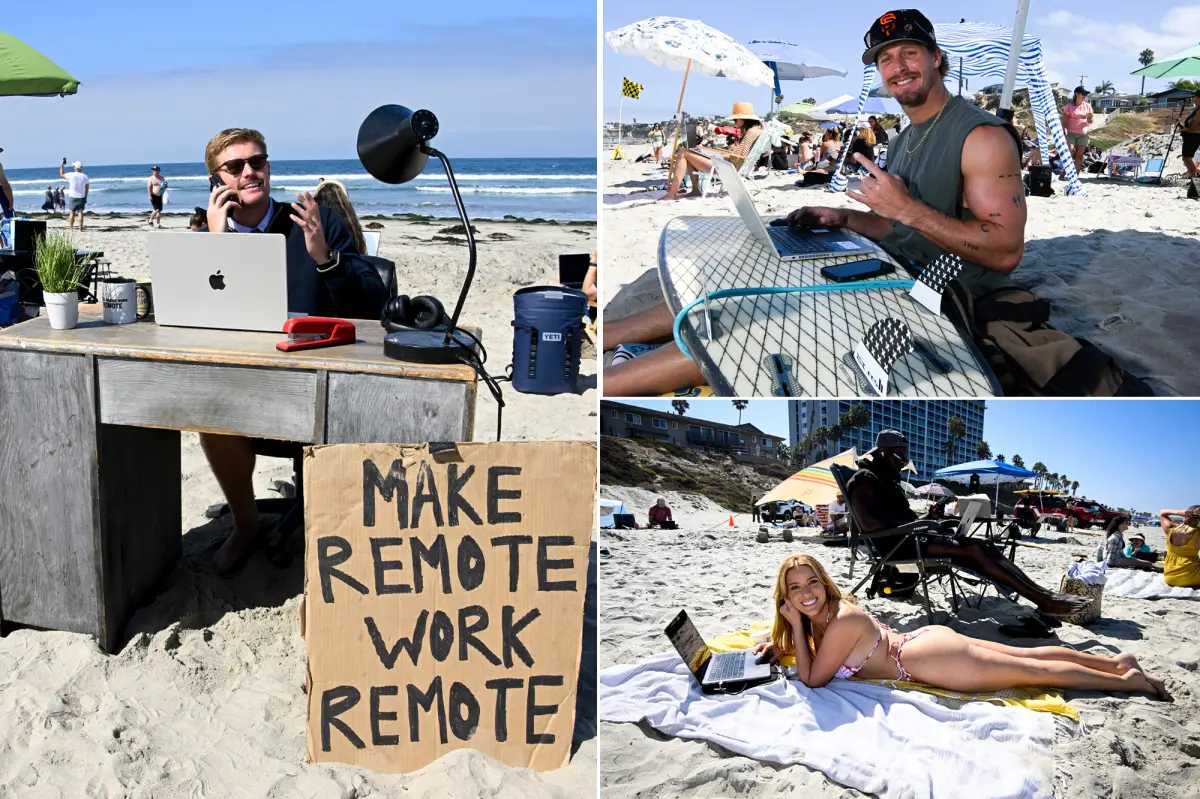
The sun-drenched coastal stretch of Pacific Beach in San Diego recently underwent a breathtaking, unprecedented transformation, turning what would have been a routine, isolated Thursday morning into a vibrant, open-air monument to the modern remote work revolution. At Law Street Beach, where the gentle, rhythmic crashing of the emerald Pacific waves typically provides a soothing soundtrack only for local surfers and sunbathers, hundreds of remote employees chose to break free from the monotonous, soul-crushing confines of their sterile home offices, cramped apartment corners, and fluorescent-lighted dining spaces. Instead of staring at blank drywall, they gathered collectively to embrace nature’s grandest, most inspiring workspace under the vast, open California sky. The shoreline was quickly converted into a sprawling mosaic of makeshift seaside offices, where sleek aluminum laptops were balanced precariously on sun-warmed knees, colorful fold-up beach chairs served as ergonomic task seating, and rustic, wax-coated surfboards were creatively repurposed as sand-dusty standing desks. The crisp, salty sea breeze mingled beautifully with the rich, comforting aroma of freshly brewed hot coffee and the savory scent of toasted bagels provided to the attendees, creating an inviting, communal breakfast-table atmosphere right at the water’s edge. This was not a lazy crowd of unmotivated individuals looking to shirk their professional duties or dodge their managers; rather, it was a highly focused, deeply engaged, and collaborative collective of designers, software engineers, content creators, and corporate strategists proving to the world that high-level productivity does not require physical or mental confinement. The sheer, awe-inspiring visual spectacle of a beach covered in hundreds of glowing computer screens offered a striking contrast to the traditional, grey-cubicle corporate landscape, embodying a profound and permanent cultural shift toward genuine work-life integration that prioritizes human happiness, employee mental health, and physical well-being alongside professional output.
The visionary mastermind behind this sun-kissed gathering is Scott Muirhead, a charismatic local social media personality and digital community builder who has passionately championed the philosophy that professional ambition and personal joy should not be mutually exclusive concepts. Frustrated by the pervasive isolation, screen fatigue, and mental stagnation that often accompany the modern “Work From Home” lifestyle, Muirhead envisioned these large-scale beach meetups as a dynamic, healthy antidote to the loneliness of the domestic home office. He strategically organized the event to run from 9:00 AM to 12:00 PM, a carefully selected window of time deliberately designed to align with key morning meetings, emails, and peak productivity hours across various corporate industries. Through his highly active social media platforms, Muirhead passionately rallied local professionals to break free from their repetitive weekly routines and embrace the healing, focus-inducing qualities of the ocean environment. In his promotional videos sharing the ultimate triumph of the day, he declared with immense pride that the city of San Diego had effectively “overruled corporate America” by legitimizing, legalizing, and celebrating outdoor remote work on public lands. The ripples of his creative vision have already extended far beyond the geographic borders of San Diego, with Muirhead revealing that professionals in major tech-centric northern cities, such as San Francisco, have reached out in droves to express a desperate desire to replicate this beachside co-working model in their own coastal regions. This rapidly growing interest highlights a universal human craving for community connection and natural beauty, suggesting that the desire to escape traditional office structures is a burgeoning, unstoppable nationwide movement that will continue to shape how we define the workday for generations to come.
The true heart and soul of the event, however, lay in the diverse personal stories, shared laughter, and collective relief of the participants who lined the shore, each finding their own unique sense of liberation in the sand. For enthusiastic attendees like Nadia Nowak, the rare opportunity to log into early morning Zoom calls and answer critical emails with the expansive blue Pacific serving as a real-life, un-blurred background was nothing short of transformative, offering an unparalleled morning routine that energized her entire day and brought a smile to her coworkers on the screen. Similarly, Lacey Mallow, a recent transplant who had only just moved to the San Diego area, found the gathering to be an indispensable social lifesaver, providing her with a warm, welcoming environment to network with like-minded peers while maintaining her professional productivity outdoors on a gorgeous sunny day. Even seasoned industry professionals deeply rooted in the coastal lifestyle, such as Steve Nass, who works for the famous lifestyle and footwear brand Reef, noted the poetic symmetry of the event. Nass pointed out that since Reef was a brand literally born on the sandy beaches of California, there was no more authentic, productive, or inspiring place for him to execute his daily marketing and corporate tasks than right there in the natural elements. These deeply personal testimonials underscore a collective psychological truth that modern employers are starting to recognize: human beings thrive when they are connected to both nature and one another. By stepping away from isolated, quiet rooms and stepping into a supportive, open-air community, these remote workers discovered that physical wellness and high-quality professional output are deeply, beautifully, and structurally interdependent.
Yet, this idyllic beachside workspace was very nearly swept away by the cold, unyielding currents of municipal bureaucracy and regulatory pushback. Following a previous gathering in March that attracted hundreds of eager workers to the same shoreline, the event drew the immediate ire of local city officials who complained about an influx of litter, crowding, and unapproved commercial-scale use of public parks. While Muirhead vehemently defended his group, arguing that the public-space trash was not generated by his respectful, professionally-minded community of remote workers, San Diego officials initially adopted a strict, uncompromising stance, telling organizers to “pound sand” regarding any future meetups. City spokesperson Benny Cartwright publicly reinforced the municipal regulations, emphasizing that any organized events utilizing San Diego Parks and Recreation facilities that attract more than 49 participants are legally required to obtain formal permits. Cartwright detailed that these permits are not merely bureaucratic red tape, but essential safety measures that encompass costly fees, liability insurance mandates, strict security requirements, and other rigorous conditions tailored to the scale of the gathering. For a brief, stressful period, the threat of heavy fines and legal shut-downs loomed over the project, creating a wave of public outcry among work-from-home employees who felt targeted by outdated municipal-use guidelines that failed to recognize modern, digital-first social structures. This clash highlighted the ongoing societal tension between rigid, legacy city regulations and the fluid, innovative needs of a rapidly evolving digital workforce that seeks to reclaim public spaces for healthy, community-driven activity.
Faced with the threat of complete cancellation and severe legal penalties, Muirhead chose collaboration over confrontation, initiating a series of diplomatic meetings with city managers to find a sustainable, lawful path forward for his community. By demonstrating that his group was comprised of highly responsible, civic-minded professionals who valued the preservation of the coastline as much as any environmentalist, he successfully secured a green light for future shoreline gatherings from city hall. To codify this profound commitment to environmental stewardship, Muirhead integrated a mandatory community beach cleanup directly into the event’s schedule, dedicating the final thirty minutes of the day, from 12:00 PM to 12:30 PM, to systematically clearing the sand of any refuse, bottle caps, or plastic. During this cleanup, participants enthusiastically closed their laptops, grabbed biodegradable trash bags, and combed the shoreline in organized teams, turning a chore into a secondary networking event where shared laughs over picking up driftwood and stray plastic fostered a deeper bond among the participants. This highly organized, collective effort ensured that the beach was left in even better condition than they originally found it, transforming the remote workers from mere consumers of public space into active, passionate caretakers of the local marine ecosystem. Municipal leaders, deeply impressed by the organizers’ sincerity, structured approach, and willingness to comply with local guidelines, embraced this civic-minded compromise, illustrating how modern lifestyle movements can successfully negotiate with local governments to create harmonious, safe, and enriching community experiences.
The triumphant return of the beachside workspace coincidentally coincided with National Work From Home Day, adding a layer of rich, symbolic significance to an already monumental and joyous occasion. This gathering has transcended its status as a simple, novel social meetup to become a powerful, living case study for the global future of professional environments and labor culture. It challenges the archaic, industrial-era notion that employee dedication and productivity must be measured by hours spent sitting under artificial, buzzing lights in a locked corporate office tower. Instead, the thriving, highly creative ecosystem on display at Law Street Beach suggests a healthy, sustainable new paradigm: one where professional labor is seamlessly integrated into a life defined by physical movement, community connection, and environmental appreciation. As the sun reached its peak and the laptops were finally closed, the lessons of San Diego began to echo across the country, serving as a beacon of inspiration for other coastal towns and urban centers alike. Ultimately, this beachside model sparks a vital conversation for urban planners everywhere: instead of fighting the digital nomad wave, cities should look to design green public spaces equipped with solar-powered charging stations and public Wi-Fi access, embracing a future where the outdoors becomes a vibrant extension of our intellectual lives. By proving that remote work can be collaborative, environmentally responsible, and deeply humanizing, Scott Muirhead and his oceanfront colleagues have written a bold new chapter, demonstrating to corporate employers and city councils worldwide that when you give people the trust and freedom to choose their environment, they will not only meet their professional expectations—they will elevate the very communities they call home.