






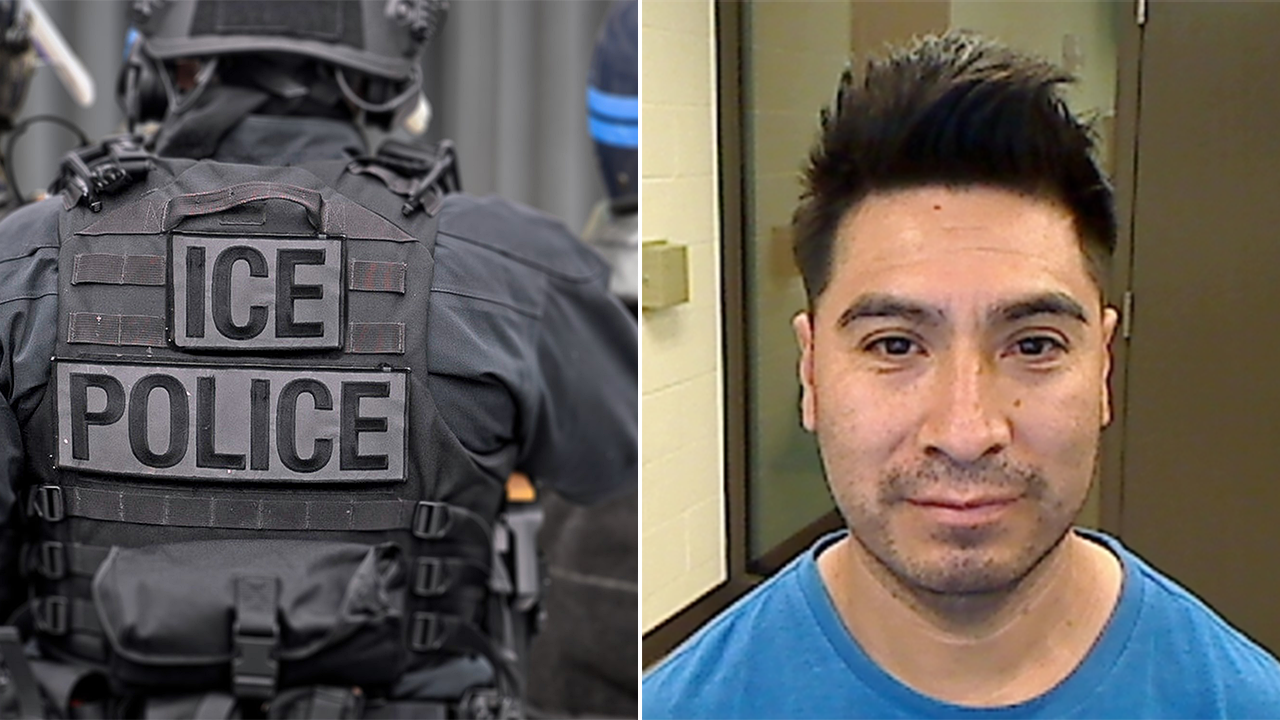
In the quiet, unassuming town of Oak Grove, Missouri, what began as a routine highway patrol for local law enforcement officers quickly escalated into a critical, life-altering intervention that saved a young soul from an unthinkable fate. It was a chilly afternoon in mid-November when alert police officers pulled over a vehicle traveling along the interstate, halting a cross-country journey that had begun hundreds of miles away in Salt Lake City, Utah, with an intended destination of the densely populated metropolitan areas of New York. Inside the vehicle sat Erik Santana-Garcia, a 34-year-old resident of Salt Lake City, alongside a vulnerable minor who had been taken across multiple state lines under deeply coercive and dangerous circumstances. This was far from an ordinary road trip; it was the active, terrifying execution of a predator’s calculated plan to engage in illicit sexual activity with a child far from home, utilizing the vast highways of America to obscure his intentions. For the young victim, the sudden appearance of blue and red flashing lights in the Missouri air was not just a routine traffic stop, but a profound moment of rescue, marking the abrupt and lifesaving end to a harrowing journey of exploitation that was destined for a tragic outcome. The rapid, decisive action taken by the Oak Grove Police Department prevented what could have been an irreparable tragedy, serving as a powerful reminder that local, everyday policing remains the absolute first line of defense against the quiet horrors of human trafficking. Yet, as the flashing lights faded and the suspect was handcuffed, the relief of the immediate rescue began to give way to a much larger, darker narrative. Investigators soon realized that this highway stop was merely the tip of a deeply disturbing iceberg, exposing a complex web of criminality that stretched across the nation, triggering a massive federal response to address the systemic dangers posed by a repeat offender.
As federal investigators stepped in to unravel the details of Santana-Garcia’s actions, the sheer gravity of his criminal behavior began to paint an incredibly grim picture of exploitation. Following his arrest in Missouri, agents from Homeland Security Investigations (HSI) secured a federal search warrant for Santana-Garcia’s mobile phone, a device that would ultimately serve as the digital repository of his darkest secrets and criminal exploits. Upon conducting a meticulous, frame-by-frame forensic analysis of the device, investigators made a horrifying discovery: explicit digital media depicting the severe sexual abuse of a second, entirely separate minor, which had been stored on his phone. This revelation instantly transformed the case from an isolated incident of interstate trafficking into a much broader, deeply entrenched pattern of child exploitation, proving that Santana-Garcia’s predatory instincts were chronic, deliberate, and highly active. Faced with an absolute mountain of forensic evidence compiled by federal prosecutors, Santana-Garcia realized the futility of attempting a courtroom defense and chose to enter a guilty plea in federal court. He formally pleaded guilty to a slate of severe federal charges, including the interstate transportation of a minor with the intent to engage in illegal sexual activity, the possession of child pornography, and illegally reentering the United States after having been previously deported. The court documents detailed the actions of a calculating individual who utilized the vast anonymity of the American interstate highway system to transport and abuse the most vulnerable members of society, operating under the dangerous assumption that constantly moving across state lines would keep him one step ahead of law enforcement. This thorough digital investigation not only solidified the legal charges against him but also gave a voice to the voiceless victims who had been subjected to his psychological and physical torment, ensuring his crimes could not be hidden.
The case of Erik Santana-Garcia has also thrust the critical issues of border security and immigration policy back into the national spotlight, highlighting the severe real-world consequences of systemic enforcement gaps. Santana-Garcia, a Mexican national, was no stranger to the United States immigration system; federal prosecutors revealed that he had been deported and removed from the country multiple times prior to his latest arrest. His most recent formal deportation occurred on March 6, 2019, yet he managed to slip back across the border undetected, establishing a quiet residence in Utah before embarking on his criminal journey that crossed state lines. His ability to repeatedly bypass border security measures and reenter the country illegally raises urgent, deeply troubling questions about the efficacy of current immigration protocols and the safety of local communities. For many, this case serves as a stark illustration of the dangers that arise when violent criminals and sexual predators exploit porous borders to escape justice in their home countries and find new, unsuspecting victims abroad. It emphasizes that immigration enforcement is not merely an abstract debate over economics or political ideology, but a fundamental matter of public safety and national security. The physical and emotional trauma inflicted upon these children is a direct consequence of a system that allowed a previously deported felon to walk freely on American soil, highlighting the gaps in monitoring deported individuals. This tragic reality has sparked intense discussions among lawmakers, law enforcement officials, and community advocates alike, all of whom are calling for more robust tracking systems, stronger border infrastructure, and harsher penalties for individuals who repeatedly violate deportation orders, emphasizing that the primary duty of any government is to protect its citizens and the vulnerable within its borders from those who cross them with malicious intent.
The successful resolution of this terrifying case was only made possible through an extraordinary, highly coordinated effort that bridged local, state, and federal law enforcement agencies across several distinct geographic regions. What began as a localized traffic stop by the Oak Grove Police Department in Missouri quickly expanded into a massive, multi-agency operation involving multiple branches of Homeland Security Investigations (HSI), including offices in Kansas City, Salt Lake City, and Billings, Montana. This level of inter-agency cooperation highlights the silent, relentless, and often exhausting work performed by dedicated law enforcement officers who collaborate behind the scenes to track down and neutralize threats to public safety. When predators cross state lines, they do so hoping that the fragmented nature of localized police jurisdictions will allow them to slip through the cracks of a divided bureaucracy. However, the seamless, rapid sharing of intelligence, digital forensics, and physical resources in this case proved that the shield of law enforcement is unified, highly adaptive, and incredibly persistent. Officers and federal agents worked tirelessly, sacrificing sleep and personal time to ensure that the immediate victim was placed in a safe, supportive environment, while simultaneously securing the forensic evidence necessary to keep a highly dangerous predator off the streets permanently and bring a swift end to his flight from justice. The emotional toll on these investigators, who must regularly confront the worst aspects of human nature and examine horrific child exploitation material, is immense, yet they persist in their mission. Their unwavering dedication to protecting children remains a guiding light in the community, showcasing how collaborative policing can dismantle complex, interstate criminal operations and restore a profound semblance of safety to families who rely on these brave men and women to stand watch over their neighborhoods.
The legal climax of this harrowing saga occurred on July 30, when a federal judge in the U.S. Attorney’s Office for the Western District of Missouri handed down a decisive 20-year prison sentence to Santana-Garcia. Crucially, this sentence carries no possibility of parole, meaning that he will serve every single day of his two-decade term behind the cold walls of a federal penitentiary, completely isolated from the society he actively sought to victimize. Following his eventual release, he will be subject to a lifetime of supervised release, a stringent measure designed to monitor his actions indefinitely and ensure he can never again operate in the shadows of American communities or seek to exploit children. While this lengthy sentence represents a significant triumph for the justice system and offers a necessary measure of retributive justice, the focus must also turn toward the long, difficult road to recovery for the young victims involved in this case. The trauma inflicted by sexual exploitation and trafficking leaves deep, invisible psychological scars that do not simply vanish with a court verdict or the banging of a judge’s gavel. Healing for these young children will require comprehensive medical support, long-term specialized therapy, and the steady, compassionate presence of family, friends, and child advocacy professionals. The 20-year sentence provides a vital sense of physical safety, reassuring the young survivors that their abuser is entirely powerless to harm them or anyone else again, but it also highlights the enduring human cost of such crimes. As a society, the commitment to these survivors must extend far beyond the finality of the courtroom; it requires a collective dedication to providing the resources, education, and love necessary to help them rebuild their lives, reclaim their stolen childhoods, and eventually look toward a future that is defined by hope rather than the lingering trauma of their past.
Beyond the walls of the courtroom, Santana-Garcia’s conviction has reverberated through the broader social and political landscape, drawing sharp commentary from immigration officials and fueling the ongoing national dialogue regarding border policy. In a public statement released on social media, Immigration and Customs Enforcement (ICE) emphasized a strict, zero-tolerance stance on child predators and individuals who repeatedly cross the nation’s borders illegally, noting that under leadership focused on safety, there is no room for those who sneak across borders to harm children. The agency confirmed that upon the completion of his 20-year federal prison sentence, Santana-Garcia will be immediately deported back to Mexico, ensuring that he will never again be permitted to walk the streets of the United States or threaten its youth, creating a safer environment for generations to come. This case has become a powerful focal point for advocates who argue that national security and border integrity are directly linked to the physical safety of America’s children. It raises essential, complex questions about how the nation can better secure its borders and streamline information sharing between immigration databases and local police to ensure that repeat deportees are identified and stopped before they can find new victims. Ultimately, the story of Santana-Garcia is a sobering reminder of the vulnerabilities that exist within our current systems, but it is also a story of resilience, swift justice, and the power of collaborative law enforcement. It demonstrates that when local communities, vigilant police officers, and federal agencies stand united, they can pierce the darkness of child exploitation and hold perpetrators accountable. As the nation continues to debate the complexities of immigration and public safety, this case serves as an enduring reminder that behind every policy, statistic, and legal brief are real human lives—children who deserve a world free from fear, and a society that will stop at nothing to protect them.