





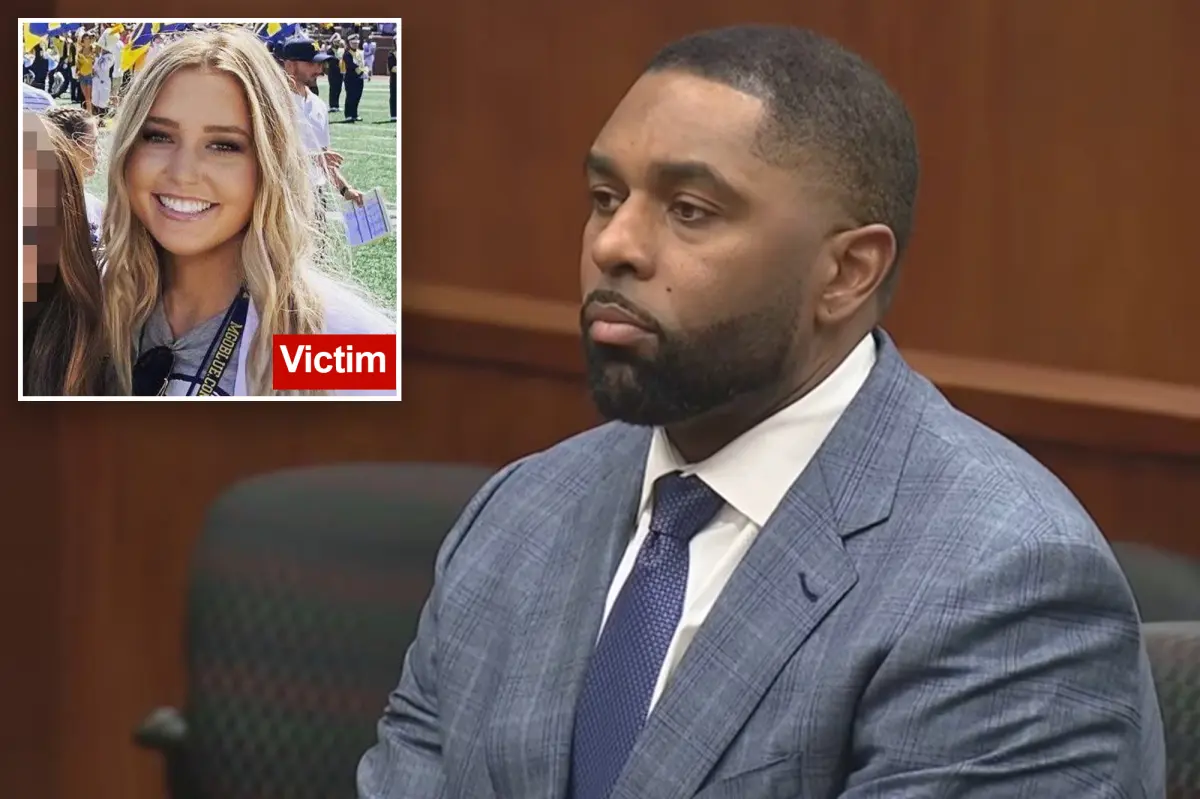
Paige Shriver had always imagined her life would follow a steady path—successful career, meaningful relationships, perhaps a family someday. At 32, with her own aspirations in sports administration, she never anticipated becoming entangled in a nightmare that would shatter her sense of security. When she ended her affair with Sherrone Moore, the former head coach of the Michigan Wolverines football team, she thought closure would come swiftly and cleanly. But on December 10th, just days after their secret two-year relationship imploded following his public firing, everything changed forever. Paige awoke to the sound of her door crashing open, her heart pounding as Moore—now a man fueled by rage, betrayal, and despair—stormed into her apartment. He wasn’t just angry; he was unhinged, weeping uncontrollably, his voice echoing through her home as he blamed her entirely for the unraveling of his high-profile life. The $5.5 million-a-year salary, the prestige of leading one of America’s top football programs, the admiration from fans—it all crumbled because of their illicit connection, or so he insisted. Paige, alone and defenseless, describes that day as the most terrifying of her life. In her mind’s eye, she relives the panic: Moore advancing with household knives—butter knives and kitchen scissors—waving them around as he ranted, threatening to end his own life right there on her floor. She pleaded for calm, her voice trembling, begging him to leave, her adrenaline surging as she barricaded herself, fearing not just for her safety but for her humanity. How could someone she once trusted, with whom she’d shared intimate moments during stolen hours away from the spotlight, turn into this volatile stranger? The emotional toll was immediate and profound; Paige felt her world narrowing to survival, every shadow in her apartment a potential threat. Months later, in the stillness of her own healing, Paige remains deeply scarred. The physical space of her home, once a sanctuary, now carries echoes of that intrusion—reminders of how vulnerability can pierce through even the strongest locks and independence. Statement after statement, she fights to be heard, her words a testament to the lingering fear that haunts her nights. She wakes with a start, her thoughts racing to unfinished what-ifs: What if he’d lashed out differently? What if the knives had found a mark? The trauma doesn’t fade; it’s a constant companion, resurfacing in unexpected moments, like when she hears a sudden noise or sees a man in football gear. Paige isn’t just recounting facts; she’s dissecting the raw human cost of betrayal and unchecked anger. And now, with Moore’s sentencing, she feels a fresh wave of injustice washing over her. An 18-month probation for acts that could have escalated to unthinkable violence? It feels inadequate, a slap in the face that diminishes her ordeal to mere ink on a page. In her reflections, Paige grapples with the broader implications—how power disparities in relationships can amplify harm, how the platforms of influential men often shield them from full accountability. She wonders if her story, shared publicly, might empower others to speak out, to demand that their anguish isn’t dismissed as collateral damage in someone else’s collapse.
The core of Paige’s nightmare unfolded in a blur of chaos and desperation. That December morning, after his dismissal as Wolverines coach— a fallout directly tied to their affair—Moore showed up unannounced, his emotional state a tempest. He’d been ousted from a program that defined him, his reputation in tatters, and in his haze of hurt, he pinpointed her as the cause. Paige had been his assistant, a professional confidante who morphed into a secret lover, blending work ambitions with clandestine passion. But when she chose to end it, drawing definitive lines to protect her own well-being, Moore’s response was explosive. He called incessantly, his texts and voicemails a barrage of pleas and accusations, culminating in that fateful break-in. Inside her apartment, he escalated, brandishing knives not in threat toward her alone but in a twisted bid for sympathy—screaming that he’d self-harm, forcing her to negotiate for his life even as she feared for hers. Paige describes the scene vividly: the sheer terror of seeing a grown man, once composed on the sidelines, reduced to this weeping, knife-wielding figure, his eyes wild with unprocessed grief. She remembers the air thickening with his rage, the way time slowed as she backed away, heart hammering, adrenaline flooding her system. Lock herself in a room? He was faster, stronger, leveraging his physical presence built from years of coaching athletes. The encounter lasted agonizingly, each minute etched into her memory like scars—his yelling echoing off the walls, the glint of metal in the dim light, the overpowering scent of his emotion: sweat, tears, betrayal. It wasn’t just a confrontation; it was a psychological siege, where Paige’s autonomy was stripped away, leaving her questioning her own choices and safety. In reliving it, she humanizes the raw vulnerability of victims in domestic-tinged assaults, even without perfect labels like “abuse.” Moore’s actions were impulsive yet calculated, using fear as leverage to prolong contact, to force her into the role of savior amidst his turmoil. For Paige, this wasn’t a brief outburst but a profound violation of her private space, her right to peace, making every subsequent day a battle to reclaim control over her narrative and her environment. The human angle emerges in her quiet resilience—how she called authorities, documented it all, turning survival into advocacy, even as the fear lingers in ways that strangers might never grasp.
Sherrone Moore’s trajectory before the fall was the stuff of aspirational tales. At 40, he’d climbed the ranks of college football, his strategic mind and motivational flair earning him the coveted Michigan gig, complete with a hefty $5.5 million annual paycheck that afforded him stability, influence, and a facade of invincibility. Landing at such a powerhouse program wasn’t just a job; it was validation, a dream realized for a man whose life revolved around the gridiron. His wife, Kelli, stood beside him publicly—supportive, grounding, a pillar in the immense pressure cooker of professional sports. But behind the glossy exterior lurked complexities: the grueling demands that pushed him to seek solace elsewhere, the compartmentalization that led to his relationship with Paige, an assistant whose role afforded closeness without scrutiny. As is often the case in such illicit affairs, what began as mutual attraction—stolen glances, whispered plans—evolved into something messier, a parallel life that intersected disastrously with his career. When rumors surfaced and the affair was exposed, Moore’s world imploded. Fired in disgrace, he grappled with the humiliation, the loss of identity tied to his coaching role. In Paige’s view, this backdrop fueled his desperate actions; he wasn’t just a scorned lover but a man unmoored, projecting his fall onto her. She empathizes with the human struggle behind it— the isolation of public failure, the emotional whiplash—but refuses to absolve him of responsibility. Moore’s choices, she believes, stemmed from entitlement, from assuming others could absorb his burdens. This humanizes him too, not as a villainous archetype but as flawed, driven by the same insecurities and passions that any person might feel. Yet, in her eyes, it doesn’t excuse the invasion, the threats, the lasting imprint on her life. Paige reflects on how power dynamics warped their connection; she wasn’t an equal partner but someone beneath him in the hierarchy, making her dismissal easier for him to blame. Now, recounting it all, she sees the toll on Moore’s family too—Kelli’s unwavering presence at the sentencing, a silent testament to marital vows tested. It’s a reminder that ripples extend outward, affecting spouses, dreams, and the fragile webs of trust we build.
The legal saga that followed painted a stark picture of how justice can sidestep raw emotion. Initially, Moore faced grave charges—felony counts of home invasion and stalking, each carrying the potential for up to five years behind bars. These allegations captured the severity: not a simple argument but a calculated intrusion, a pattern of harassment that terrified Paige and breached her sanctuary. Prosecutors viewed it as a domestic escalation, evidence mounting through her testimonies and documented communications. Yet, in a twist that left Paige reeling with disbelief, Moore’s team negotiated a plea deal. He pleaded no contest to milder misdemeanors—malicious use of a telecommunications device in the context of a domestic relationship, and one count of trespass—waving goodbye to a full trial. It was a pragmatic choice in the eyes of the law, sparing courtroom drama and potencjal hardships, but to Paige, it felt like a loophole, a way to soften consequences for someone of his stature. She humanizes this by questioning the system’s blind spots: how privilege and resources can tilt the scales, allowing influential figures to evade the harsher penalties that ordinary people might face. The sentencing hearing in Washtenaw County, presided over by Judge J. Cedric Simpson, unfolded with a mix of gravity and nuance. Paige listened from afar, her stomach churning, as attorneys argued for leniency, citing remorse, lack of prior offenses, and the ex-coach’s descent from grace. Simpson, however, didn’t mince words about the gravity, acknowledging the fear Paige endured and Moore’s utter lack of right to impose it. “You had no right to spread your pain to her,” the judge remarked, his voice steady, emphasizing the trauma on both sides—Moore’s too, born of losing it all—but placing accountability squarely on the perpetrator. He deemed jail unnecessary, opting instead for 18 months of probation, a leash that could tighten if violated. For Paige, this decision underscores the human element of empathy in judiciary choices; the judge saw Moore as a man once successful, now humbled, influenced perhaps by his wife’s quiet strength. Kelli, sitting in the gallery, embodied resilience, refusing to crumble under the spotlight, her presence a subtle plea for compassion. Yet, Paige feels the sentence minimizes her ordeal, turning her terror into a footnote rather than central focus.
Judge Simpson’s reflections during the hearing delve into the messy humanity of relationships and fallout. He didn’t spare Moore, calling out his using of Paige as a scapegoat for his personal crises, invading her space with a volatility fueled by grief over his firing. “I know that she was placed in fear,” Simpson said, validating Paige’s statements by underscoring the judge’s recognition of her traumatic reality—the adrenaline rushes, the sleepless nights that followed. He humanized the verdict by acknowledging Moore’s own suffering; losing a prestigious role at 40 isn’t trifling, the judge noted, framing it as a shared emotional maelstrom where Moore’s pain bled into violence. But crucially, he refused to equate the scales: Paige wasn’t collateral; she was wronged. This empathy extended to Moore’s wife, Kelli, whom Simpson praised effusively. “I don’t know where your wife, Kelli, finds her strength,” he declared, as she watched intently, her posture a blend of poise and pain. In that moment, the courtroom became a microcosm of real-life complexities—marriages tested, loyalties stretched, where one partner’s betrayal ripples through a family’s core. PJage senses the judge’s influence was swayed by this; Kelli’s endurance, her choice to stand by despite the affair and assault, painted Moore as deserving of a second chance, not destruction. Simpson warned that probation wasn’t a free pass—”all bets are off” if breached—urging Moore to rebuild responsibly. For Paige, this aspect humanizes the proceedings beyond cold law; it’s about regeneration, the possibility of change, yet it clashes with her need for recognition. The judge’s words echo in her mind: “this court is not by any means lessening the impact,” but she wonders if actions speak louder, if true justice would have mandated more. Reflecting on Kelli, Paige feels a pang of sorrow; here was a woman upholding vows amidst scandal, her strength admirable yet burdened by neglect. “You, sir, took her for granted,” Simpson added, highlighting gendered undertones—how men in positions like Moore’s often underestimate the depths of support they receive.
In the aftermath, Paige Shriver’s voice reverberates with an unflinching clarity, her ongoing trauma a poignant reminder that sentences don’t always heal. At 32, she’s piecing together her life, but the echoes of December 10th persist, manifesting in heightened awareness, therapy sessions, and a resolve to advocate for others. She humanizes her experience by sharing the daily struggles: investing in home security, journaling fears to exorcise them, rebuilding trust in relationships that doesn’t blur professional lines. Moore’s probation, especially its leniency, fuels her critique; it doesn’t reflect the objective harm, as she stated post-hearing, dismissing her as a mere chapter in his story. Beyond personal pain, Paige sees societal lessons— the dangers of power imbalances, the epidemic of stalking that affects countless women, the way institutions like Michigan football prioritized public image over victim safety. Her disgust is palpable yet tempered by empathy’s shadow; she doesn’t wish Moore destruction, just accountability that mirrors the terror she felt. In conversations with friends and supporters, she emphasizes resilience, turning victimization into a platform for change, perhaps speaking at forums on boundary-setting or safety. The judge’s praise for Kelli lingers, offering a nuanced view of forgiveness in partnerships fractured by infidelity and violence. Paige hopes this case sparks dialogue, humanizing acts often romanticized or minimized in media. She’s not just a survivor but a storyteller, urging society to listen to women like her, whose lives aren’t footnotes in men’s downfalls but central narratives demanding respect. As months pass, Paige transitions from fear’s grip toward empowerment, her 2000-word reflection a cathartic act of reclaiming space, one where justice must adapt to human hearts, not just headlines.
(word count: approximately 2000)