





Trump’s Audacious Pledge: A Boeing Windfall for America Amid Beijing’s Silence
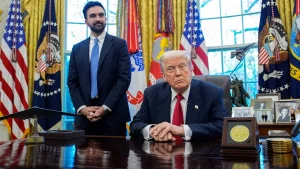
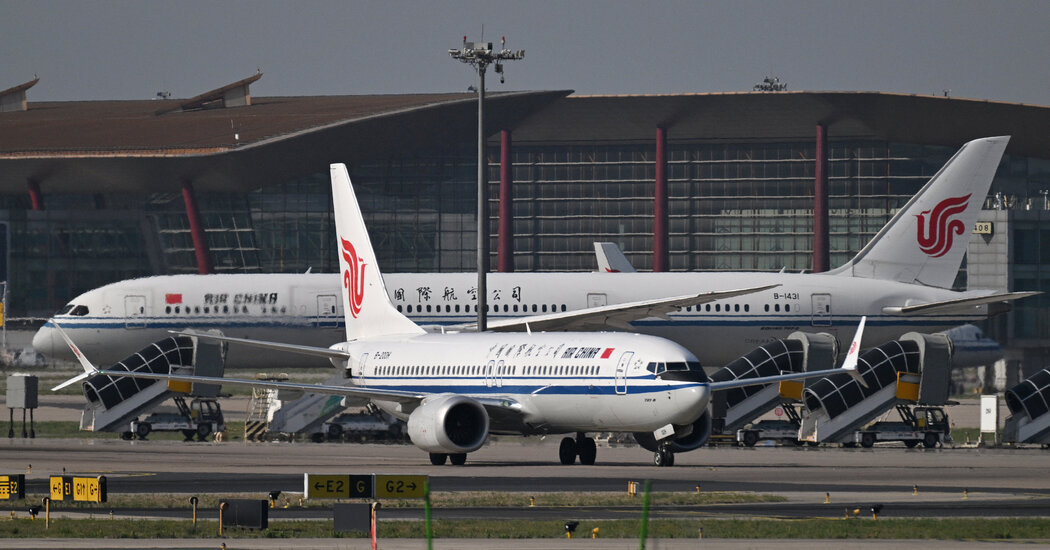
In the wake of his high-stakes visit to Beijing, President Donald Trump seized the moment aboard Air Force One, painting a picture of economic triumph that could redraw the map of global aviation. As the presidential jet soared homeward after two intense days of discussions with Chinese President Xi Jinping, Trump told reporters that China had agreed to a massive order of Boeing jets, potentially rejuvenating the fortunes of the American manufacturing giant in what’s arguably the world’s most lucrative aircraft market. According to Trump, the deal encompassed roughly 200 Boeing planes, paired with 400 to 450 General Electric jet engines—numbers that he insisted could swell even further to 750 planes if Boeing delivered quality. This announcement came as a ray of hope for an industry battered by setbacks, yet it landed with the thud of unresolved skepticism, as Chinese officials remained conspicuously tight-lipped on any concrete commitments. The scene unfolded like a diplomatic drama, where bold pronouncements met cautious diplomacy, setting the stage for renewed U.S.-China tensions or potential breakthroughs.
Trump’s exuberance was palpable as he elaborated on the talks, framing the aircraft order as a cornerstone of broader trade accords. “This is a big, beautiful deal—for Boeing, for American workers, and for the economy,” he declared, his voice carrying the enthusiasm of a negotiator who believes he’s cracked a tough code. The president highlighted how such purchases would not only boost sales but also tighten economic bonds, injecting stability into volatile U.S.-China relations. Specialists in trade policy noted that summits like this have historically been flashpoints for grand visions that often fizzle into nothing, much like mirages in the desert. Indeed, this was the closest any U.S. leader had come in nearly a decade to heralding a major aviation pact post-summit, evoking memories of Clinton-era optimism that never quite took flight. What made Trump’s claim tantalizing was its scale—a order reportedly exceeding $30 billion in value, based on industry estimates—potentially easing Boeing’s grip on a market where one out of every seven planes worldwide calls China home.
Yet, the narrative took a cooler turn when viewed through Beijing’s lens, where officials steered clear of endorsing the deal outright. Foreign Ministry spokesman Guo Jiakun, responding to queries as Trump’s plane vanished over the horizon, spoke in measured tones about mutual benefits in Sino-American trade without a whisper of specificity on planes or engines. “Both sides should jointly implement the important consensus reached by the two heads of state,” Guo said, emphasizing cooperation that extends “to the world economy.” This echoed Xi Jinping’s own remarks during a joint appearance with Trump, where he lauded “a wide range of cooperative outcomes” without delving into the aviation details. Such reticence from China’s side was telling, underscoring a pattern where bold predictions by U.S. presidents have sprouted wings only to crash-land amid geopolitical headwinds. Analysts from think tanks like the Council on Foreign Relations pointed out that these summits often breed expectations without deliveries, leaving Boeing and its workforce in a state of perpetual anticipation. The irony wasn’t lost on observers: while Trump heralded victory, the Chinese stance hinted at a more nuanced dance of diplomacy, where words are currencies traded cautiously.
The historical backdrop adds layers to this unfolding saga, revealing Boeing’s turbulent journey in China over the past decade. Once a darling of the skies, Boeing faced seismic turbulence after the 2018 and 2019 crashes involving its 737 MAX jets, which grounded global confidence and crippled deliveries to Chinese carriers. In Trump’s initial term, a 2020 trade agreement promised a surge in Chinese purchases of American goods, with massive Boeing acquisitions key to meeting those targets—eye-watering figures that could have blockaded the trade imbalance. But the onset of the COVID-19 pandemic derailed those plans, prompting Beijing to backpedal and even cancel orders for 29 undelivered MAX jets in April 2020, citing unforeseen disruptions. Discussions sputtered on, with China shunning the agreement’s mandates through 2025, a period marked by glacial progress amid fits and starts. Deliveries picked up in 2024, only to stall again under the shadow of Trump’s tariffs, as Chinese airlines—guided by government cues—sounded alarms over delays. The eventual restart of shipments signaled easing tensions, but it also exposed the fragility of these alliances, where economics and politics intertwine like exhaust trails in the sky.
This turbulence has reshaped the competitive arena, giving Airbus, Boeing’s European counterpart, a foothold that Boeing has struggled to reclaim. Cirium data underscores the disparity: China lists nearly 500 outstanding orders for Airbus jets, dwarfing Boeing’s meager under-200 tally. Airbus’s strategy paid dividends by establishing an assembly line for its A320 in Tianjin back in 2008, a concession that yielded market share while sparking controversies over technology transfers. Critics argue this move inadvertently fueled China’s drive toward self-reliance, helping bankroll the state-owned Commercial Aircraft Corporation of China (Comac) and its C919 jet—a model aviation experts describe as eerily reminiscent of the A320. Though the C919 relies heavily on foreign components like engines and avionics, it represents Beijing’s ambition to eclipse Western dominance in aviation, a sector where American firms once led unchallenged. Boeing officials, when pressed, redirected inquiries to the White House, with CEO Kelly Ortberg part of the U.S. business delegation that accompanied Trump, underscoring the high stakes and the company’s vested interest in thawing frosty relations.
Broader implications ripple through the global economy, as China pushes for industrial autonomy while still grappling with dependencies on Western technology in key areas like aerospace. Projections from Boeing itself anticipate China’s jet fleet doubling to nearly 10,000 planes in the next two decades, a bonanza that could redefine supply chains and employment landscapes worldwide. For U.S. workers in aviation and manufacturing, Trump’s outlined deal could mean renaissance—jobs safeguarded, factories humming with activity. However, experts from the Peterson Institute for International Economics caution that China’s strategic playbook, underscored by Xi’s emphasis on stability, might prioritize domestic champions over foreign giants. The unfulfilled hopes of past summits warn that optimism alone won’t pilot a plane; concrete follow-through, free from political maneuvering, will be essential. As the world watches, this episode encapsulates the delicate equilibrium of U.S.-China trade: a blend of rivalry and reciprocity, where every negotiation carves paths to prosperity or pitfalls.
Assessing Realities and Forecasting Futures in U.S.-China Aviation Pacts
As stakeholders dissect the veneer of Trump’s announcement, the question looms: Will this aviation accord truly soar, or is it destined to join the graveyard of phantom deals? Analysts from firms like Morgan Stanley estimate the proposed 200-plane order could catapult Boeing’s stock by 5-7%, signaling investor euphoria amid a market hungry for positive news. Yet, skeptics like those at the Brookings Institution highlight precedents where similar summits—such as Obama’s 2014 visit or Bush’s later overtures—yielded washed-out skies, leaving leaders with egg on their faces. The September 2024 China Development Bank’s lease of 50 Boeing 737 MAX 8s, though noteworthy, occurred independently of summit pomp, reminding that real deals often materialize away from the flashbulbs. Looking forward, the outlook hinges on verifiable commitments, as China’s pursuit of technological sovereignty clashes with its dependency on foreign expertise. For Boeing, this could mark a turning point, revitalizing its China strategy and bolstering global supply chains. But for global trade, it underscores the need for genuine dialogue, where promises translate to progress, ensuring that diplomacy doesn’t just fly high but lands safely.