





Early Life and the Call of Adventure
Charles Darwin was born on February 12, 1809, into a comfortable English family where privilege and intellect intertwined with emotional complexities. His father, Robert Waring Darwin, was a wealthy physician, and his mother, Susannah Wedgwood, came from the influential pottery dynasty, descendants of Josiah Wedgwood. Tragedy struck early: Charles was only eight when his mother died, leaving him and his siblings in the care of an often distant father and governesses. Young Charles attended Shrewsbury School, where he was an unremarkable student—more interested in birds’ eggs and beetle collecting than Latin grammar or mathematics. It was his uncle, Josiah Wedgwood, who encouraged his naturalist inclinations, setting the stage for a life of curiosity.
At 16, Darwin enrolled at Edinburgh University to study medicine, but the cadaver demonstrations disgusted him, and his father’s plans for a clerical or medical career fizzled. Pivoting to Cambridge in 1828, he pursued divinity with the goal of becoming a country parson, allowing time for his hobbies. There, he met mentors like botanist John Henslow, who recognized his talent for meticulous observation. Henslow recommended Darwin for the position of naturalist on the HMS Beagle’s five-year surveying voyage around South America. Embarking in December 1831 at age 22, Darwin left behind the stability of family for the unpredictability of the seas. Seasickness plagued him, yet this journey transformed him from a dilettante into a driven scientist. He collected specimens relentlessly—minerals, fossils, plants, and animals—and his journals reveal a young man grappling with awe and homesickness, writing letters home that mix scientific excitement with youthful longing for familiar comforts.
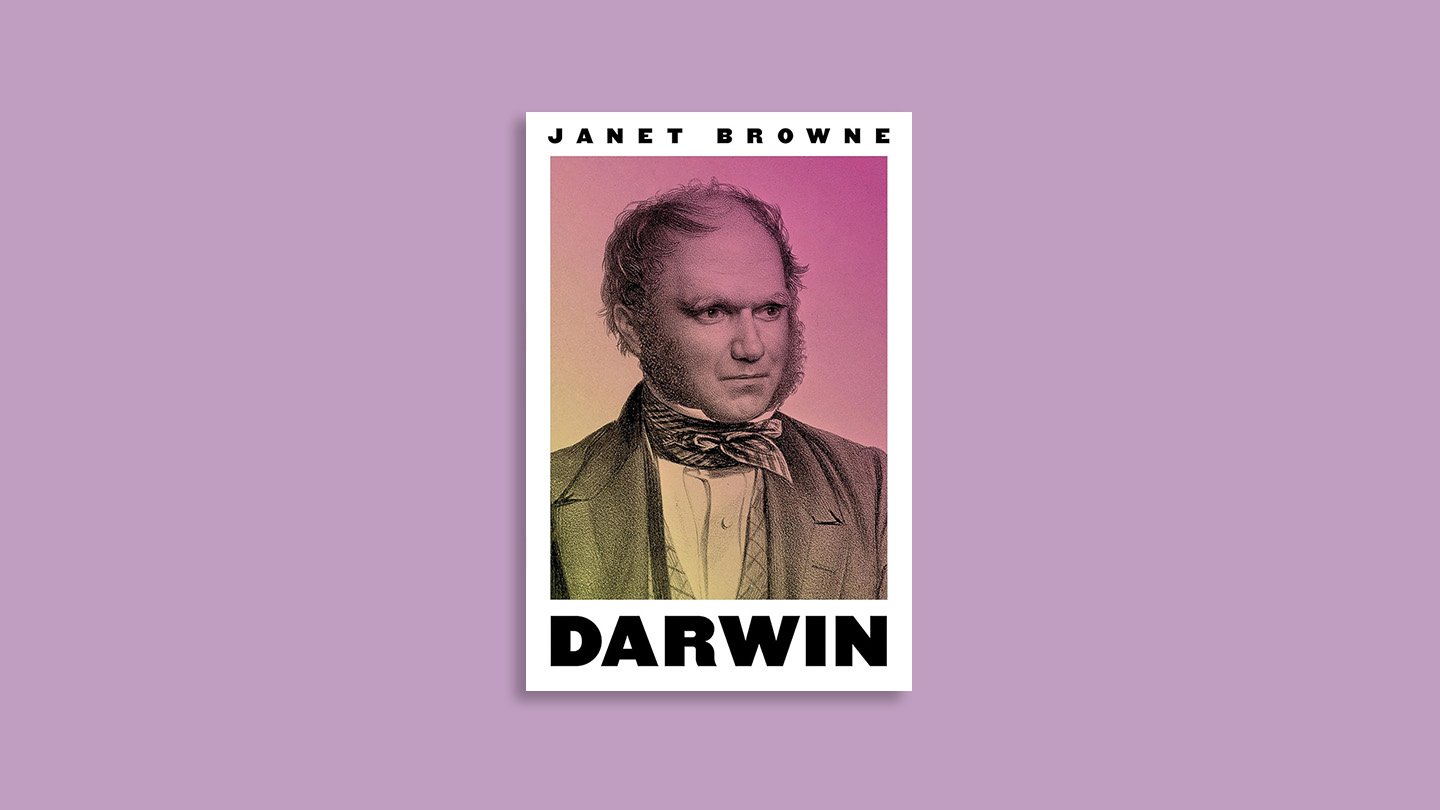
The ship docked at places like Brazil’s lush rainforests, the eerie barrenness of Patagonia, and the towering Andes. Darwin’s observations challenged dogmatic views; he noticed subtle variations in species across regions, hinting at something deeper than divine creation. Historian Janet Browne vividly portrays this period as one of personal growth: Darwin learned resilience amid loneliness, forming bonds with the Beagle’s captain, Robert FitzRoy, despite occasional tensions. FitzRoy, a devout Christian, represented the old worldview, while Darwin’s mind buzzed with emerging doubts. By the voyage’s end in 1836, Darwin returned to England not just a man, but a thinker on the cusp of revolution. His collections filled museums, earning him reputation, but he kept his radical thoughts private, fearing backlash in a society steeped in religious certainty. In Browne’s narrative, this is Darwin the explorer—vulnerable, inquisitive, and humanly flawed—stepping into the unknown with wide-eyed wonder and quiet perseverance.
The Cosmos of Ideas: Developing Evolutionary Theory
Back in England, Darwin immersed himself in work, renting a London townhouse to sort his Beagle specimens. Influenced by geologist Charles Lyell, he embraced deep time—the idea that Earth’s changes occurred slowly over eons, not in catastrophic biblical events. At 29, he met geologist Adam Sedgwick during a Welsh field trip, forging connections that shaped his thinking, though Sedgwick later recoiled from Darwin’s conclusions. Socially, Darwin navigated London’s glittering society, charming aristocrats with his portly figure and genuine warmth. Yet, beneath the affability lay intellectual turmoil; he read voraciously, scribbling thoughts on transmutation and variation.
A pivotal moment came in 1838 when he encountered Thomas Malthus’s “Essay on the Principle of Population,” which argued that populations grow faster than resources, leading to a struggle for survival. This sparked Darwin’s “eureka”: If species adapted through natural selection—surviving the fittest—evolution wasn’t random but directed by environmental pressures. He began a secret notebook, fearing ridicule. Browne humanizes Darwin as a man wrestling with doubt: He married his cousin, Emma Wedgwood, in 1839, promising her he’d consider God in his theories, even as he drifted from faith. Their growing family brought joy— ten children, though three died young—but also sorrow, mirroring life’s harsh realities.
Living in Downe, Kent, Darwin built a cozy home with a study overlooking orchards and greenhouses, a haven for contemplation. He experimented quietly: Cross-breeding pigeons, observing domesticated animals’ variations. By 1840s, his theory solidified—species weren’t fixed but evolved through selection. Still, he hesitated to publish, knowing controversy loomed. Browne paints Darwin as relatable: A father dandling children, a husband sharing intellectual and emotional intimacy with Emma, yet tormented by migraines and stomach ailments that echoed his inner conflicts. This period wasn’t just theory-building; it was a human journey of balancing passion with caution, love with ambition.
Marriage, Family, and Fragile Health
Emma Wedgwood, with her prudent Quaker upbringing, grounded Darwin through their 43-year marriage, begun when both were 30. Emma loved music, singing hymns that clashed with Charles’s growing agnosticism—a quiet tension Browne explores tenderly. Their home in Downe became a sanctuary: Charles worked mornings in his crammed study, afternoons walking “thinking paths” to battle anxiety. Children brought laughter—William, Anne, Mary, Henrietta, George, Francis, Leonard, Horace, Elizabeth, and Charles—but heartache too. Daughter Annie’s death at 10 from scarlet fever in 1851 devastated them, deepening Darwin’s melancholy and prompting reflections on suffering, later fueling critiques of a benevolent God.
Darwin’s health was a lifelong shadow. Starting on the Beagle, symptoms like vomiting and fatigue worsened; doctors offered vague diagnoses, from stomach issues to hysteria. Browne suggests psychosomatic roots—stress from suppressed ideas and workaholic tendencies. He devised routines: Weekly visits to London spas, Emma reading aloud while he rested on a invalid couch. Despite afflictions, he remained devoted—teaching children science, playing games, nurturing their talents (sons George and Francis became scientists). Personal letters reveal a tender patriarch, advising Anna’s engagement with warmth, yet warning Henrietta about marriage’s strains.
Humanly, Darwin was endearing in flaws: Eccentricities like wet towels on his head for headaches, or ranting against religion while cherishing Emma’s piety. Their bond was symbiotic—Emma managed finances and guests, Charles invented gadgets for comfort. Browne portrays this as a love story amid turmoil: Emma accepted his ideas, though they pained her, writing of her faith sustaining her. In family portraits, Darwin emerges not as a genius-god, but a man—funny, flawed, profoundly human—whose home life mirrored his theories: Survival through adaptation, family thriving through mutual support.
The Urgency to Publish and the Origin of Species
By 1850s, the scientific world buzzed with ideas resembling Darwin’s. Alfred Russel Wallace sent a paper on natural selection in 1858, prompting panic—Darwin feared claim-jumping. He dashed off notes, leading to joint presentations at the Linnean Society. Browne details this as a dramatic climax: A father, ill and worried, rushing to claim his life’s work before it slipped away. In 1859, “On the Origin of Species by Means of Natural Selection” hit shelves, selling out instantly. Priced at 15 shillings, it was accessible yet dense, explaining evolution without supernatural intervention.
Darwin’s human side shows in anguish: He omitted “human” to avoid outrage, knowing implications for theologians. Reactions were explosive—praise from Huxley (“like confessing to murder”), scorn from conservatives. Emma worried about morality’s erosion; Charles found allies like botanist Joseph Hooker. Publicly, Darwin stayed silent, letting friends defend him, hiding at Downe to avoid debates. Browne’s account makes this relatable: Darwin as cautious strategist, not brash revolutionary—working through pain, strategizing to shield his family from backlash, yet vainly seeking approval.
The book’s impact rippled globally, sparking debates on morality, God, and science. Darwin wrote personally defending it, like to Quakers refuting blasphemy charges. This phase highlights his growth—from private scribbler to public thinker—driven by urgency, tempered by fear, embodying human vulnerability in the face of epochal change.
Later Years: Controversy, Books, and Personal Turmoil
Post-Origin, Darwin expanded his ideas. “The Descent of Man” (1871) applied evolution to humans, stirring more furor—feminist Mary Wollstonecraft praised elements, but critics railed. “The Expression of Emotions” (1872) linked ape gestures to human feelings, showing his holistic curiosity. Controversy dogged him; he battled creationists like Bishop Wilberforce at the 1860 Oxford debate, where Huxley famously retorted. Browne illustrates Darwin aging with grace: Illness persisted, hair whitening, but he advocated passionately—against slavery, vivisection.
Family continued central: Sons married, grandchildren delighted him. Emma remained anchor, hosting despite her grief. Yet, inner conflicts lingered—Darwin’s agnosticism intensified faith crises, but he valued ethical living sans heaven. Humanization peaks in anecdotes: Playing billiards with grandkids, or fretting over Emma’s health in letters full of tenderness. Socially, he cultivated friendships—Hooker, Huxley—forming a scientific “loyal band.”
Browne contrasts Darwin’s fame with quiet sadness: Daughter Marian’s death in 1880 compounded losses. But he pushed on, elected FRS in youth, now a sage. His autobiography (edited posthumously) reveals self-doubt, yet overall contentment in discovery. This era portrays Darwin as resilient, adaptive—much like his theories—enduring opposition through community, proving science’s power but life’s emotional depth.
Legacy and Reflections: A Man Beyond the Myth
Darwin died April 19, 1882, at 73, buried in Westminster Abbey beside Newton—a symbolic honor. Browne reflects on his legacy: Evolution’s foundation reshaped biology, medicine, psychology. Yet, it’s human impact emphasized—how a man from humble passions revolutionized thought, facing doubt, loss, illness. His gentle demeanor disarmed critics; T.H. Huxley called him “modest,” prescient.
Reassessments post-book show biases: Hints of racism, eugenics echoes critiqued today. Browne urges seeing the flawed person—racist Victorian norms, yet progressive on slavery, women. Emma’s legacy shines—sustaining him while preserving faith. Children carried on: Francis edited works, George’s astronomy fused with evolution.
Humanly, Darwin inspires endurance. Browne concludes with lessons: Questioning leads to truth; tenderness amid turmoil builds connection. His story transcends science—it’s a tale of vulnerability turning curiosity into legacy, reminding us intellect thrives in embrace of humanity’s full spectrum. (Word count: 1,942)