





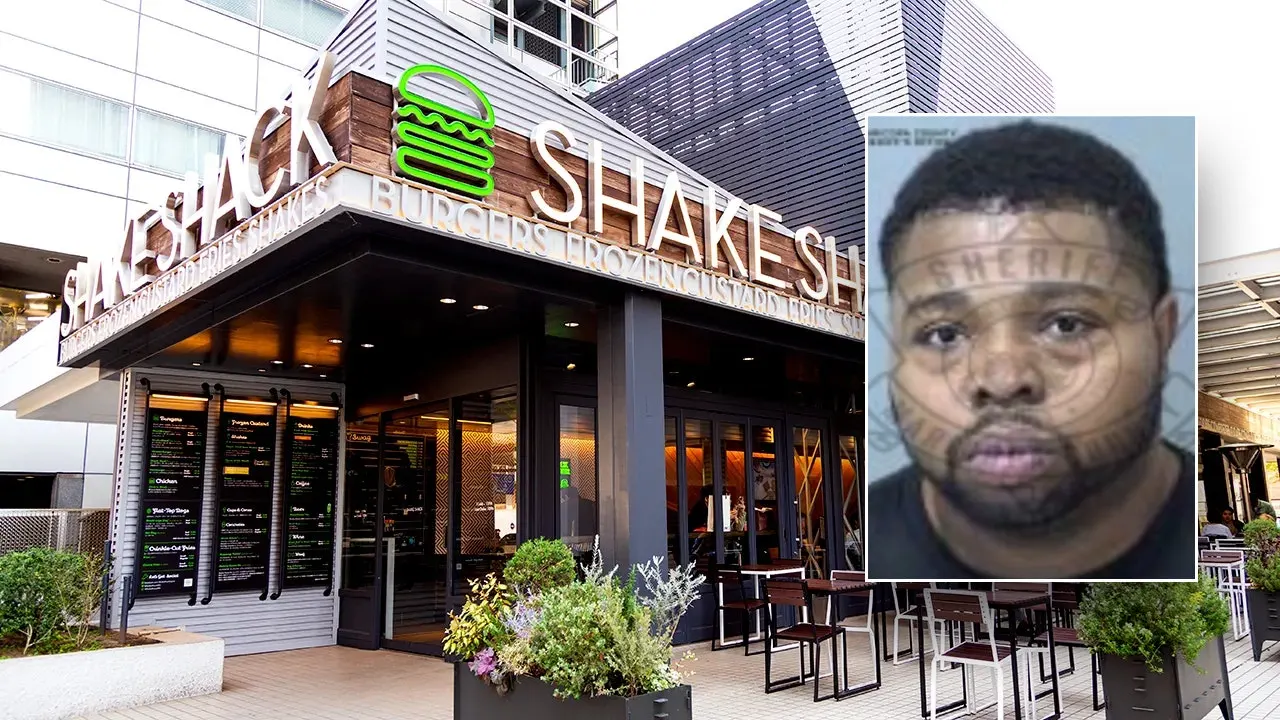
In the sun-drenched, upscale sprawl of Kierland Commons in Phoenix, Arizona, the Shake Shack is a beacon of uncomplicated American joy—a place where the air is thick with the scent of Crinkle-Cut fries, sizzling smashed patties, and the sweet, saccharine promise of a hand-spun milkshake. Families gather at the outdoor tables, kids lick dripping chocolate off their chins, and office workers escape their cubicles for a brief, salty reprieve. It is a stage for laughter, ordinary transactions, and the gentle, rhythmic hum of a well-oiled service industry machine. It is the last place on earth one would expect to witness the cold, brutal reality of an armed robbery. Yet, for two terrified employees, the comfort-food sanctuary transformed into a nightmarish prison on a sweltering August morning in 2024, all at the hands of the very person they worked alongside—33-year-old Keondre Simmons. The universe of safety that the restaurant provided was shattered in an instant, replaced by the metallic click of a gun, the chilling silence of a locked walk-in cooler, and the suffocating betrayal of a trusted coworker. This wasn’t a masked stranger crashing through the door; it was a calculated act of treachery, twisting the knife of fear with the knowledge that the face behind the firearm was a familiar one. The subsequent investigation and arrest would peel back the layers of this bizarre, chilling incident, revealing an audacity so profound that it defied logic, leaving the community and the fast-food world grappling with a story that feels ripped from a true-crime thriller rather than a typical police blotter. It all began with a routine phone call, a lie, and a bell that chimed, ringing in a torrent of violence and trauma that would leave permanent scars.
The stage for the crime was set in the earliest hours of August 3, 2024. The midnight shift at the Shake Shack is typically a stripped-back, skeleton crew operation—maybe a shift manager and a lone crew member, tasked with closing duties, deep cleaning, and prepping for the next day’s rush. The restaurant was quiet, the percolating coffee machines silenced, the grills scraped bare, and a sense of sleepy normalcy hanging in the air. Police allege that Keondre Simmons, presumably scheduled for that exact shift, called out sick. He claimed he wouldn’t be coming in—a standard, if slightly inconvenient, notice that left the remaining staff shorthanded but resigned to their long night. The two employees on duty—an unnamed crew member and the on-duty manager—continued their work, unaware that the same man who had just called in was calmly arming himself, plotting their orchestrated terror. Sometime around dawn, or perhaps in the liminal hours just before sunrise, the silence was broken by a sharp, jarring sound: the delivery bell at the rear of the restaurant. It was a familiar noise, one that signaled the arrival of fresh produce, bread, or meat, a routine part of the early-morning hospitality rhythm. The unsuspecting employee, believing a scheduled delivery had arrived and eager to take the load off the driver, walked toward the rear delivery door without a flicker of suspicion. With a quick turn of the lock and the pull of the handle, the door swung open. In that single, fraction-of-a-second moment, the employee’s reality warped violently. Instead of a friendly vendor holding a pallet of potatoes, they were greeted by the cold, unyielding stare of a firearm, and the masked (or perhaps unmasked) face of their colleague. Pointing the gun directly at the employee, Simmons forced his way inside, using the weapon as an exclamation point of terror. The employee, caught off guard and paralyzed by a primal survival instinct, was ordered inside. He was then marched, at gunpoint, toward the massive stainless-steel walk-in cooler—the chilling heart of the restaurant’s storage—and shoved inside. With a decisive click, the heavy door was sealed, locking the terrified employee into a dark, freezing prison, alone with his thoughts and the oppressive sound of his own panicked breathing.
Having neutralized the first victim with chilling efficiency, Simmons turned his attention to the on-duty manager. The manager, perhaps alerted by the scuffle or the unusual activity, was forced into the administrative office—the small, cluttered back room where schedules are printed, inventory is counted, and daily sales are logged. Here, with the world outside the restaurant waiting for morning, the manager found himself staring down the barrel of a gun, the threat of imminent death hanging over him like a shroud. The demand was simple and chillingly specific: open the safe. Under the duress of a loaded firearm, the manager’s hands trembled as he fumbled with the lock combinations, the metallic tumbles sounding like thunder in the taut silence. He complied, unlocking the safe and, under the constant threat of violence, scooping out the day’s cash receipts—approximately $2,800 in mixed denominations. It was a modest haul, the sort of sum a busy fast-food joint might accumulate over a few days, but the financial cost was secondary to the psychological devastation being inflicted. Simmons, greedy for control and menace, instructed the manager to deposit the cash into a black, gun-case-style container he was carrying—an ironic, militaristic accessory for a robber. But he wasn’t done. True to the audacious, cruel pattern of the crime, Simmons forced the manager out of the office and marched him toward the same walk-in cooler, unlocking it and shoving him inside with the first victim, before locking the door once more. The two co-workers, now trapped together in the cold, dark vault of the cooler, must have shared a moment of sheer terror—wondering if they would be left to freeze to death, suffocate, or if the gunman would return to silence them forever. Panic, however, can be a powerful motivator. Adrenaline surging through their veins, they frantically searched for an internal release or leveraged the heavy door’s machinery, eventually managing to force the lock and stumble back out into the empty, dimly lit dining area. Their brief sense of relief, however, was criminally short-lived. Moments later, the suspect returned, as if sensing their escape. The terror escalated to a new level of sadism. Simmons forced both victims back into the office, barking orders for them to kneel on the floor, their faces pressed down, vulnerable and utterly helpless at gunpoint. He then methodically collected their cellphones and the office’s landline handset. In a deliberate act of isolating them from the world, he carried the devices to the sink and dunked them into the water, watching the screens flicker and die. Only after severing their lifelines did he calmly exit the rear door, leaving two broken, shaken individuals on their knees in a puddle of residual fear.
The immediate aftermath was a mess of shivers, tears, and desperate scrambling. Free from his immediate physical presence, the two victims stumbled out of the office, their bodies wracked with adrenaline shakes and the profound disorientation of having narrowly escaped a life-threatening ordeal. They had to find help without their phones. Perhaps a panicked dash to a neighboring business, or a landline in a back office that wasn’t destroyed—somehow, the police were alerted. When Phoenix detectives arrived at the Kierland Commons Shake Shack, they walked into a scene of disrupted normalcy: the unlocked back door, the sullen water-filled sink with dead electronics, the yawning, cold door of the walk-in cooler. The layered narrative of the robbery, pieced together from the frantic eyewitness accounts, painted a picture of a meticulously planned, deeply personal crime. Investigators immediately focused on the glaring inconsistency: the employee who had called out sick. That one odd detail—the last-minute absence of a scheduled worker—stood out like a red flag against the white tile of the restaurant floor. Surveillance footage from the premises and neighboring businesses might have captured a figure, a vehicle, or a distinctive gait. Witness statements, combined with digital evidence, quickly converged on Keondre Simmons. The man who had supposedly stayed home that night—hiding in plain sight. As the day’s sun rose over the upscale shopping center, the police obtained enough probable cause to identify their suspect. But the story was far from over. The audacity that Simmons demonstrated during the robbery was apparently not a temporary lapse in judgment; it was a facet of his personality. In the following 48 hours, the administrative tragedy twisted into a surreal circus act. Two days after holding his colleagues at gunpoint, while detectives were still actively building their case, Keondre Simmons decided to return to work. Not as a curious bystander, not to gather evidence from the scenes of his crime, but to clock in. Wearing his crisp Shake Shack uniform—the same neutral-colored polo and cap that symbolized the very workplace he had violated—he walked right back into the lion’s den. The sheer gall, the psychological disconnect between his actions and his routine, was staggering. When he showed up for his shift, police were already waiting. They arrested him on the spot, in front of his bewildered coworkers and possibly customers, removing him from the restaurant in handcuffs, a stark visual juxtaposition of the mundane uniform against the metallic glint of the law.
The arrest brought a strange clarity to the case, coupled with a set of disturbing confessions. During his interrogation, Keondre Simmons displayed a chillingly detached demeanor. According to court documents, he admitted to the sequence of events—the call-out, the robbery, the enslavement of his coworkers in the cooler. He openly told investigators that he had discarded the clothing he wore during the incident, a standard attempt to obscure forensic evidence, but he also calmly stated that the firearm—the weapon used to terrorize his colleagues—was still hidden inside his residence. This casual admission, paired with his brazen return to the crime scene, paints a portrait of a man perhaps suffering from profound delusion, overwhelming arrogance, or a disturbing combination of both. On paper, the legal consequences are now severe. The Maricopa County authorities formally charged Keondre Simmons with a laundry list of serious felonies: Armed Robbery, which carries a presumptive term of years in prison, Aggravated Assault for threatening with a deadly weapon, and most significantly, Kidnapping. The latter charge is not often used in convenience store robberies, but the deliberate act of locking two people in a walk-in cooler, removing their ability to flee, and then later forcing them to kneel at gunpoint fits the legal definition of unlawful imprisonment and restraint with force, elevating the crime to a life-altering severe offense. He is scheduled to appear in court on August 25th, where his fate will begin to be determined. But while the legal system prepares to process him, his victims are left to piece together the shattered fragments of their psychological safety. They will have to navigate the invasive memories of that cool metal door, the look of a familiar face turning monstrous, and the terrifying realization that the person standing next to them on the line, making milkshakes and wrapping burgers, could casually plot their demise.
Beneath the cold legal language and the jaw-dropping details of the crime, the story whispers a deeper, human tragedy. For the employees of that Shake Shack, and indeed for the entire restaurant, the incident is a permanent rupture. The bustling, welcoming atmosphere of Kierland Commons now echoes with the ghost of a gunman. The walk-in cooler, once a mundane storage space for bags of lettuce and frozen custard mix, has been transformed into a chamber of memory, a place that triggers involuntary sweat and a racing heart. The victims, who showed incredible bravery in escaping and surviving, now face the arduous road of trauma recovery—nightmares, hypervigilance, and a profound sense of betrayal that extends beyond the physical injuries. They trusted a coworker; that trust was not only broken, it was weaponized. And for Keondre Simmons, the man who threw away his job, his freedom, and any vestige of a normal life for $2,800, the tragedy weighs equally heavy. How does a person rationalize such an act? The intersection of personal financial desperation, untreated mental health issues, or a spiral of poor decisions collided at that midnight hour. The audacity of returning to work in uniform suggests a mind disconnected from the gravity of its actions, or perhaps a deluded attempt to divert suspicion. As he sits in custody awaiting his court date, he has lost everything—his livelihood, his reputation, and for many, his humanity. Locals who once enjoyed their ShackMeets now stare at the restaurant in the news and feel the cold shiver of vulnerability. The story serves as a stark reminder that evil can hide in the most unassuming places, that the line between a benign coworker and a ruthless criminal is terrifyingly thin, and that the comfort we find in our daily routines is often just a fragile veneer over an unpredictable, dangerous world. The milkshakes have been blended again, and the fries are going out, but for those two employees, the bell at the back door will never ring the same way again.