






Chasing a Mirage or Making History? The High-Stakes Truth Behind the U.S.-Iran Peace Deal
The Diplomatic Waiting Game: Rubio Tempers Expectations on Looming U.S.-Iran Accords
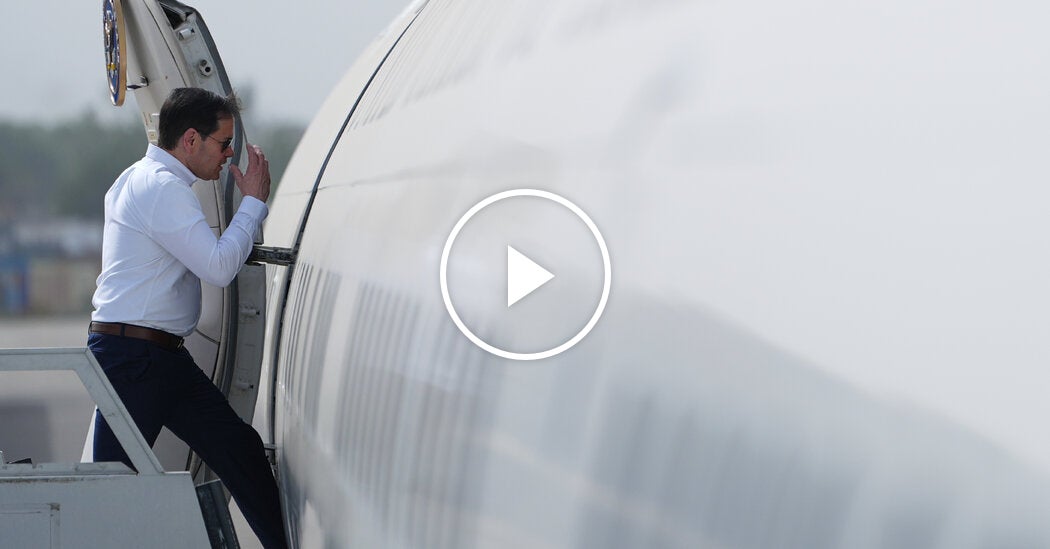
On May 25, 2026, a wave of cautious anticipation rippled through the corridors of power in Washington and foreign ministries across the globe. After a series of dramatic behind-the-scenes leaks and sudden administrative whispers suggested that a historic, paradigm-shifting agreement between the United States and the Islamic Republic of Iran was not only close but perhaps imminent, Secretary of State Marco Rubio stepped forward to inject a heavy dose of diplomatic realism into the public sphere. Speaking with the measured, highly strategic cadence of a seasoned statesman navigating one of the world’s most volatile and enduring geopolitical fault lines, Rubio clarified that the potential peace treaty is best characterized as a “work in progress,” effectively cooling the speculative frenzy that had gripped global financial markets, international oil exchanges, and Capitol Hill overnight. The Secretary of State openly acknowledged that while the Trump administration had harbored high hopes of announcing a major foreign policy breakthrough—potentially as early as the previous evening or during the current morning hours—the delicate architecture of international diplomacy often demands supreme patience, reminding eager observers not to read too much into the sudden silence or minor response delays originating from Tehran. This careful public recalibration highlights the immense friction inherent in negotiating with an adversary of several decades, where every word, clause, and comma is scrutinized by hardliners in both capitals. By confirming that the current proposal on the table remains a viable, robust blueprint, Rubio sought to preserve a precarious diplomatic window while signaling to domestic critics and international allies alike that the United States will not be rushed into a superficial agreement merely to satisfy a 24-hour news cycle. The current pause in communications is not necessarily a harbinger of failure, but rather a reflection of the systemic complexity of dismantling decades of crippling sanctions, verifying uranium enrichment rollbacks, and establishing maritime guarantees that could reshape the strategic landscape of the Middle East for a generation.
Securing the Strait of Hormuz: The Core Economic and Geopolitical Linchpin
    VITAL GLOBAL ENERGY ROUTE: THE STRAIT OF HORMUZ

 [Persian Gulf]  ====>  [ Strait of Hormuz ]  ====>  [Gulf of Oman]
                              |||
                   20% of Global Oil Transit
                   Core Demolitions Buffer
To understand the true mechanics of these tentative negotiations, one must look to the hyper-critical maritime corridors where global energy security hangs in the balance, specifically the Strait of Hormuz, which Rubio identified as the first major operational pillar of the proposed U.S.-Iran framework. This narrow, highly strategic choke point, through which approximately one-fifth of the world’s petroleum passes daily, has long been weaponized by Tehran as a geopolitical leverage tool, using naval exercises, mine-laying capabilities, and commercial tanker seizures to retaliate against Western economic pressure campaigns. According to the Secretary of State, the immediate, actionable core of the current proposal hinges on a concrete commitment from Iran to “get the straits open” and permanently keep them free for international transit, a concession that would instantly stabilize global supply chains, lower international crude oil prices, and provide a much-needed boost to the global economy. By tying maritime security to the very baseline of diplomatic progress, the Trump administration is attempting to address the immediate cash-flow and security concerns of regional allies like Saudi Arabia and the United Arab Emirates, while simultaneously easing inflationary energy pressures at home. Rubio’s emphasis on this critical transit route highlights a deeply pragmatic undercurrent in the administration’s foreign policy, recognizing that before deep-seated ideological or nuclear issues can be resolved, the physical arteries of global commerce must be secured. This represents an elegant tactical sequencing of diplomacy, wherein tangible security guarantees on international waterways serve as a vital confidence-building measure, proving that Tehran can adhere to baseline operational rules before the much more controversial and technically complex discussions regarding its domestic capabilities are put to the ultimate test.
Beyond the JCPOA: Crafting a Time-Limited Nuclear Framework
Once maritime stability is established, the proposed diplomatic blueprint transitions into its most contentious and technically demanding arena: a “very real, significant time-limited negotiation on the nuclear matters” that seeks to permanently address the systemic flaws of previous international accords. Ever since the United States walked away from the original 2015 Joint Comprehensive Plan of Action (JCPOA)—a deal heavily criticized by the political right as overly permissive and suffering from sunset clauses that merely kicked the nuclear can down the road—the question of how to permanently curb Iran’s atomic ambitions has haunted Western policymakers. By insisting on a “time-limited” negotiation framework, Secretary Rubio is signaling a sharp departure from open-ended, performative dialogues that Tehran has historically used to buy time while quietly spinning advanced centrifuges and accumulating highly enriched uranium. This aggressive, structured timeline is designed to prevent the Iranian regime from engaging in stalling tactics, forcing their leadership to make hard, foundational choices about their nuclear program under the steady, unyielding pressure of existing, bite-sized sanction structures. The administration’s demand for a “significant” negotiation indicates that any future treaty will go far beyond the scope of the old JCPOA, likely targeting not just uranium enrichment thresholds and centrifuge limits, but also Iran’s ballistic missile development programs and its extensive network of regional proxy forces. It is a high-wire act of coercive diplomacy, where the United States offers targeted sanction relief in exchange for verifiable, exceptionally intrusive inspections, gambling that the severe economic desperation of the Iranian regime will compel them to accept structural restrictions they once deemed completely incompatible with their national sovereignty.
The Trumpian Doctrine of No Deal Over a Bad Deal
                    THE TRUMPIAN DOCUMENT

 [Maximum Sanctions]  =======>  [Strategic Patience]
          ||                            ||
          /                            /
 [Iranian Economic Pressure] ===> [No Deal Over Bad Deal]
At the very heart of this diplomatic maneuver lies the distinctive, transactional foreign policy philosophy of President Donald J. Trump, a methodology that Rubio vigorously defended by asserting that “the president is not in a hurry” and is absolutely determined to avoid a “bad agreement.” This deliberate posture of strategic patience is a carefully calibrated psychological tool designed to project supreme leverage, signaling to the Supreme Leader in Tehran and the international community that the United States remains entirely comfortable maintaining the status quo of maximum economic pressure if its core demands are not met. Unlike traditional diplomatic efforts that are often compromised by self-imposed timelines and domestic political deadlines, the Trump administration’s approach treats the negotiation table as a corporate boardroom where the willingness to walk away is the ultimate source of power. Rubio’s rhetoric is designed to preemptively silence domestic hawks who fear the administration might accept a weak deal for a quick public relations victory, while also reassuring international partners that Washington is looking for structural, long-term stability rather than a superficial, short-lived band-aid. By framing the President’s stance as unhurried and uncompromising, the State Department aims to shift the burden of urgency entirely onto Iran, whose domestic economy continues to suffer from hyperinflation, currency devaluation, and widespread civil unrest driven by decades of harsh economic isolation. This calculated indifference from the White House forces Iranian negotiators to grapple with the painful reality that their primary adversary is prepared to let the pressure cook indefinitely, transforming time from an Iranian negotiating asset into a devastating liability.
A Fragmented International Front: Regional Allies and Global Superpowers Weigh In
As this complex diplomatic chess match plays out in public view, the global stage remains deeply divided over the potential outcomes of a bilateral U.S.-Iran understanding, with regional powers and global adversaries watching Rubio’s statements with a mixture of intense anxiety and calculated opportunism. In Jerusalem, Israeli leadership continues to view any potential deal with extreme skepticism, fearing that a time-limited nuclear negotiation might ultimately legitimize Iran’s threshold state status while failing to neutralize the immediate threat posed by Hezbollah, the Houthis, and other regional proxies on Israel’s borders. Conversely, European allies—who have long advocated for a diplomatic resolution to the nuclear crisis—are quietly urging Washington to maintain its momentum, hoping that even a limited interim deal could prevent a wider regional war that would inevitably disrupt European energy security and trigger massive refugee crises. Meanwhile, Eastern superpowers like China and Russia present a different set of challenges; Beijing, as a major purchaser of illicit Iranian oil, has its own strategic interest in keeping the Strait of Hormuz open, while Moscow watches the potential rapprochement with concern, knowing that a normalized Iran could eventually flood the European market with competing natural gas and crude oil. Rubio’s diplomatic team must therefore navigate an incredibly fragmented international architecture, reassuring nervous allies that American security commitments remain ironclad, while simultaneously monitoring efforts by America’s strategic competitors to exploit the temporary diplomatic vacuum for their own regional ascendancy.
The Ultimatum of Alternatives: The Shadow of Conflict and the Future of Middle East Security
                   THE DIPLOMATIC FORK IN THE ROAD

                              [ RUBIO'S ULTIMATUM ]
                                       |
                +----------------------+----------------------+
                |                                             |
                /                                            /
     [ SUCCESSFUL DIPOMACY ]                        [ ALTERNATIVE PATHS ]
 - Strait of Hormuz Unlocked                    - Precision Kinetic Strikes
 - Time-Limited Nuclear Caps                    - Severe Naval Blockades
 - Economic Integration                         - Catastrophic Regional War
Ultimately, the current diplomatic overture is framed by a stark, chilling reality that Secretary Rubio did not hesitate to invoke: the absolute necessity of giving diplomacy “every chance to succeed before we explore the alternatives.” This sobering conclusion serves as a blunt reminder that the alternative to a negotiated, structured peace is not a peaceful status quo, but a rapidly accelerating path toward a devastating kinetic conflict that could drag the United States and its allies into another protracted Middle Eastern war. These “alternatives” represent a comprehensive spectrum of escalating pressure tactics, ranging from total naval blockades and a drastic ratcheting up of cyber warfare to targeted strikes against Iran’s deeply buried nuclear facilities at Natanz and Fordow—options that military planners at the Pentagon have refined and kept on standby for years. By openly discussing these catastrophic contingencies, Rubio is not merely posturing; he is defining the severe boundaries of the current diplomatic window, reminding Iranian leadership that the administration’s willingness to talk is an act of calculated pragmatism, not weakness. As the world watches to see if Tehran will return a favorable response to the proposal currently resting on the table, the stakes could not possibly be higher, representing a historic fork in the road that will either lead to an unprecedented era of economic integration and maritime stability or a catastrophic descent into a regional conflagration that would redefine global security for the next half-century.