





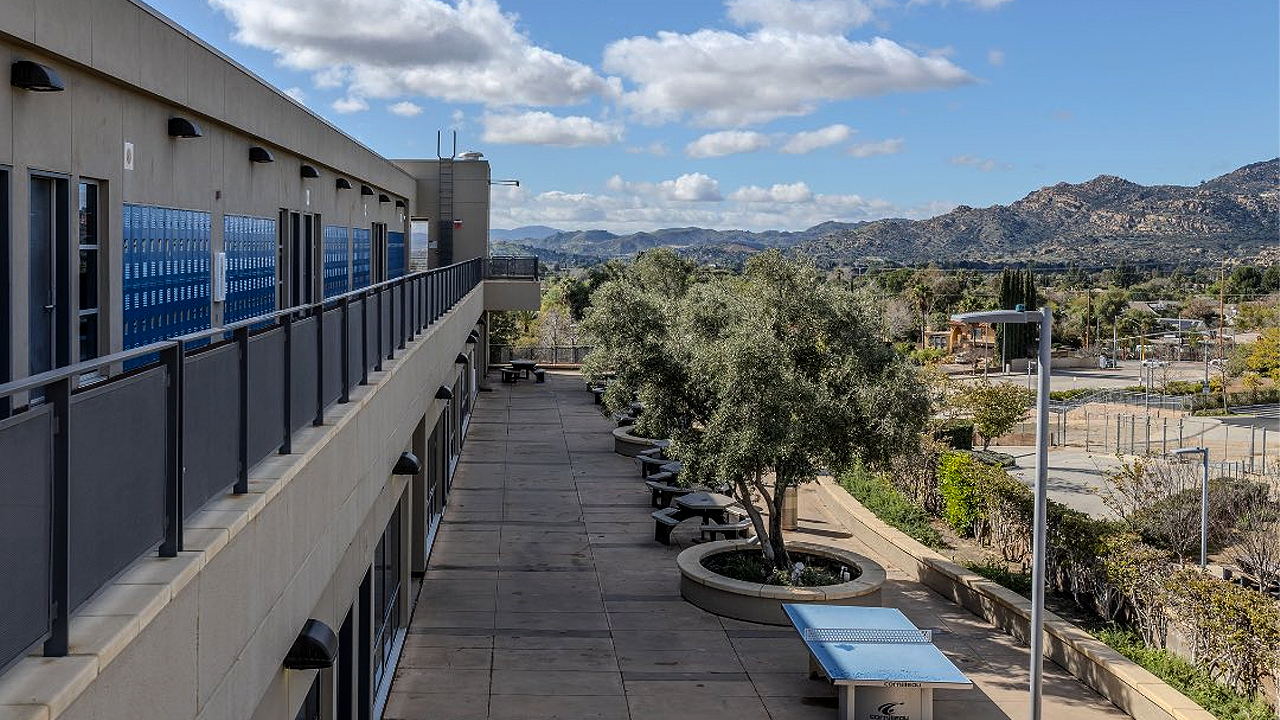
Nestled deep within the serene, sun-drenched hills and manicured landscapes of Chatsworth, Los Angeles, the prestigious Sierra Canyon School has long stood as an unrivaled academic and social sanctuary for the children of the global elite. Here, movie stars, legendary musicians, and multi-millionaire corporate executives willingly pay upward of $46,000 a year for tuition, drawn to a highly curated preparatory school environment that promises unmatched luxury, safety, and pathways to success. Over the years, the school has meticulously built its global brand on the backs of its high-profile student body, which has included the children of LeBron James, Will Smith, Jamie Foxx, and the heavily publicized Kardashian-Jenner family, cultivating an aura of absolute privilege that seemed impervious to the scandals of the outside world. Yet, beneath this beautifully polished facade of athletic triumphs and academic excellence, a deeply disturbing reality has collided head-on with the California legal system, fundamentally threatening to shatter the institution’s proudest asset—its reputation. In a landmark decision that sent seismic shockwaves through the school’s ultra-wealthy community, Los Angeles County Superior Court Judge David B. Gelfound flatly denied Sierra Canyon’s aggressive, high-stakes legal attempt to force a devastating child sexual abuse lawsuit into the secretive, closed-door realm of private arbitration. By ruling that the case must proceed publicly toward a potential jury trial, Judge Gelfound did more than just establish a critical procedural pathway; he stripped away the institutional shield of confidentiality that wealthy private schools historically employ to bury allegations of severe misconduct, dragging Sierra Canyon out of its comfortable, self-regulated shadow and forcing its governing body to answer to the public. For an administration accustomed to managing its public relations with the absolute precision of a Hollywood film studio, the prospect of a public jury trial represents a devastating, unprecedented crisis.
The stomach-turning details of the lawsuit read like a parent’s ultimate nightmare, painting an incredibly grim picture of systemic supervisory failure and predatory behavior operating completely unchecked in a setting where young children are supposed to be most secure. Filed on behalf of a young girl identified in legal filings as E.K., who was a mere seven years old when the alleged abuse first began, the complaint details a shocking, deeply predatory environment where older female students allegedly organized and operated an illicit, highly coercive “kissing club” inside the school’s restrooms. In these unmonitored spaces, younger, highly vulnerable children were reportedly pressured, intimidated, and manipulated into performing explicit sexual acts, including forced kissing, genital touching, and oral copulation. For a seven-year-old child—an age defined by innocence, absolute vulnerability, and a total reliance on adult protection—the school bathrooms became a site of terrifying, recurring victimization rather than a basic facility of a safe learning environment. The lawsuit argues that this abusive behavior escalated directly because of a catastrophic and prolonged failure of basic supervision by Sierra Canyon’s teachers, administrators, and campus staff, who allegedly left these critical communal areas completely unmonitored for extended periods, permitting an active culture of peer-on-peer sexual predation to take root and flourish in a school that prides itself on offering premium individualized attention. The contrast between the astronomical tuition fees paid by families and the complete absence of basic adult supervision in critical campus areas highlights a shocking gap between what the school actively markets to parents and what actually transpired behind closed doors.
At the absolute core of this legal battle lies the raw, human trauma of a shattered childhood and a family whose lives have been permanently upended by the institutional betrayal they experienced at the hands of Sierra Canyon’s administration. E.K.’s mother, Pantea, has emerged as the emotional voice of this struggle, publicly sharing the profound psychological scars and immense grief that have plagued her household since the horrific abuse came to light. Pantea shared the suffocating, crushing helplessness of being unable to protect her daughter from harm that she firmly believes was 100% preventable, pointing a finger directly at the school’s systemic failures. Choosing a school of this caliber is inherently an act of profound, sacred trust, a belief that the staggering financial and emotional investment guarantees not just elite academic counseling, but the absolute physical and emotional sanctuary of one’s child. To discover that this trust was met with negligent oversight and a complete lack of basic situational awareness is a betrayal of the highest order, leaving the family to navigate the complex, painful road of childhood trauma recovery. The psychological aftermath of such severe, early-childhood abuse is historically devastating, requiring expensive therapy, constant emotional rebuilding, and an exhausting daily effort to help a young girl recover her sense of personal safety, physical autonomy, and trust in the adult world, emphasizing that the real-world wreckage of this scandal cannot be neatly resolved by corporate public relations or defensive legal strategies.
Adding a layer of profound outrage to the initial allegations of negligence, the lawsuit targets Sierra Canyon with serious accusations of an deliberate institutional cover-up and a flagrant failure to adhere to California’s strict mandatory child abuse reporting laws. The legal complaint alleges that school administrators eventually discovered highly disturbing video evidence of the abusive incidents recorded on students’ personal cellphones, yet rather than immediately alerting law enforcement or communicating the danger to the victims’ families, school officials allegedly sat on the discovery, prioritizing the protection of the school’s prestigious brand and celebrity clientele over the immediate safety of its youngest students. In the state of California, educators, administrators, and counselors are legally designated as mandatory reporters, bound by strict statutory duties to report any suspected child abuse to child protective services or police authorities immediately; the allegation that Sierra Canyon delayed this critical step hints at a corporate, self-protecting reflex to minimize scandal. While the school has issued vehement denials, asserting that they responded to the concerns raised in 2024 with a thorough analysis and appropriate corrective actions, their defensive position is vastly complicated by the family’s legal representative, Sam Dordulian. Dordulian publicly revealed that this is not an isolated incident but the second lawsuit brought against Sierra Canyon involving similar, highly concerning allegations of unchecked student misconduct, suggesting a potential, systemic pattern of administrative paralysis, institutional denial, and an ongoing culture of turning a blind eye to student welfare.
The high-stakes legal drama surrounding Judge Gelfound’s denying Sierra Canyon’s motion for private proceedings highlights a critical, broader civil conflict in modern law: the battle between private corporate insulation and public democratic transparency. Elite institutions, armed with massive financial endowments and high-priced legal teams, consistently view private arbitration as their golden ticket to survival when faced with existential scandals, because it ensures that embarrassing internal memos, damning text messages, and executive testimonies remain permanently locked away from public consumption, safeguarding enrollment rates, donor relations, and celebrity partnerships. Had Sierra Canyon succeeded in forcing the case behind closed doors, the public, current parents, and future applicants would have remained entirely blind to the inner workings of the school’s response and the potential risks to other children on campus. Now that the shield of arbitration has been shattered, the lawsuit enters the critical, highly active discovery phase, during which the family’s attorneys have the subpoena power to demand internal school records, disciplinary files, administrative emails, and sworn depositions from high-level school officials. This process will force the school’s leadership to defend their decisions under the penalty of perjury, turning over raw, unfiltered communications that may reveal whether their primary distress during this crisis was the protection of a vulnerable seven-year-old child or the preservation of their highly lucrative, celebrity-marketed empire, offering a rare look behind the iron curtain of private school governance.
Ultimately, the public trial of Sierra Canyon School stands as a powerful testament to the limits of extreme wealth, celebrity influence, and institutional privilege when confronted with the unyielding human demand for justice and accountability. For decades, highly exclusive private schools have functioned almost as independent, untouchable entities, trusting that their elite status, wealthy patrons, and aggressive public relations firms would allow them to quietly manage internal crises and sweep devastating scandals under a rug of lucrative non-disclosure agreements. By bravely stepping forward into the public arena and refusing to be silenced by the school’s massive legal and financial apparatus, E.K.’s family has challenged this entrenched culture of impunity, sending a crystal-clear message that the physical and emotional safety of children can never be sacrificed to protect a corporate brand. As the legal proceedings march toward an emotional and highly publicized jury trial, this case will undoubtedly reverberate far beyond the boundaries of Southern California, forcing a long-overdue national conversation about institutional transparency, the vulnerabilities of young children in elite settings, and the absolute necessity of rigorous oversight. In pushing this high-stakes battle into the public record, this lawsuit holds the vital potential not only to secure meaningful justice and validation for a deeply traumatized young survivor, but also to establish a critical, unshakeable precedent that forces every educational institution in the country to recognize that child safety must always take absolute precedence over prestige.