




The picturesque coastal enclave of the Monterey Peninsula has long been celebrated as a sanctuary for automotive excellence, a place where the scent of ocean brine regularly mixes with the high-octane fumes of the world’s most exclusive machines. This sensory experience reaches its zenith during the annual Monterey Car Week, a legendary multi-day celebration that draws billionaire collectors, passionate gearheads, and ultra-rare vehicles from every corner of the globe. It is a time when public streets are transformed into a living, breathing museum of automotive history, where classic Ferrari models and modern hypercars roll past casual onlookers in a dazzling display of wealth and prestige. Yet, despite the pervasive atmosphere of luxury that defines this elite event, a bizarre and highly publicized cultural clash unfolded on a Friday afternoon at a location far removed from the manicured lawns of Pebble Beach: the local In-N-Out Burger in Seaside. Seeking nothing more than the comfort of a classic Double-Double and a side of animal-style fries, two brothers decided to make a quick pit stop at the popular fast-food joint. However, their simple quest for a quick lunch was immediately disrupted by a stark difference in how they were received. One brother, driving an ordinary, unassuming everyday vehicle, was waved through the security checkpoint into the parking lot without a single question. Meanwhile, the other brother, piloting a sleek, roar-inducing, multi-hundred-thousand-dollar McLaren supercar, was abruptly stopped at the entrance and denied access by a stern private security guard. This unexpected rejection immediately shattered the casual, celebratory mood of their afternoon drive. Finding oneself behind the wheel of one of the most technologically advanced and highly coveted machines on the planet, only to be turned away from a humble burger joint’s parking lot, felt like a surreal glitch in the matrix of luxury living.
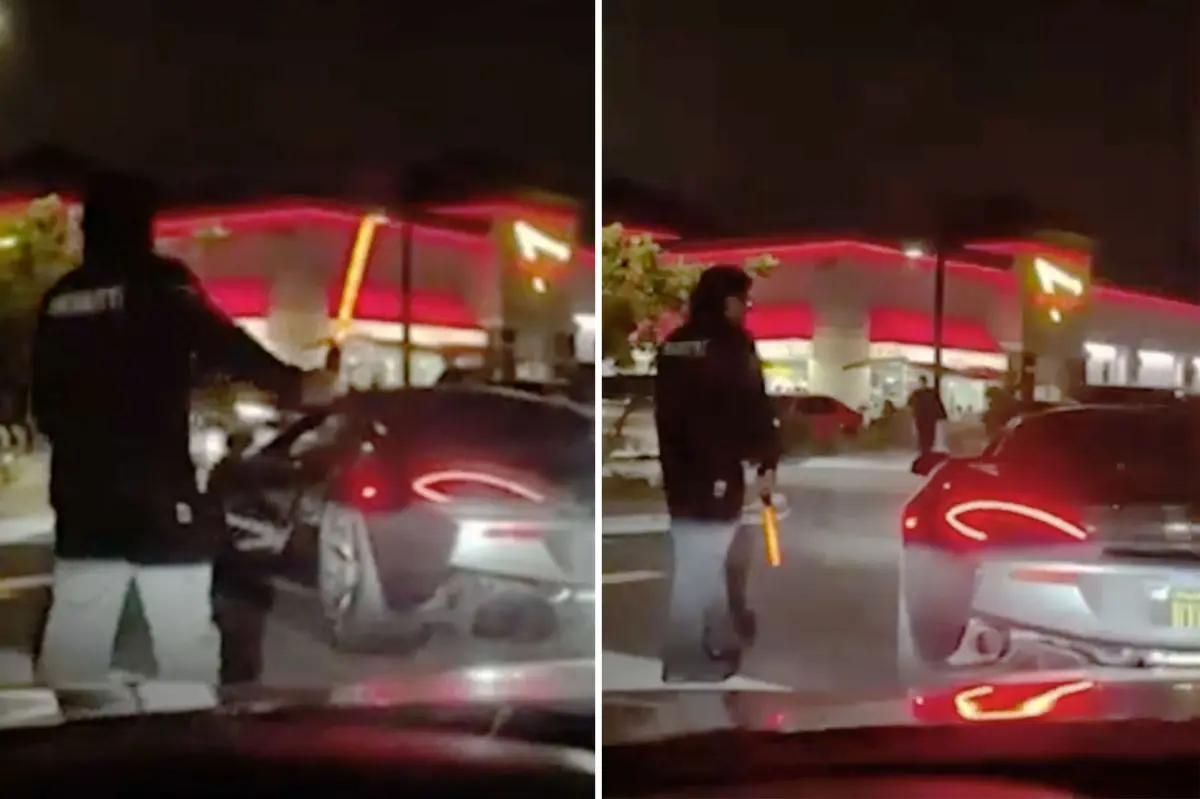
The sheer absurdity of this high-stakes customer service rejection was instantly captured on video, as the brother who had successfully gained entry began filming the unfolding drama, creating a clip that would quickly ignite fierce debates across various social media platforms. In the video, which was subsequently shared by the local news station KSBW, the disbelief in the driver’s voice is palpable as he interacts with the private security personnel stationed at the driveway. “That’s profiling. That’s racism towards cars,” the driver of the McLaren claimed from behind the wheel, venting his frustration in a hyperbolic statement that, while clearly exaggerated, betrayed a genuine sense of bewilderment and offense. Clad in a casual gray hoodie that contrasted sharply with the elite status of his carbon-fiber vehicle, the driver listened as the guard allegedly explained that he was barred from parking simply because he was driving a McLaren. The brother behind the camera echoed this frustration, expressing his utter shock that private security was already heavily patrolling a fast-food establishment before the official weekend festivities of Car Week had even kicked into high gear. Turning the camera toward the iconic yellow-and-red arrow sign, he half-jokingly, half-bitterly predicted that by the time Car Week 2026 arrived, In-N-Out would likely ban all supercars from their premises entirely. The stark contrast between the two brothers’ experiences highlights a fascinating dynamic of modern wealth: the brother in the ordinary car was welcomed with open arms, while the one in the ultimate symbol of success was treated as an unwanted hazard to public order. It was a moment where the traditional hierarchy of status was completely flipped on its head; the very vehicle meant to command respect and open exclusive doors was the exact reason its driver was being treated like an outcast at a drive-thru.
To fully comprehend why a globally recognized fast-food franchise would take the drastic step of hiring private security to turn away high-end luxury vehicles, one must look back at the chaotic legacy of the previous year’s event. During Monterey Car Week in 2025, this specific In-N-Out Burger location in Seaside had inadvertently transformed into the epicenter of an unofficial, late-night, impromptu meetup spot that quickly spiraled out of control. What began as a harmless gathering of exotic car enthusiasts looking to grab a late-night bite evolved into a massive, unauthorized, and illegal street takeover. Hundreds of rowdy spectators and high-powered vehicles swarmed the parking lot, blockading nearby streets, spinning donuts, burning rubber, and showing off their luxury rides in a display of reckless bravado that completely overwhelmed local law enforcement and terrified nearby business owners. The quiet, family-friendly burger joint was effectively hijacked by a subculture of exhibitionists, leaving the franchise owners and local residents determined to prevent a repeat performance at all costs. Thus, the heavy-handed security presence encountered by the brothers was not an act of arbitrary malice, but rather a preemptive, highly protective defensive strategy designed to safeguard the property, protect employees, and maintain public safety. For the management of In-N-Out, a McLaren was no longer just a beautiful piece of automotive art; it was a potential catalyst for a massive crowd, a beacon that would inevitably attract hundreds of amateur videographers, TikTok influencers, and thrill-seekers looking to capture the next viral video. By stopping these exotic supercars at the very edge of the property line, the security team hoped to nip any potential street takeover in the bud, even if it meant alienating peaceful, law-abiding customers who simply wanted to enjoy a quick meal.
As the brothers stood stranded outside the parking lot, their frustration only mounted when they observed the behavior of other motorists who were seemingly allowed to operate with impunity just yards away. Turning their camera toward the public streets surrounding the restaurant, they captured several large, modified pickup trucks revving their engines, blowing black exhaust smoke, and making deafening, obnoxious noises. “The actual idiots are in the trucks,” one of the brothers pointed out, highlighting what they perceived as a glaring double standard in how different types of automotive enthusiasts were being policed. While pristine, quietly idling supercars like their McLaren were barred from entering the parking lot due to their potential to attract crowds, loud and disruptive trucks were seemingly ignored as they paraded just outside the property lines. To make matters even more confusing, a handful of other sports cars could be seen parked safely inside the In-N-Out lot, suggesting that the enforcement of the ban was either highly selective, inconsistent, or targeted specifically at the most eye-catching hypercars. This perceived hypocrisy highlighted a deep-seated tension within the broader automotive community itself, where a clear divide exists between the ultra-high-end collectors who view their vehicles as rolling sculptures and the loud, rowdy street racers who use public roads as their personal stages. By grouping law-abiding supercar owners in with the reckless street takeovers of the past, the security team had inadvertently created an environment of mutual resentment, leaving the brothers feeling unjustly penalized for the bad behavior of a completely different subset of drivers. This frustration was compounded by the realization that their quiet, respectful demeanor stood in stark contrast to the loud exhibitionism of the trucks, yet they were the ones bearing the brunt of the corporate crackdown.
From the perspective of the local Seaside community and the management of In-N-Out, however, the situation looked entirely different, representing a delicate balancing act between hosting a world-class tourism event and maintaining basic civic order. Monterey Car Week brings tens of millions of dollars in economic activity to the region, but it also places an immense strain on local infrastructure, emergency services, and the daily lives of residents who must navigate gridlocked streets and disruptive noise for a week straight. For a business like In-N-Out, which relies on a rapid turnover of customers and a safe, family-friendly environment, the threat of an unauthorized car meet is a logistical and financial nightmare. A single minor accident in their parking lot involving a multi-million-dollar vehicle could lead to astronomical liability issues, while a blockaded driveway prevents ordinary families from accessing the restaurant. The low-wage security guards stationed at the entrance were tasked with an incredibly difficult job: enforcing a strict, zero-tolerance policy in the face of wealthy, highly influential individuals who are not accustomed to hearing the word “no.” These guards were the frontline defense against the potential chaos that has plagued similar car festivals worldwide, where the boundary between harmless enthusiasm and illegal public endangerment has increasingly blurred in the age of social media clout-chasing. Thus, the decision to deny entry to the McLaren was not born out of personal animosity, but out of a desperate bid to preserve the peace of a community trying to survive the onslaught of Car Week. By analyzing the situation from both sides, it becomes clear that the conflict is not just about a burger, but about the challenges of managing public space in an era of extreme wealth inequality and viral social dynamics.
Ultimately, the incident serves as a fascinating microcosm of the modern cultural landscape, where the pursuit of viral content, the prestige of luxury ownership, and the mundane realities of community safety constantly collide. The brothers’ video did not just document a minor customer service dispute; it captured a moment of genuine cultural friction that resonates far beyond the borders of the Monterey Peninsula. It raises poignant questions about public spaces, corporate responsibility, and the shifting nature of how we define status in a hyper-connected world. While a McLaren will always remain an object of desire and a symbol of ultimate success, this viral encounter proved that there are times and places where a humble, mass-produced burger joint holds all the cards, and where a uniform and a plastic orange cone can triumph over hundreds of horsepower. As car culture continues to evolve, fueled by social media platforms that reward increasingly outrageous public behavior, communities and businesses will undoubtedly continue to tighten their grip on public spaces, creating a world where even the wealthiest enthusiasts might find themselves locked out of the simplest pleasures. For the brothers, the afternoon ended without their desired burgers, but they walked away with a viral video and a stark lesson in the limits of privilege, proving that sometimes, no matter how fast your car is, you simply cannot outrun the rules. In the end, the true cost of the supercar lifestyle during Monterey Car Week may not be the astronomical price of the vehicle itself, but rather the unexpected social barriers and restrictions that come with driving a rolling target for corporate anxiety. This minor clash of values serves as a gentle reminder that true hospitality cannot always be bought, and that even the most exclusive keys cannot unlock every door in a world increasingly weary of the chaos that follows extreme wealth.