






Rewrite the following content into a 2000-word, SEO-optimized article in English. Write it in the style of a professional journalist or news reporter. The article should be fully humanized, natural, and engaging — not robotic or repetitive.
Focus on clarity, flow, and storytelling while preserving the meaning of the original. Structure the article into 6 well-developed paragraphs with smooth transitions, strong headlines, and a professional tone. Use varied vocabulary, sentence lengths, and natural phrasing to make it read like human-written journalism.
Avoid keyword stuffing, but naturally integrate important SEO keywords throughout the article. Ensure the final article feels like it was written by a skilled reporter for a reputable news outlet.
The Japanese town of Kaminokawa is serene and unassuming, known for vast fields of barley and rice, and endless blue skies. Nestled amid shrines and ancient burial grounds, it is a world away from the bustle of Tokyo, just 70 miles to the south.
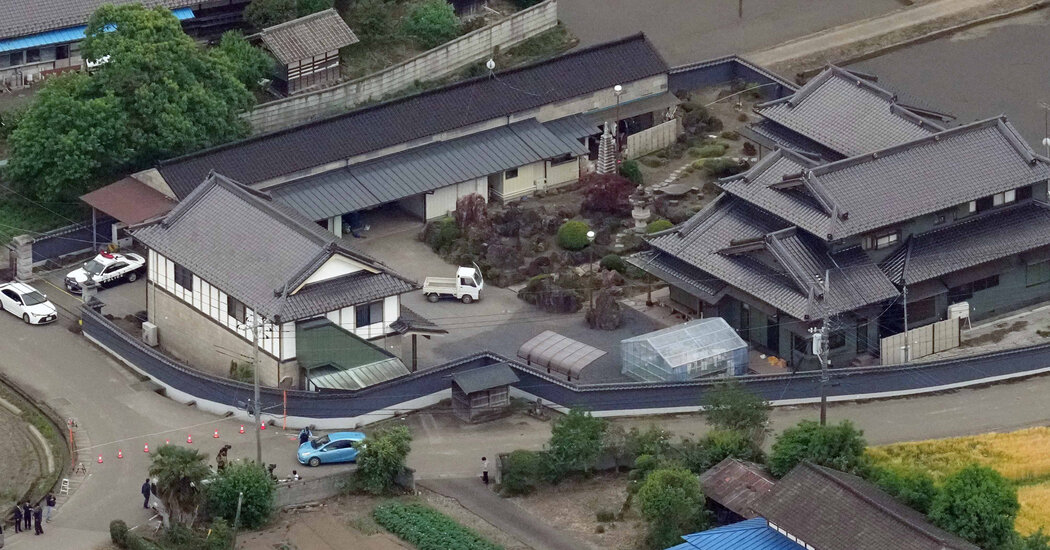
One morning last week, though, the stillness of Kaminokawa was disrupted when, the authorities say, four 16-year-old boys broke into a house and killed a 69-year-old woman who ran a family farm growing burdock root and strawberries. The police are investigating the possibility that the boys were hired to rob the compound by a transient criminal group.
The woman, Eiko Tomiyama, was left with more than 20 stab wounds to her chest. Her two sons were also injured in the attack at their home, known locally as the “Burdock Mansion.” The police have arrested a couple in their 20s, who live about 90 miles from Kaminokawa, describing them as having helped oversee the operation.
The killing has prompted debate across Japan about the morals of young people and the influence of the internet.
The case has also reignited fears about elusive criminal rings known as tokuryu, which prey on students and the unemployed, persuading them to take part in robberies, fraud schemes, assaults and even murder. The groups have spread in recent years, luring recruits on social media with promises of lucrative part-time work.
Toki Inaba, an 82-year-old farmer who has lived in Kaminokawa for more than six decades, recalled Ms. Tomiyama as a kind, hard-working neighbor.
“I never thought something like this could happen in such a peaceful rural village,” she said, tending to a plot of cabbage and lettuce across the road from the compound. “It’s terrifying.”
She said she was startled to learn that young people might have been involved.
“Sixteen-year-olds are still just children, aren’t they?” she said. “It’s unbelievable that kids like that could kill someone.”
Japan is one of the safest countries in the world, with low rates of homicide, assault and robbery. Strict anti-gang laws have in recent decades weakened powerful crime syndicates like the yakuza.
But tokuryu groups, with no fixed hierarchy or geographical territory, have sprung up in their place, using encrypted apps to organize. (The term combines the Japanese word for anonymous, tokumei, with fluid, or ryudo.) The leaders of these groups disguise criminal schemes as easy, high-paying jobs and then threaten to harm the relatives of recruits to pressure them to carry out their tasks.
The national police agency said in April that it took action against more than 12,000 people involved in tokuryu schemes last year; of those, about 38 percent were between the ages of 20 and 29, and 11 percent were under 20.
Asked about the killing in Kaminokawa, Minoru Kihara, a top cabinet official in Japan, said that eliminating tokuryu groups was a priority for Prime Minister Sanae Takaichi.
“The government is working as a whole to address this issue,” he said at a news conference in Tokyo this week. “We are aiming to eradicate it, and we will continue to strengthen our response measures.”
Ms. Tomiyama ran a thriving agricultural business with her husband in Kaminokawa. According to the authorities, the teenagers broke in to her home before 9:30 a.m. on May 14. Her husband called the police. The boys fled the scene, the authorities say, and were later arrested.
The group had driven to the compound from their hometowns, more than 80 miles away in Kanagawa Prefecture, where they are enrolled in high school, according to the authorities. It is unclear why they might have targeted Ms. Tomiyama and her family.
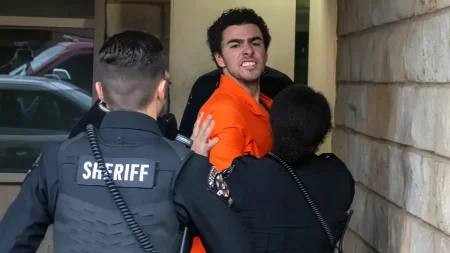
The police arrested a couple, whom they identified as Kaito Takemae, 28, and his wife, Miyuu Takemae, 25, on Sunday, accusing them of giving instructions to the teenagers; the authorities believe the couple might have been working with a larger tokuryu network. According to Japanese news reports, the couple lives in Yokohama, south of Tokyo, and met the boys for the first time on the day of the break-in.
The authorities believe that Mr. Takemae provided real-time directions to the students via apps, according to Japanese news reports. He was apprehended at Haneda Airport in Tokyo, where he was about to board an international flight. Japanese media reported the couple has denied the accusations.
In Kaminokawa, which has long had a friendly, laid-back feel, residents have been on edge. They said in interviews that they were locking their doors to run short errands and closing their shutters.
Akiko Atsuta, a nurse, said she was saddened to see the family suffer this tragedy.
“They were a family that worked really hard, covered in mud,” Ms. Atsuta, 52, said. “They really put their hands and all their strength and ability into it.”
She said it would be difficult for the community to heal.
“We’ll have to keep an eye on each other,” she said. “It’s no longer a place where you can live without any suspicion.”