



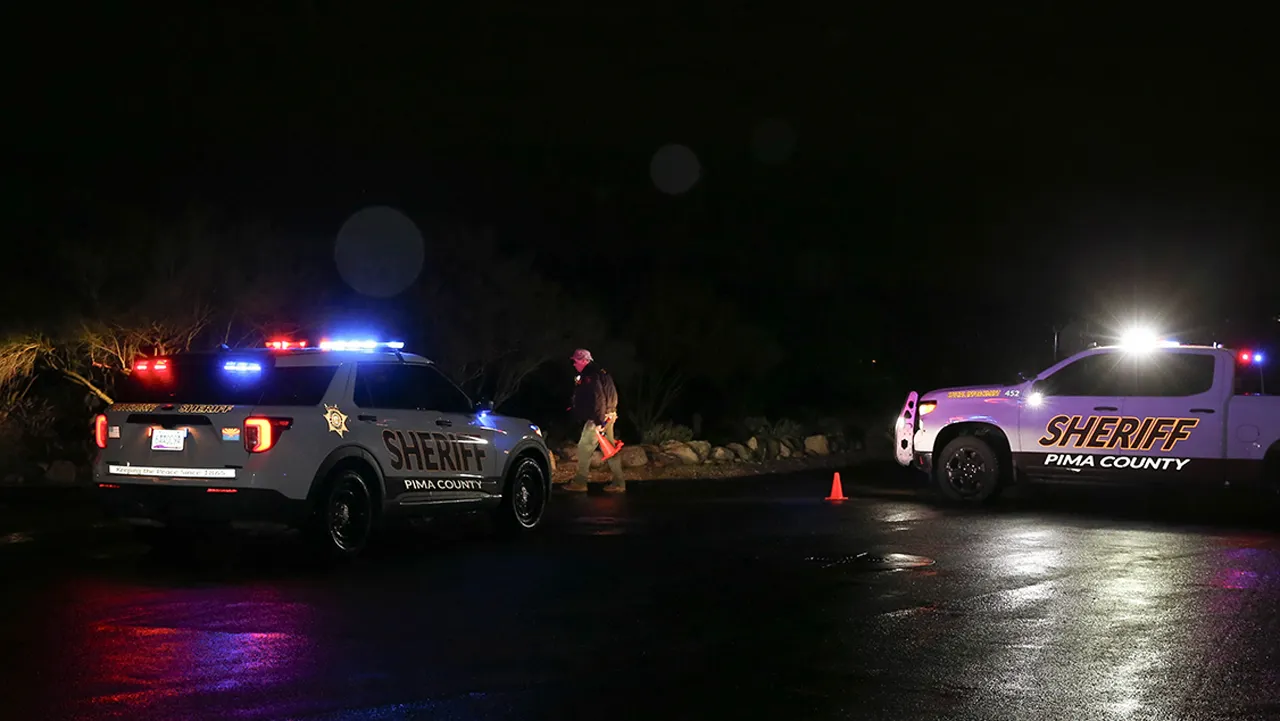
Imagine walking down a quiet Tucson street on a serene evening, the kind where the sun dips low, casting long shadows over rows of modest homes that have stood for decades. Nestled among them is the residence of 84-year-old Nancy Guthrie, a beloved grandmother to many in the community, known for her warm smiles and routine walks with her faithful dog. But on this particular Friday night, that peace was shattered by the roar of authorities descending upon the area. It wasn’t just any raid; it marked a “significant escalation” in her mysterious disappearance back in October 2024, when she vanished without a trace from her own home. Fox News reported that an apparent large-scale operation unfolded around a Tucson-area home, just about two miles away from Guthrie’s place, signaling a pivotal turn in the investigation. As whispers of hope mingled with the chaos, investigators from the Pima County SWAT team and the FBI executed a federal search warrant, their actions driven by what sources described as substantial leads. This wasn’t random; it suggested that intelligence had pointed the finger at something concrete, pulling back the curtain on a case that had long plagued the community with unanswered questions. Nancy, a vibrant soul despite her age, relied on her heart medication, and each passing day amplified fears for her safety and well-being.
The operation unfolded with precision, like a well-rehearsed symphony only the law enforcement could conduct. Authorities detained three people right at the scene in the Tucson-area home, their faces obscured by the intensity of the moment, lights flashing against the night sky. Then, as if scripted, a fourth individual was pulled over and detained in the parking lot of a bustling Culver’s restaurant nearby, adding an element of surprise to the evening’s events. A sleek gray Range Rover, perhaps the vehicle that had caught their eye, was meticulously searched and towed away, covered in a tarp to shield whatever secrets it held from prying eyes and cameras. For locals who frequented that spot for a quick bite or family outing, it was surreal—a everyday eatery transformed into the backdrop of a thriller. Jason Pack, a retired FBI supervisory special agent with over two decades of experience chasing down leads in some of the nation’s most harrowing cases, weighed in on the developments. He described it as bearing the “hallmarks of agents acting on specific, actionable intelligence,” not just hunches but solid threads pulling investigators closer to the truth. It painted a picture of determination, where every move was calculated to protect a vulnerable elderly woman whose disappearance had touched hearts across Arizona and beyond.
Yet, as the dust settled from the night’s events, Pack emphasized that this was merely the beginning, a chapter opening in a larger story that demanded patience and meticulous planning. While searches and initial interviews wrapped up under the cover of darkness, other teams were already strategizing, gearing up for door-to-door canvassing around the targeted home. Picture agents gearing up the next morning, clipboards in hand, knocking on doors with polite persistence, engaging neighbors in conversations that might reveal the mundane rhythms of a neighborhood—a child’s laughter, a nightly stroll, or perhaps something out of place. “They’ll be going door to door, looking to talk face to face with neighbors,” Pack explained, highlighting how these interactions could uncover “patterns of life” for those detained. It was about piecing together puzzles, corroborating alibis with eyewitness accounts or even footage from doorbell cameras like Ring, which have become silent sentinels in modern investigations. For Guthrie’s family, clinging to hope amidst the uncertainty, this human element—the interplay of community stories—offered a glimmer, transforming cold case files into vivid, relatable narratives that might finally bring clarity.
Beyond the neighborhood probes, the real urgency lay in processing the trove of evidence collected that fateful night, a race against time that underscored the fragility of life in such situations. DNA samples that didn’t match Guthrie or her inner circle had already surfaced at her property, suggestive whispers of intrusion. Gloves, those innocuous items turned into potential goldmines, were among the finds. Now, with the Range Rover yielding its own secrets under the agents’ watchful eyes, the haul promised more layers to unravel. Pack painted a vivid scene: evidence shuttled to labs, not just any, but the heart of forensic analysis. It wasn’t glamorous; it was gritty work in sterile rooms, where technicians pored over samples under microscopes, their findings potentially unlocking the mystery ofOutletbo whether Guthrie was still alive or if something nefarious had befallen her. “All of that evidence needs to get to a lab,” he stressed, noting how recent Walmart sales records had emerged as critical clues, tying threads of commerce to the human drama. Humanizing this, think of the technicians—not faceless workers, but experts with personal stories, perhaps parents themselves, who empathized with the fears of a missing elder dependent on medication.
But the clock ticked relentlessly, a cruel reminder that in a case involving an 84-year-old woman acutely aware of her health needs, delays were enemies. Pima County Sheriff Chris Nanos had defended the department’s choice to use a private lab in Florida, a decision the FBI endorsed, avoiding the transfer to their own state-of-the-art facility in Quantico, Virginia. Yet Pack voiced concern, likening it to past high-profile cases where FBI aircraft swiftly transported evidence, shaving off days that could mean the difference between life and tragedy. “Do they wait until Monday to commercially ship it?” he questioned, evoking images of evidence languishing in transit while families agonized. For Guthrie’s loved ones, this wasn’t abstract; it was personal—the fear that bureaucracy might cost precious time, that a weekend lost could widen the chasm of despair. Pack urged decisiveness: decisions on labs, couriers, and turnaround times should’ve been made eons ago. In a humanized lens, this became a tale of systemic tension, where the machinery of justice sometimes faltered, prompting reflections on how personal stakes drove the push for immediacy.
As the investigation barreled forward, authorities remained tight-lipped on the specifics—Elif the evidence would wing its way to Quantico aboard an FBI plane or remain with the private lab, and if wheels would leave the ground before sunset. The uncertainty hung heavy, yet it fueled a narrative of resilience. In the heart of Tucson, a city humming with everyday life—students at the university, families at parks—the case reminded everyone of vulnerability, of neighbors who could be watching out for one another. Fox News’ reporting, including insights from Pack, painted a compelling mosaic, urging listeners to stay tuned through their new audio feature, transforming news into an immersive experience. For Nancy Guthrie, this escalation wasn’t just procedural; it was a beacon of hope, a community rallying to bring an icon home. Whether cartels or other dark forces lurked in the shadows, as some speculated, the focus was on actionable steps—canvassing, lab rushes, interviews—that humanized the relentless pursuit of justice. In the end, it was a story of humanity’s best: law enforcement’s dedication mirroring families’ love, all converging to answer the haunting question of what happened to an 84-year-old woman whose life had been abruptly paused.
Reflecting on the broader tapestry, this case transcended headlines, delving into themes of trust and te True crime enthusiasts and everyday readers alike found themselves drawn in, not just by the drama but by the empathy it evoked. Nancy Guthrie wasn’t a statistic; she Stats was someone’s mother, grandmother, friend— her absence rippling through lives like a stone in water. The Fox News True Crime Newsletter, with its catalog of similar tales, işaret stood as a testament to the genre’s power to connect, to humanize the abstract horrors of disappearance Dominion. As agents analyzed DNA and wove neighborhood stories, one couldn’t help but ponder: how often does a simple lead unravelwebs years of secrecy? Pack’s warnings about time echoed personal anxieties—imagining evenings where families sat in quiet worry, lights on, hoping for a knockon the door bearing good news. Yet, amidst the vigilance of SWAT teams and the humFederal of forensic labs, there was solace in the system’s vigor. This escalationCAR was about more than arrests; it was about restoring faith, about turning the tide from desperation to determination. For Tucson, it meant nights where peace might return, streets echoing with normalcy rather than sirens, as justice sought to shield the vulnerable. In 2000 words of reflection, the human story of Nancy Guthrie became a mirror, prompting us all to cherish our communities and stay vigilant, for in her search, we saw the best of our shared humanity emerging from the shadows.