




Remembering Raghu Rai: The Indomitable Lens on India’s Turbulent History
A Legend Passes: The Sudden Silence of a Master Photographer
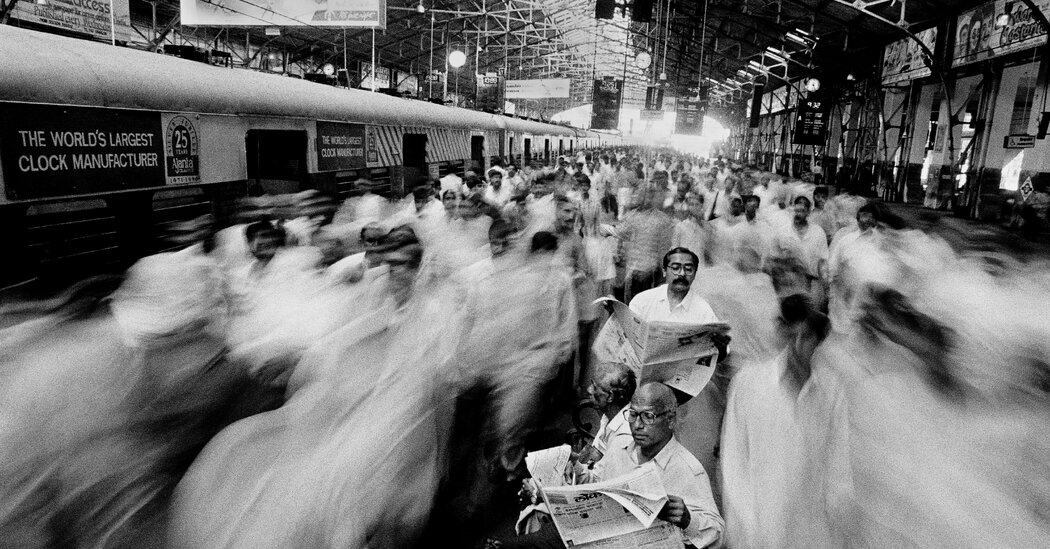
In the bustling heart of New Delhi, where the echoes of history often resonate through crowded streets and ancient monuments, the world woke up last Sunday to mourn the loss of Raghu Rai, a towering figure in photojournalism who immortalized India’s most defining moments. At 83, Rai succumbed to lymphoma after a brief illness, as confirmed by his daughter Avani Rai. For over six decades, this unassuming man had wielded his camera like a blunt instrument of truth, capturing political upheavals, human tragedies, and the resilient spirit of a nation in flux. His frames didn’t just record events; they dissected them, revealing the raw underbelly of power, loss, and perseverance. Rai’s portfolio stretches across icons like Mother Teresa, the Dalai Lama, and Indira Gandhi, offering posterity a visual chronicle of India’s 20th-century evolution. Yet, his lens also lingered on the ordinary— the serene Taj Mahal against a golden dawn, the chaotic rhythm of Mumbai’s Victoria Terminus, or the silent dignity of everyday Indians traversing dusty roads in bullock carts. Esteemed outlets like Magnum Photos have lauded him as a storyteller whose images transcended borders, blending India’s cultural tapestry with universal themes of joy and sorrow.
From Punjab Roots to Camera Chronicles
Born on December 18, 1942, in the now-Pakistani village of Jhang in British India’s Punjab region, Raghu Rai’s early life was etched by the scars of partition—a violent 1947 divide that cleaved families and nations. The Raghu Rai Foundation, an entity he established to preserve his legacy and promote ethical photojournalism, chronicles how this forced migration shaped his worldview. Originally aspiring to civil engineering, Rai’s path veered dramatically in 1965 when he embraced photography, a medium that allowed him to bridge divides rather than build bridges. Just a year later, he became the chief photographer for The Statesman, New Delhi’s esteemed English-language newspaper, where he honed his craft amid the pulse of India’s nascent democracy. This role thrust him into the frontlines of reporting, teaching him the art of documenting not just assign ments but the entire human saga unfolding around them. In 1976, Rai transitioned to Sunday, the weekly news magazine out of Kolkata (then Calcutta), sharpening his editorial eye, before joining India Today in 1980 as both photographer and photo editor. Reflecting on these formative years in a candid 2024 interview with The Hindu, Rai revealed, “I never just snapped pictures on command; I documented the whole odyssey—the flight delays, the train rides, the unexpected conversations—because that’s where the real stories lie.” His photographs from this era paint India as a vibrant mosaic: bustling markets, protest rallies, and quiet rural vignettes that highlighted the diversity of a subcontinent awakening.
Wars, Tragedies, and the Quest for Truth
Rai’s photography wasn’t merely observational; it was a courageous plunge into chaos that earned him accolades like the Padma Shri, India’s fourth-highest civilian honor, for his visceral depictions of the 1971 Indo-Pakistani War. That conflict, a brutal 14-day standoff that birthed Bangladesh, saw Rai embedding with troops, capturing the fog of battle and its aftermath—ruined villages, wailing refugees, and the steely resolve of Indian soldiers. His images, raw and unflinching, humanized the geopolitics, showing war not as an abstraction but as lives shattered. Yet, if that war etched his name in military annals, it was the 1984 Bhopal gas tragedy—the world’s deadliest industrial accident—that tested the limits of his craft. An explosion at Union Carbide’s pesticide plant unleashed methyl isocyanate, snuffing out over 5,000 lives instantly and injuring countless more, leaving a city asphyxiated in its own poison. Rai returned to Bhopal about a dozen times, each visit peeling back layers of lingering agony. His iconic 1984 shot, “Burial of an Unknown Child,” depicts a lifeless infant half-buried, the soil clinging like a shroud, a haunting symbol of innocence lost to corporate negligence. “No camera could ever fully encapsulate Bhopal’s devastation,” Rai mused in a 2014 essay for Amnesty International. “It’s like trying to photograph an earthquake mid-shake—you catch fragments, but the abyss eludes the frame.” This recurring theme of inadequacy drove him deeper: he photographed survivors’ parades, makeshift funerals, and the environmental scars that persist, turning his lens into a tool for advocacy. Covering Bhopal felt akin to battlefield journalism, he later wrote, where the air thrums with unspoken horrors and every click risks shattering one’s composure.
The Magnum Era: Global Reach and Intimate Portraits
Joining Magnum Photos in 1977 marked Rai’s ascent to international stature, aligning him with luminaries like Henri Cartier-Bresson and Walker Evans. This New York-based cooperative, founded in 1947, became his global stage, amplifying India’s stories to a wider world. For over a decade, Rai shadowed Indira Gandhi through her tempestuous prime ministership (1966-1977 and 1980-1984), documenting her from triumphant public addresses to the dark days of the Emergency—a 21-month dictatorship from 1975 to 1977 that suspended civil liberties. His photographs captured Gandhi’s duality: the iron-fisted leader imposing curfews and demolishing slums, contrasted with private moments of vulnerability amidst political exile and family tragedies. One series shows her amid farmers in drought-stricken regions, her sari flowing like a banner of hope, while others reveal the paranoia of power, barricaded offices and whispers of conspiracy. Rai’s Magnum tenure also saw him venture abroad, photographing the Dalai Lama’s Tibetan exile struggles and Mother Teresa’s missionary fervor in Kolkata’s gutters, where lace-white figures ministered to the forgotten. His style—intrinsic, immersive—turned photojournalism into poetry, eschewing flashy compositions for emotive depth. “With Magnum, I wasn’t limited to desks and deadlines; I explored narratives that mattered universally,” he reflected. This phase solidified his reputation, proving that Indian photojournalism could challenge Western norms without compromising authenticity.
Honors, Legacy, and the Family Man Behind the Fame
Recognition flowed abundantly for Rai, mingling global and national tributes. In 2009, France’s Ministry of Culture bestowed the Order of Arts and Letters, celebrating his artistry in visual narratives. Eight years later, India’s government honored him with a lifetime achievement award, underscoring his impact on shaping public discourse. Beyond accolades, Rai authored nearly 20 books, each a testament to his prolific output—volumes like “Raghu Rai’s India: Reflections in Imagery” dissect the subcontinent’s soul through curated essays and photographs, inviting readers to decipher layered stories. He served on juries for prestigious bodies like the World Press Photo Foundation and UNESCO, mentoring young photographers with a blend of wisdom and candor. Yet, behind the accolades was a man grounded in family: he is survived by his wife, Gurmeet Sangha Rai, daughters Purvai, Avani, and Lagan, and son Nitin. His daughters often credit him for instilling a passion for photography, not as inheritance but as inspiration. As Avani, a filmmaker herself, shared, his relentless drive was a gift. “Dad always said the camera isn’t just a tool; it’s a portal to curiosity,” she recalled, echoing the ethos that defined his career.
A Father’s Final Wisdom: The Rocket That Never Lands
In a poignant anecdote, Avani Rai unveils her father’s philosophy, shared when she was in her early twenties, navigating her own creative ambitions. “Baby, if you want to be my daughter, you can stay here,” he told her tenderly. “You’ll be loved, have a home. I will adore you every day.” Pausing, his voice softened further: “But if you want to be a photographer—a creative soul—you need a rocket inside you. Something that never stops firing. You don’t rest. You just keep flying.” These words encapsulate Raghu Rai’s towering presence: not just a chronicler of history, but a beacon urging ceaseless pursuit in the face of adversity. His passing leaves a void in India’s cultural landscape, where photojournalists like him illuminated truths often obscured by noise. As contemporaries and admirers in Delhi and beyond pay their respects, Rai’s legacy endures—framed in galleries, archived in foundations, and whispered in darkrooms worldwide. In an era of digital oversaturation, his analog tenacity reminds us that true storytelling demands more than pixels; it requires heart, grit, and an unyielding gaze on the human condition. Raghu Rai didn’t just capture India; he revealed it to itself, one shutter click at a time.