




Putin’s Commemoration Conceals Growing Vulnerabilities Amid Ukraine Conflict
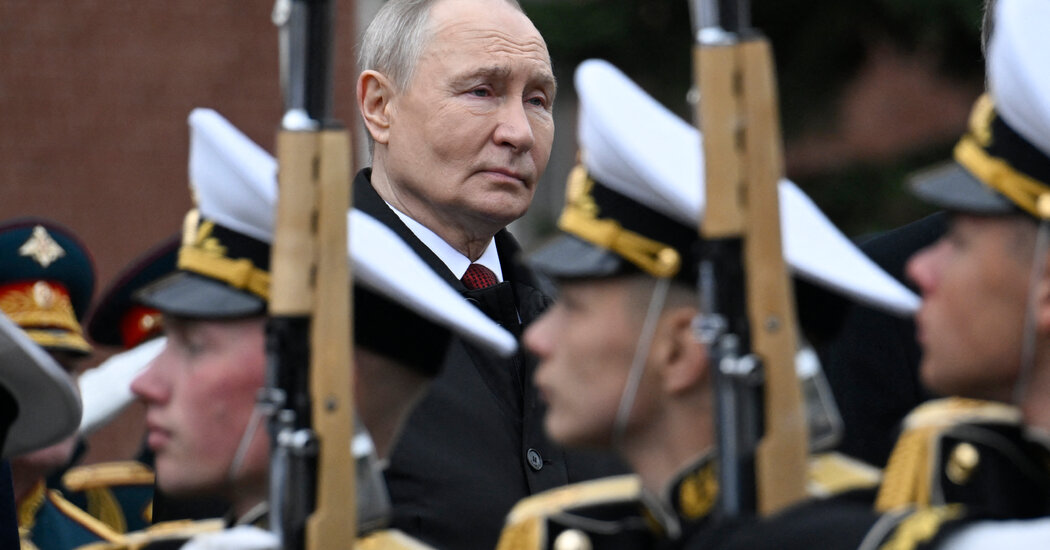
As the echoes of Red Square’s usual grandeur faded into an unusually subdued Moscow commemoration of the Soviet Union’s victory over Nazi Germany in World War II, one stark reality emerged: Russian President Vladimir V. Putin is navigating turbulent waters. The annual parade, a cornerstone of national pride designed to evoke the heroism of past battles, felt restrained this time—stripped of its traditional military hardware display not just for heightened security concerns, but as a deliberate choice to steer focus toward the ongoing conflict with Ukraine. Onlookers and analysts alike sensed an undercurrent of tension, with Putin’s remarks during the event hinting at a leader acutely aware of mounting pressures from both the battlefield and within his own borders. This wasn’t merely a tribute to history; it was a platform for Putin to recalibrate public perception as Russia’s aggressive campaign against its western neighbor drags into its fifth year, increasingly bogged down in a grueling stalemate.
The subdued atmosphere underscored a president eager to project an air of inevitability in Russia’s path, yet the underpinnings of unease were palpable. For months, Ukraine’s forces have struck deeper into Russian territory, pushing Putin’s military to its limits with devastating drone attacks and newly developed missiles that have targeted strategic locations far from the front lines. Meanwhile, at home, Russians are grappling with economic hardships—rising inflation, stagnant wages, and the pervasive frustration of everyday struggles amplified by restrictions on the internet that have throttled access to global information and social platforms. This confluence of external threats and internal discontent has forced Putin to confront a reality he rarely acknowledges publicly: the war, which he has framed as a necessary defense of Russian sovereignty, is exacting a heavy toll. His Saturday post-parade press conference was laden with a mix of defiance and pragmatism, where he declared, “I believe the matter is coming to a close,” a phrase that ricocheted across international headlines, sparking speculation about potential shifts in strategy.
Yet, beneath that seemingly conciliatory veneer lurked a resolute stance. Putin wasted no time pivoting to criticisms of Western elites, accusing them of igniting the conflict through provocative policies and underestimating Russia’s resilience. He railed against what he perceives as imperialistic meddling, insisting that Moscow’s demands—often centered on Ukrainian territory, security guarantees, and NATO’s eastward expansion—remain non-negotiable. Analysts interpret this as a strategic thread: acknowledging the war’s unsustainable drift while doubling down on victory. Stefan Meister, a seasoned Russia expert at the German Council on Foreign Relations, put it bluntly in an interview: “He wants to send a message: ‘I understand this war needs to end soon, but it needs to end on my conditions.’” This delicate balancing act reveals Putin’s calculus—preserving his image as a steadfast leader amid whispers of fatigue, while subtly signaling to domestic audiences that retreat is not an option.
Delving deeper, the internal pressures are manifesting in ways that echo broader societal shifts. Peace talks, once a beacon of hope for many, have vanished from public discourse as the U.S. administration under President Trump pivots focus to Middle Eastern flashpoints. Opposition voices, though marginalized, are gaining traction. Boris B. Nadezhdin, an antiwar politician disqualified from the 2024 presidential race for challenging Putin’s narrative, offers a window into this discontent. Preparing for fall parliamentary elections, Nadezhdin has engaged in grassroots conversations that paint a picture of simmering unrest. “Somehow, things have taken a sharp turn for the worse since the beginning of this year,” he shared in a candid phone discussion, drawing parallels to the chaotic 1990s. His insights highlight how the prolonged conflict has eroded the optimism that marked Putin’s early tenure, replacing it with a cocktail of economic despair and digital isolation.
Nadezhdin’s observations categorize the dissatisfaction into distinct yet interconnected fronts. Elderly Russians, feeling the pinch of diminished pensions and soaring utility costs, voice frustration over government priorities that sideline their welfare. Younger generations, meanwhile, decry the creeping censorship and online restrictions that disrupt education, work, and social connections—measures ostensibly tied to wartime security but seen by many as stifling freedoms. Perhaps most telling is the widespread weariness across age groups with a war that shows no endgame, draining national resources and lives in what feels like an endless quagmire. “For the time being, the prevailing view is ‘the tsar is good, the boyars are bad,’” Nadezhdin noted, invoking a age-old Russian proverb that absolves the leader while castigating the bureaucracy. This diffused blame shifts focus to local officials, yet it doesn’t shield Putin from the broader narrative of mismanagement that Nadezhdin says is awakening a populace long accustomed to authoritarian stability.
As Putin grapples with these domestic rumblings, recent global events have amplified his sense of peril. The targeted assassinations of Iranian leaders by the U.S. and Israel have reportedly heightened his paranoia, prompting even stricter controls on the information flow within Russia. This hyper-vigilance comes as Ukraine ramps up its capabilities, introducing domestically produced weapons that penetrate defenses Putin once deemed impregnable. Such developments paint Putin as uncommonly exposed, a figure adapting to an unpredictable landscape where electoral threats may be distant but public sentiment could erode his grip. While approval ratings linger above their pre-2022 invasion lows—per data from the Levada Center, an independent pollster—they mask underlying fragilities in a system where true dissent is suppressed. Meister cautions that pressure from these fronts isn’t dismantling the regime but forcing reactions: “He has to adapt somehow.” In this light, the World War II commemoration wasn’t just remembrance—it was a subtle pivot, hinting at a leader wary of legacy’s judgment as Russia’s saga with Ukraine unfolds.