



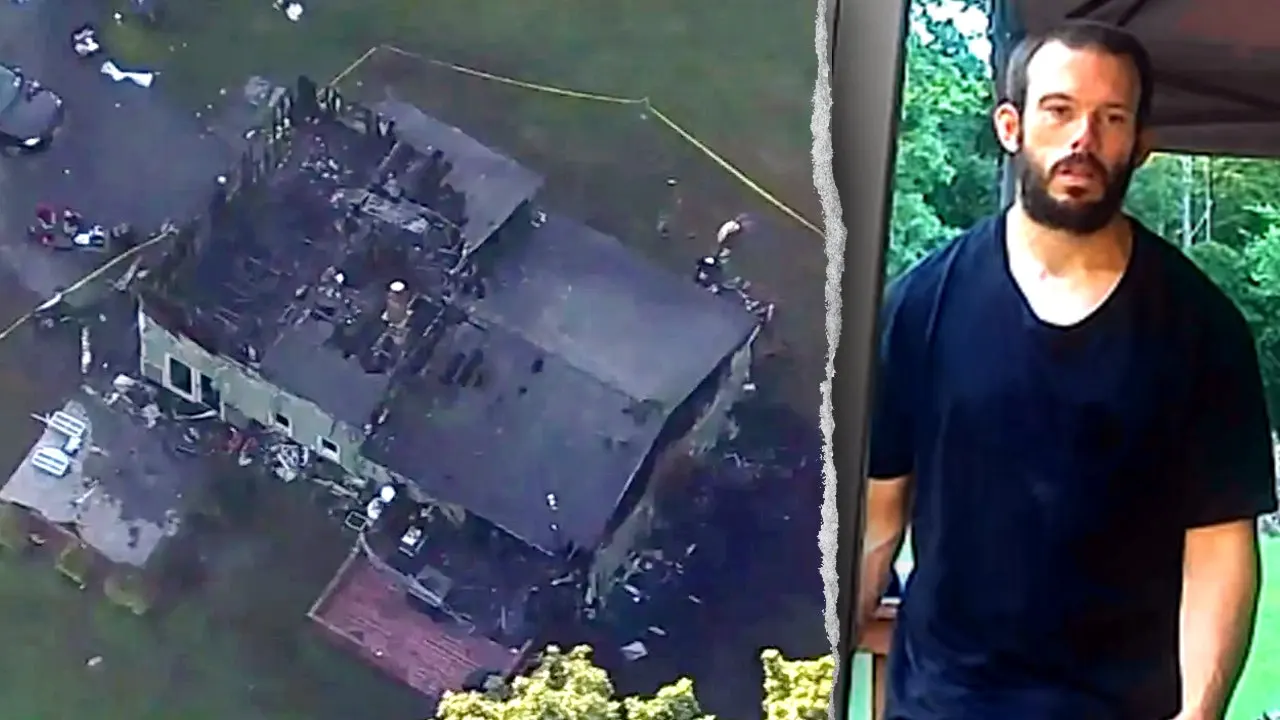
The quiet, tree-lined expanses of Orange County, New York, are typically synonymous with peaceful suburban life and close-knit community ties, but that tranquility was shattered on a recent Thursday evening. Around 7:30 p.m., the peaceful atmosphere of Greenville Turnpike was ruptured by the piercing wails of sirens and the ominous glow of amber flames rising into the night sky. Firefighters and state troopers rushed to the scene of a residential fire, battling both the intense heat and the choking smoke to bring the inferno under control. However, the physical destruction of the house was only the prelude to a far deeper, more heartbreaking tragedy. Once the flames were finally suppressed, emergency responders made a grim and devastating discovery inside the charred ruins of the home: the lifeless body of 70-year-old Robert Ryan. What initially appeared to be a tragic household accident quickly transformed into something far more sinister, as investigators combed through the wreckage and realized that this was not a random mishap, but a scene of unimaginable violence. The loss of a senior citizen in such a horrific manner immediately cast a dark shadow over the local community, leaving neighbors grappling with a profound sense of grief, vulnerability, and disbelief as they watched their quiet street turn into an active crime scene.
As the smoke cleared, forensic investigators and New York State Police worked tirelessly through the night, quickly determining that the fire had been intentionally set to cover up a heinous act. The investigation rapidly shifted from an accidental fire inquiry into a full-scale homicide investigation, with the spotlight of suspicion falling upon the victim’s own family. Law enforcement officials identified the prime suspect as the victim’s 32-year-old son, Thomas David Ryan. The realization that a son was suspected of not only murdering his elderly father but also desecrating their family home by setting it ablaze sent shockwaves through the region. Parricide is a crime that defies the natural order of human relationships, striking at the very heart of the sacred bond between parent and child, and the psychological weight of this accusation hung heavily over the community. Thomas Ryan did not reside with his father and possessed no other current ties to the Greenville area, painting a picture of a distant, perhaps estranged, figure returning to his father’s doorstep only to leave a trail of absolute devastation in his wake.
In the immediate aftermath of the killing, Thomas Ryan vanished into the night, initiating a tense, high-stakes manhunt that stretched across the state of New York. Investigators discovered that the suspect had fled the scene of the crime in his deceased father’s vehicle, a gray 2016 Toyota Prius, transforming a vehicle associated with an elderly man’s quiet life into an instrument of escape. Recognizing the extreme danger posed by a desperate suspect with nothing left to lose, New York State Police issued urgent public warnings, repeatedly characterizing Thomas Ryan as “armed and dangerous.” This chilling designation put local residents on high alert, transforming ordinary neighborhoods into areas of heightened anxiety where locked doors and watchful eyes became the norm. The public was strongly cautioned not to approach the suspect under any circumstances, but to immediately contact 911 if they spotted him or the distinctive Prius. This sense of looming threat created a palpable tension throughout Orange County and surrounding municipalities, as families huddled in their homes, anxiously checking local news updates and wondering if a suspected killer was hiding in their midst.
To locate the fugitive, law enforcement agencies launched a massive, coordinated effort that relied heavily on modern technology, traditional police work, and community cooperation. Detectives meticulously combed through hours of surveillance video retrieved from local businesses and residential security cameras, trying to piece together a digital breadcrumb trail of Thomas’s movements in the critical hours following the homicide. Residents in Greenville and adjacent towns were urged to review their personal security footage from Thursday evening, searching for any glimpse of the gray Prius or the suspect himself. The search was further complicated by Thomas’s nomadic lifestyle; investigators revealed that he had a history of staying in various shelters across the state and was known to frequent the Plattsburgh area, located more than 200 miles north of Greenville near the Canadian border. Because of his known affinity for train travel, investigators had to coordinate closely with railway operators and transit police, turning the search into a complex chess match played across hundreds of miles of tracks, highways, and urban centers.
The sheer scale of the manhunt required an extraordinary level of interagency collaboration, drawing in the specialized resources of federal, state, and local law enforcement. The Federal Bureau of Investigation (FBI) joined forces with the New York State Police, the New York City Police Department (NYPD), the Orange County Sheriff’s Office, and local police departments in Middletown and Port Jervis. Multiple specialized State Police investigative units worked alongside county agencies, pooling their intelligence, surveillance capabilities, and tactical personnel to close the net around the fugitive. This relentless, multi-day pursuit finally culminated on a Sunday in the scenic, rural area of Gilboa, located in Schoharie County. It was there that Thomas David Ryan was safely taken into custody, bringing a sudden end to the exhausting manhunt that had gripped the state. While authorities did not immediately release the specific details of how they tracked him down or the exact circumstances of his arrest, the news of his capture brought an immense wave of relief to the law enforcement officers who had worked sleeplessly, as well as the communities that had lived in fear for days.
While the physical capture of Thomas Ryan has neutralized the immediate threat to the public, it marks only the beginning of a long and painful journey toward justice and healing. The ashes of the Greenville home have cooled, but the emotional scars left on the community and the surviving members of the Ryan family remain raw and deeply painful. Law enforcement officials have kept many details close to their chests, withholding information regarding a potential motive, the exact cause of Robert Ryan’s death, and the specific charges that Thomas will face as he enters the judicial system. This silence leaves a void of unanswered questions, as a grieving community struggles to comprehend how a domestic relationship could deteriorate into such extreme violence. Ultimately, this tragedy serves as a somber reminder of the fragile nature of safety and the hidden depths of domestic discord, leaving a neighborhood to mourn a life lost too soon while hoping that the impending legal process will finally bring some semblance of peace and closure to a shattered family.