





Paris Under the Sun: How a Scorching Heatwave Forced a Historic Public Alcohol Ban and Sparked a Debate on Health, Climate, and Liberty
The Unprecedented Ban: Paris Limits Public Drinking in the Face of Extreme Heat
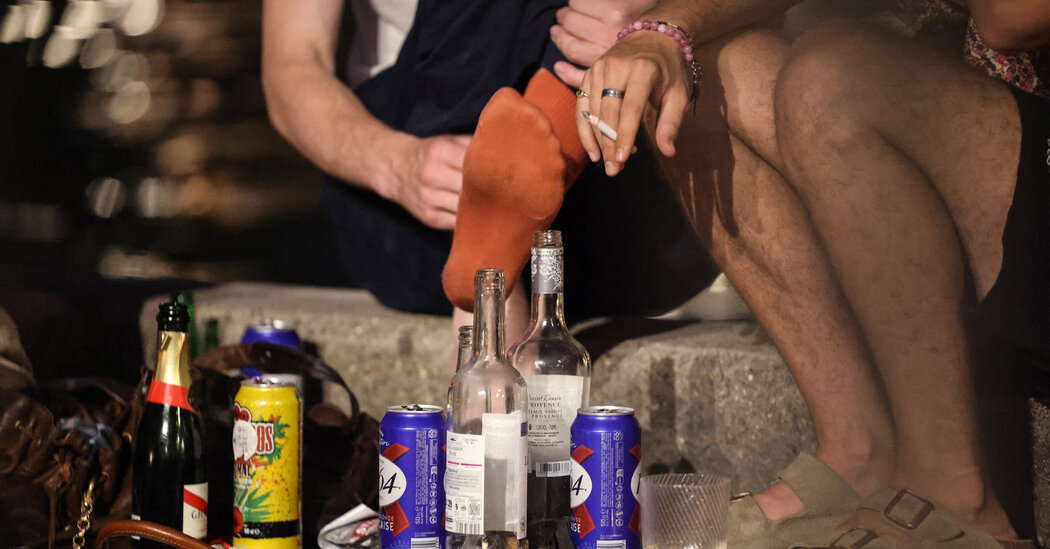
As a relentless summer heatwave gripped Western Europe, transforming the historic avenues of the French capital into shimmering corridors of concrete heat, Parisian authorities took the extraordinary step of temporarily banning the public consumption of alcohol in an urgent bid to alleviate the mounting pressure on the city’s fragile healthcare network. Paris Police Chief Patrice Faure issued a decisive decree prohibiting the drinking of alcoholic beverages in all streets, public squares, and public parks from midday on Friday, complemented by a strict ban on the retail sale of alcohol after 6:00 p.m. This regulatory intervention came on the heels of a brief, largely ignored attempt to enforce similar restrictions during a major music festival the previous weekend, prompting the French Interior Ministry to decline specifying exactly how long these exceptional measures would remain in force. In addition to regulating alcohol consumption, Chief Faure suspended all outdoor sporting competitions and successfully petitioned organizers to postpone major public gatherings, including a prominent Pride march and an outdoor music festival, while the Interior Ministry encouraged regional prefects across the country to enact identical restrictions in their own jurisdictions. This sweeping administrative crackdown marks a watershed moment in the intersection of climate adaptation and municipal governance, illustrating how the accelerating European climate crisis is forcing state actors to curtail cherished cultural customs—specifically, the deeply embedded tradition of open-air socializing, or apéro, along the banks of the Seine and within the city’s manicured parks—to protect the population from the physiologically destabilizing effects of extreme, record-breaking temperatures.
A Logistical Necessity: Shielding an Overburdened Emergency Medical System
THE ACCELERATION OF RISK[ Alcohol Consumption ] + [ Direct Intense Sunlight ] = [ Accelerated Dehydration ]
│ │
▼ ▼
[ Vasodilation & Imbalance ] [ Rapid Core Temp Spike ]
│ │
└─────────────────────────┬────────────────────────────────┘
▼
[ Acute Cardiovascular Strain ]
│
▼
[ Critical Emergency Call Volume ]
│
▼
[ Severe Hospital Grid Congestion ]
The medical and logistical rationale underpinning this dramatic regulatory intervention rests on the volatile physiological synergy between heavy dehydration, direct exposure to solar radiation, and alcohol-induced heat stress. Addressing journalists on the eve of the ban’s implementation, Chief Faure emphasized that public drinking under a blistering sun produces devastating somatic consequences that rapidly drain municipal resources, systematically tying up firefighters and emergency medical services (EMS) at the exact moments when other critically ill citizens might require lifesaving intervention. His primary administrative objective, he explained, was to prevent the complete paralysis of the metropolitan emergency response and hospital care systems, warning that any further congestion in emergency rooms would yield disastrous consequences, potentially translating into preventable deaths due to an inability to provide timely care to critically injured or sick patients. Rather than resorting to punitive criminalization, municipal authorities opted for a pragmatic enforcement strategy, indicating that while officers would not detain individuals caught violating the public ban, violators would face immediate, substantial financial penalties. This policy highlights a growing anxiety among European urban planners: as ambient temperatures climb to unprecedented heights, the margin of safety for public utility and emergency response infrastructure shrinks, forcing leaders to treat individual lifestyle choices as collective risk factors that must be managed through direct state intervention.
The Human Toll: Rising Cardiac Arrests, Drownings, and Childhood Tragedies
─────────────────────────────────────────────────────────────────────────────
HEATWAVE TOLL IN FIGURES
─────────────────────────────────────────────────────────────────────────────
Cardiac Arrest Occurrence (Paris/24h) | [XXXX] (400% of Baseline)
Heat-Related Drownings (Nationwide) | [XXXXX] 55 Deaths
Pediatric Vehicular Fatalities | [X] 3 Deaths
─────────────────────────────────────────────────────────────────────────────
The stark epidemiological reality of the heatwave was brought into sharp focus by French Health Minister Stéphanie Rist, who delivered a sobering warning that over a critical 24-hour period, Paris had recorded four times the baseline rate of cardiac arrests among its populace. While Ms. Rist noted that it remained too early to calculate the precise excess mortality rate attributable to this specific meteorological event, the broader public safety data gathered by the government painted an alarming picture of the mortal dangers associated with surging temperatures. Between June 18 and the implementation of the weekend restrictions, at least 55 people drowned nationwide in desperate, hot-weather accidents as citizens sought unsupervised bodies of water to escape the suffocating air, while prosecutors confirmed the tragic, heat-induced deaths of at least three young children trapped inside unventilated family vehicles. In a somber reflection of this hazard, a three-year-old toddler was discovered dead in a parked car in a Paris suburb, while only days earlier in the southern town of Carpentras, two siblings aged two and four lost consciousness and died inside their parents’ vehicle as temperatures soared. These devastating incidents underscore the unforgiving nature of extreme heat, demonstrating that behind the statistical data of meteorological reports lies a deeply painful human toll that forces government medical officers to deploy every regulatory mechanism at their disposal to mitigate further casualties.
A Polarized Populace: Liberty, Compliance, and the Battle over Public Space
┌───────────────────────────────────────────────────────────────────────────┐
│ PARISIAN REACTION VOICES │
├─────────────────────────────────────┬─────────────────────────────────────┤
│ Richard Loiseau, 50 (House Painter)│ Lee Carbonnier, 27 (Librarian) │
│ “Normal… when people drink too │ “Ridiculous… a strange priority. │
│ much, with the heat they can │ Reinvest in public hospitals │
│ faint. I’ll just drink water.” │ rather than restricting freedom.” │
└─────────────────────────────────────┴─────────────────────────────────────┘
Unsurprisingly, the sudden imposition of the drinking ban provoked a highly polarized reaction among the residents of a city that historically prides itself on its robust culture of public assembly and open-air leisure. Shortly before the midday curfew took effect, Richard Loiseau, a 50-year-old house painter seeking respite under the leafy canopy of a Parisian square, expressed quiet support for the initiative, noting that the decree seemed entirely logical because excessive alcohol consumption combined with intense heat regularly causes vulnerable individuals to lose consciousness. Exhibiting a cooperative pragmatism, Mr. Loiseau explained that he was more than willing to temporarily alter his daily habits, cheerfully declaring that he would simply substitute water for his midday beer until the extreme weather patterns subsided and the ban was lifted. In stark contrast, 27-year-old librarian Lee Carbonnier vehemently condemned the government’s approach, characterizing the public prohibition as a ridiculous policy and arguing that targeting outdoor recreation represented a bizarre misallocation of administrative priorities. For Ms. Carbonnier and those who shared her view, the intervention was seen not as a genuine act of public care, but rather as an invasive regulatory overreach that unconstitutionally curtails basic civic liberties while failing to address the fundamental, structural drivers of the ongoing public health crisis.
Systemic Critiques: The Hospital Funding Debate and the Air of Inequality
This critical perspective was further articulated by Ms. Carbonnier’s friend, Camille Monnier, a 27-year-old costume coordinator in the film industry, who raised poignant questions regarding the socio-environmental distribution of heatwave vulnerability within modern metropolitan areas. Ms. Monnier demanded that municipal authorities place data transparently before the public, questioning whether the number of individuals requiring emergency hospitalization due to drinking in public parks was truly comparable to the volume of vulnerable people collapsing inside their own homes because they live in poorly insulated, inadequately ventilated apartments. Her critique directly hits upon a systemic issue plaguing the French capital: the architectural legacy of Paris, characterized by beautiful but thermally inefficient nineteenth-century stone buildings topped with dark, heat-absorbent zinc roofs, creates severe indoor microclimates that disproportionately affect working-class residents and the elderly. Consequently, critics like Ms. Monnier and political opponents of the current administration argue that temporary, behavioral restrictions like municipal alcohol bans are merely superficial, cosmetic measures designed to deflect attention away from decades of state underinvestment in public hospital infrastructure, social housing, and urban greening initiatives that could permanently lower the ambient temperature of marginalized neighborhoods.
The Road Ahead: State Mobilization and the Long-Term Climate Adaptation Challenge
┌───────────────────────────────────────────────────────────────────────────┐
│ STATE CRISIS RESOLUTION MATRIX │
├───────────────────────────────────────────────────────────────────────────┤
│ [PM Sébastien Lecornu Protocol] │
│ └── Activation of Highest Level Healthcare Mobilization │
│ └── Reallocation of Medical Personnel & Ward Reprioritization │
│ │
│ [Ministry of Health Financial Directive] │
│ └── Allocation of €100 Million ($114M USD) Emergency Fund │
│ └── Rapid Procurement: Industrial Fans & HVAC Cooling Ecosystems │
└───────────────────────────────────────────────────────────────────────────┘
In response to these mounting criticisms and the escalating medical emergency, Prime Minister Sébastien Lecornu announced the activation of the supreme mobilization protocol within the national healthcare system, a directive designed to significantly bolster hospital staffing, cancel non-essential medical procedures, and prioritize thermodynamic stress cases. To back this administrative mobilization with material support, the French Health Ministry subsequently announced a dedicated emergency fund of 100 million euros, equivalent to approximately 114 million dollars, specifically allocated to enable hospitals and eldercare facilities to rapidly purchase and install industrial fans, air-conditioning units, and climate-control mechanisms. While this massive infusion of capital offers immediate relief to medical workers on the front lines of the heat crisis, it also serves as a stark admission of how structurally unprepared modern European civil systems remain for our rapidly shifting global climate reality. As Paris looks to the future, municipal administrators, urban planners, and public health officials must transition away from ad-hoc emergency decrees—such as restricting when and where citizens can drink alcohol—and instead commit to systemic, long-term urban transformations. Only through the aggressive expansion of the urban forest, the physical retrofitting of historic housing stocks, and a sustained reinvestment in public healthcare can the city of light hope to preserve both its vibrant public life and the physical safety of its citizens in the scorching summers yet to come.