






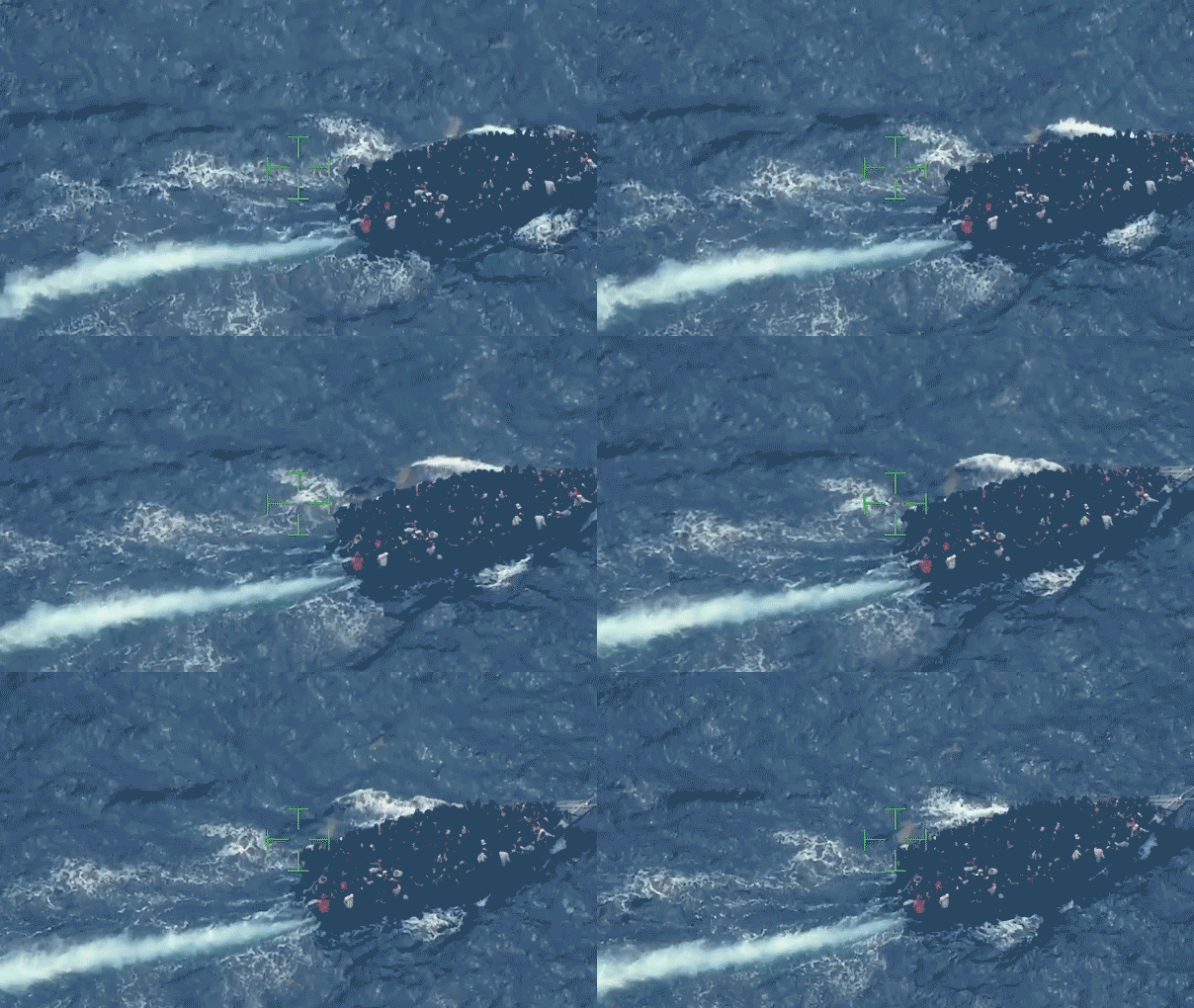
Imagine the sheer terror of being trapped in the middle of the vast, unforgiving ocean, packed shoulder-to-shoulder with 239 other desperate souls on a vessel that was never meant to hold more than a fraction of that number. This was the harrowing reality for 240 migrants, who claimed Haitian nationality, as they clung to a wood-hewn boat that was slowly but surely taking on water just fifteen miles south of the sun-drenched beaches of the Turks and Caicos Islands. To the tourists relaxing on those nearby white-sand shores, the ocean represents a pristine sanctuary of leisure; to these 240 human beings, it was a volatile, liquid stage for a desperate bid for survival. As the wooden hull groaned under the immense weight of its human cargo and the seawater began to seep across the floorboards, threatening to swallow them whole, the line between life and death grew razor-thin. For these travelers, this journey was not a careless adventure but a calculated gamble born of sheer necessity, where the threat of drowning in the deep blue was weighed against the unbearable realities of the lives they left behind. When the joint rescue forces finally spotted the listing vessel, they did not just find an unlawful migration attempt; they encountered a floating crucible of human desperation, where mothers, fathers, and children were holding their breath, waiting to see if their perilous gamble would end in salvation or a quiet, watery grave.
The dramatic intervention that followed was a masterclass in swift, high-stakes international coordination, acting as a vital shield against what could have easily become a catastrophic mass casualty event. Upon receiving reports of the severely distressed and overcrowded vessel, a massive joint task force mobilized with urgent precision, uniting the resources of the United States Coast Guard, U.S. Customs and Border Protection (CBP) Air and Marine Operations, and the Royal Turks and Caicos Islands Police Force. More than 140 dedicated personnel were thrust into action, launching a race against both time and the relentless tides to secure the vessel before it slipped beneath the waves. Aerial footage captured the sobering spectacle of the rescue: tiny, heavily loaded boats dwarfed by the rolling swells, and the massive, disciplined cutters of the Coast Guard closing the gap to offer a lifeline. Crews worked tirelessly, balancing the delicate logistics of keeping the unstable vessel afloat while methodically transferring the cold, wet, and terrified passengers to safety. Once the immediate danger of drowning was averted, the Turks and Caicos Islands Border Force took custody of the vessel and its passengers, bringing a chaotic and life-threatening chapter at sea to a controlled, bureaucratic close, but leaving the ultimate fate of these travelers hanging in the balance.
To truly understand the weight of this incident, we must look beyond the sterile statistics of “interdictions” and “vessel seizures” and look into the human hearts of those who boarded that doomed boat. The vast majority of the passengers claimed Haitian nationality, a detail that speaks volumes about the agonizing state of affairs in their homeland. Haiti has been gripped by a devastating cycle of political instability, rampant gang violence, and systemic poverty that has rendered daily life an exercise in survival, leaving families with few options but to flee. When a homeland becomes a place of constant fear, the open ocean—despite its notorious dangers—begins to look like a doorway to hope. These individuals chose to crowd onto a vessel that lacked even basic life-saving equipment, fully aware that they were risking everything they had, including their lives. Their willingness to step onto an unseaworthy boat and face the open sea is a testament to the depth of their desperation; it reminds us that migration is rarely a choice made lightly, but rather a final, agonizing resort for those who feel they have absolutely nothing left to lose in the places they once called home.
In the wake of this near-tragedy, officials were quick to issue stern warnings, highlighting the inherent madness of attempting such perilous sea crossings. Lieutenant Chelsea Garcia, the deputy director of Coast Guard Operations for the Bahamas and Turks and Caicos, spoke with a mix of professional authority and deep humanitarian concern, urging would-be migrants to thoroughly reconsider before embarking on these unlawful maritime journeys. She described the chilling reality of these voyages: highly unstable, heavily overcrowded boats that are virtually guaranteed to take on water, piloted without the barest essentials of maritime safety. Her message was clear and urgent, pleading with individuals to seek out safe, legal, and orderly avenues of migration rather than placing their lives at the mercy of treacherous currents and predatory smugglers who view human cargo as nothing more than a transaction. Yet, the tragedy lies in the friction between this sensible advice and the ground reality, as many of those fleeing desperate circumstances find that these theoretical “legal pathways” are heavily blocked, incredibly slow, or entirely inaccessible to them, leaving a gaping chasm between official policy and human survival.
While the rescue operations emphasize the preservation of life, the geopolitical response from United States border agencies highlights the uncompromising wall of national security that awaits those who attempt to cross. The Department of Homeland Security made its stance loudly and clearly known on social media, posting a blunt, capitalized warning that underscored the nation’s closed borders and declared a relentless commitment to tracking down and intercepting anyone attempting illegal entry by land or sea. Similarly, U.S. Customs and Border Protection Commissioner Rodney Scott lauded the cooperative efforts of the international partners, praising the team for preventing a horrific loss of life but firmly reiterating that the United States would not grant entry to those arriving through unauthorized maritime channels. This dual narrative—of life-saving compassion on one hand and strict, unyielding law enforcement on the other—defines the modern migration crisis, where the immediate relief of being saved from a sinking ship is instantly met with the cold reality of detention, repatriation, and the closing of doors to the very dreams that motivated the journey in the first place.
This dramatic rescue near the Turks and Caicos Islands is not an isolated event, but a single, vivid thread in a sprawling global tapestry of human migration that continues to challenge nations and test our collective humanity. Only months prior, similar high-stakes interceptions occurred off the coast of California, demonstrating that whether it is the warm waters of the Caribbean or the cold currents of the Pacific, the drive to seek a better life knows no geographic boundaries. As maritime border forces continue to patrol these invisible lines in the water, the stories of these 240 Haitian travelers remind us of the profound human cost of global inequality and political collapse. It forces us to confront a difficult question: how do we balance the legal and sovereign rights of nations to secure their borders with the fundamental human right to seek safety and flee unbearable suffering? Until the root causes of this desperate flight are addressed with the same vigor and resources used to patrol the seas, desperate souls will continue to board unseaworthy boats, and the waters will continue to bear witness to the fragile, heartbreaking struggle of humanity adrift.