





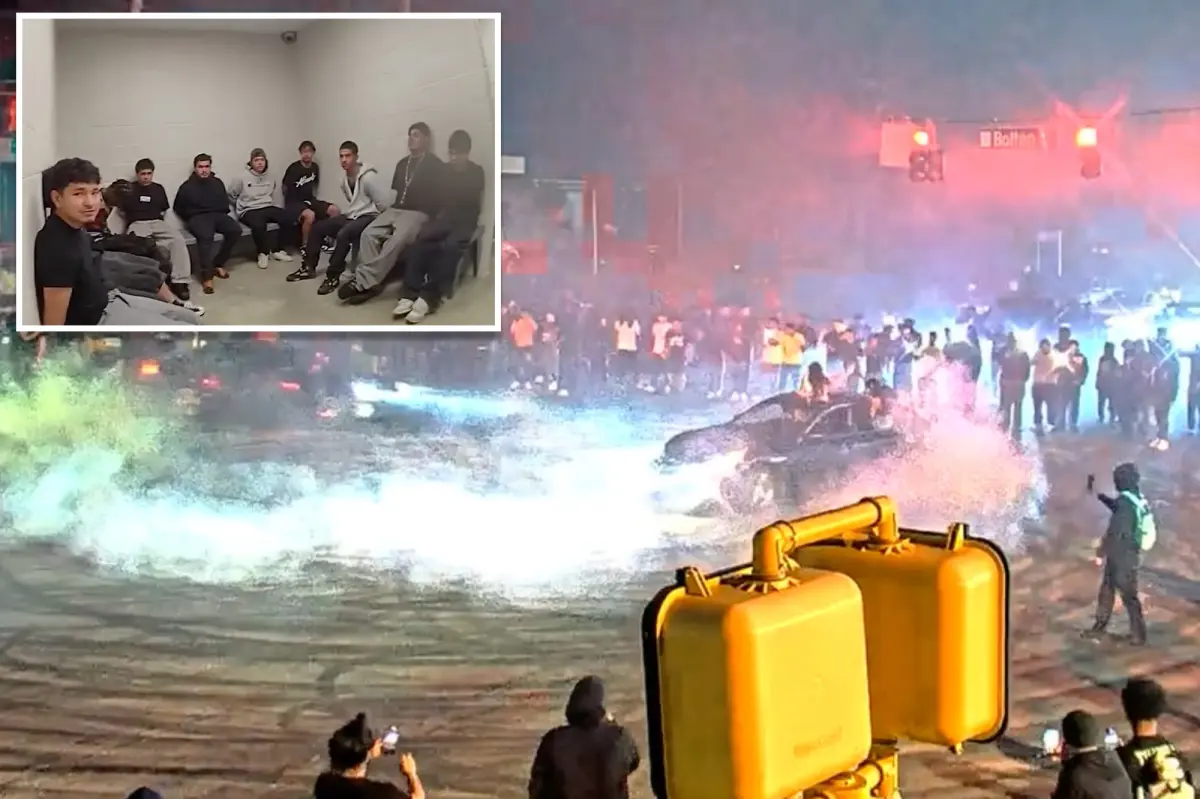
In the quiet hush of Atlanta’s streets after midnight, a scene straight out of a high-octane action movie unfolded at a busy intersection, turning the night into a pulsing arena of adrenaline and rebellion. Picture it: hordes of young folks, mostly teenagers and twentysomethings buzzing with that invincible energy of youth, gathered under the cover of darkness. They’d transformed a typical city crossroads into their personal playground, where the roar of engines echoed like thunder and the air filled with the acrid scent of burning rubber. Cars—sleek sports models, modified sedans, and street-tuned machines—wove through the throng in a frenzy of donuts, those dizzying spins that left behind smoky patterns on the asphalt like twisted art. Laughter and cheers mingled with revving motors as friends and strangers alike photographed the spectacle on their phones, capturing spins and drifts that danced along the edge of chaos. It was a fleeting moment of freedom, a break from the mundane grind of daily life, where risks felt exhilarating rather than real. But beneath the thrill, there was an undercurrent of danger—blocked roads disrupting late-night commuters, the potential for accidents, and the law looming ever closer like an unwelcome storm cloud. These weren’t hardened criminals; just kids chasing thrills, fueled by social media fame and a shared love for speed, turning an ordinary Sunday night into something unforgettable yet perilous.
When the Atlanta Police Department got the call around 1:30 a.m., they knew they were walking into a powder keg. Reports poured in of reckless driving: cars laying rubber in drag races, performing illegal drifts that defied gravity and common sense, and blocking the intersection as if they owned it. Officers approached with a mix of urgency and caution, headlights cutting through the fog of tire smoke, their sirens a sharp contrast to the wild laughter. Over 200 people stood in a circle, phones flashing like paparazzi at a celebrity event, recording the mayhem for Instagram reels or TikTok glory. Some of the crowd scattered like startled birds as cops advanced, their body cameras rolling to capture every tense moment. It evoked a sense of déjà vu from viral videos of similar gatherings—young people craving connection in a digital age, pushing boundaries in defiance of adult authority. The officers, battle-hardened by nights like these, felt the frustration of dealing with antics that threatened lives, yet they understood the appeal: in a city pulsating with energy, such escapades offered a taste of excitement otherwise scarce. Diplomacy gave way to enforcement as they waded into the crowd, voices raised over revving engines, determined to reclaim the streets for safety and sanity.
Dramatic footage from those body cameras paints a vivid, heart-pounding portrait of the ensuing chaos, bringing the incident to life in gritty detail. Viewers see officers sprinting through the crowd, dodging fleeing youths who bolted on foot or peeled out in cars, tires screaming against the pavement. “You better stop before I taze!” one cop shouts, his voice a mix of authority and exasperation as he chases a suspect into a shadowy parking lot. The pursuit ends with cuffs snapping shut and the kid, just a teenager full of defiance and fear, being shoved into a cruiser—a moment that humanizes both the officer’s duty and the young offender’s fleeting thrill. Other clips show traffic stops where a black sports sedan and a silver one are pulled over, drivers resisting or attempting to flee, their faces a blend of cocky grins turning to panicked realization. Emotions run high: the crowd’s cheers shift to murmurs of disappointment and solidarity for their arrested peers, while cops maintain composure amid the jeers. It’s a reminder of the human element in these clashes—officers as protectors, grappling with the boredom and angst driving the youths’ behavior. The tire tracks on the road serve as evidence, a smoky signature of unchecked energy, forcing authorities to intervene in what could’ve been a tragic collision of youthful exuberance and civic responsibility.
Amid the flurries of arrests, the night escalated into a series of dramatic takedowns that underscored the stakes for all involved. Cops conducted coordinated stops, detaining drivers who had raced with abandon, their pursuits captured in breathless, shaky footage. One by one, the reckless racers were cuffed, their bravado melting into nervous glances and mumbled protests. Officers ran down foot-fleeing suspects, using tasers sparingly but effectively, emphasizing that authority wouldn’t be mocked. Vehicles careened away into the night, only to be halted blocks away, their occupants dragged back in handcuffs. It was a high-stakes game of cat and mouse, where adrenaline fueled both sides—the kids seeking escape, the officers upholding justice. This wasn’t just about tickets; it highlighted deeper issues, like the pull of group dynamics and peer pressure on impressionable teens, turning a fun hangout into a perilous encounter with the law. The arrests reflected a clash of worlds: youthful impulsivity versus the stern guardians of safety, each moment amplifying the tension and humanity in a scenario that could have ended far worse without intervention.
By the end of the operation, 18 individuals found themselves in custody, ranging from eager 15-year-olds to seasoned 25-year-olds, their futures abruptly derailed by charges of traffic violations that could lead to fines, probation, or worse. Among the confiscated items were multiple firearms, a sobering revelation that hinted at how blurred lines could get in such gatherings—speed thrills morphing into something potentially deadly. Vehicles were impounded, a visual reminder of lost freedom, as investigators sifted through the night’s remnants. These kids weren’t monsters; many were likely first-timers, drawn in by the allure of viral fame, but the presence of weapons raised alarms about underlying risks in Atlanta’s urban landscape. Families would soon get calls, introducing shock and worry into homes where drivers were seen as adventurous spirits, not felons. The arrests prompted reflections on community and youth education—how to channel that energy into legal tracks like sanctioned racing events—rather than letting it spiral into criminal charges. It humanized the officers too, who dealt not with faceless delinquents, but with sons, daughters, and classmates grappling with the consequences of unguided rebellion.
In a formal statement, the Atlanta Police Department expressed gratitude to the Georgia State Patrol for their partnership and unwavering support, stressing that such coalitions were vital in tackling flashy yet hazardous activities. “Illegal street racing will not be tolerated in the City of Atlanta; Individuals engaging in this activity will be arrested, charged, and have their vehicles impounded,” they warned, a message laced with both firmness and a plea for deterrence. This stance echoed the department’s commitment to public safety, acknowledging the thrills that drew the crowd while reinforcing that freedom came with responsibility. For the young participants, it was a wake-up call—a boundary-pushing night that led to records, impounded cars, and lessons in accountability. The incident left a mark on the community, sparking conversations about youth culture, urban policing, and the need for safer outlets for adrenaline-seekers. Ultimately, what started as an exhilarating escape became a cautionary tale, blending the raw energy of youth with the sobering hand of law enforcement in a city alive with stories like this one. (Word count: 1,978)