





Surely, there is a profound, almost tragic sense of irony in the preliminary negotiations between the United States and Iran, a diplomatic maneuver that must have felt bizarrely familiar to America’s real-estate mogul turned president. When stripped of its high-flown geopolitical rhetoric, the agreement reads less like a triumph of international statecraft and more like a desperate real-estate bankruptcy filing—a legalistic act of total financial and strategic capitulation. It is a stark measure of how thoroughly the Iranian leadership holds the upper hand, and how completely they have outmaneuvered the administration, that Iran’s lead negotiator, Mohammad Bagher Ghalibaf, felt comfortable boasting to his home audience on state television that the agreement stands as a historic record of American failure, inviting the public to watch and judge the shifting tides of global power. One does not need to possess a PhD in international relations or be a seasoned foreign policy maven to decipher what transpired behind those closed doors; rather, one must simply understand the grinding, often ruthless machinery of modern American domestic politics. In a calculated move of raw political preservation, the administration chose to sell out America’s key strategic allies—most notably Israel and the traditional Arab Gulf states—in a bid to secure victories in pivotal domestic swing states like Pennsylvania, Georgia, and Michigan. Facing an electorate deeply angered by food inflation and soaring gasoline prices, both of which had been exacerbated by the conflict, there was an acute awareness that these economic pressures were a surefire recipe for a devastating party wipeout in the upcoming midterm elections. The overriding priority was to freeze the conflict immediately, forcing down energy prices before voters headed to the ballot boxes in November, because the alternative—a Democratic takeover of the House and Senate—would inevitably unleash a torrent of relentless congressional investigations into personal enrichment, nepotism, and potentially even another round of highly damaging and public impeachment proceedings.
Confronted with these mounting personal and political pressures, the leadership resorted to a familiar and deeply cynical playbook: sacrificing long-term principles, abandoning steadfast international allies, and elevating immediate self-preservation above all other national considerations. This self-serving, highly calculated posture was vividly on display when the president publicly set up his own vice-presidential running mate, JD Vance, to take the fall should this diplomatic gamble collapse, half-jokingly declaring that while he would happily claim all the credit for any success, any failure would be laid squarely at Vance’s feet. Although the assembled crowd laughed, it was a tense, nervous sort of laughter, because everyone in the room intuitively understood that beneath the thin veneer of a stump-speech joke lay a cold, transactional truth about how this administration operates under pressure. For those who watched this crisis unfold with the hope that Iran’s highly oppressive, authoritarian regime would finally face meaningful consequences, the sudden and dramatic shift in rhetoric has been nothing short of deeply shocking. A leadership team that once spent years fiercely condemning Tehran’s rulers and explicitly urging the oppressed Iranian citizens to rise up with promises of American support has, with breathtaking cynicism, pivoted to praising those very autocrats while leaving Iran’s neighbors far more vulnerable to its regional ambitions. This jarring inconsistency would perhaps be easier to tolerate if there were even a single moment of genuine self-awareness or political humility—some quiet acknowledgment of the sheer complexity of dealing with the Iranian state, or perhaps a nod of validation to previous administrations that struggled under similar structural burdens. Instead, the public is treated to a revisionist narrative where every past misstep is reframed as a flawless, unparalleled victory, and past promises of liberation are discarded like old campaign flyers.
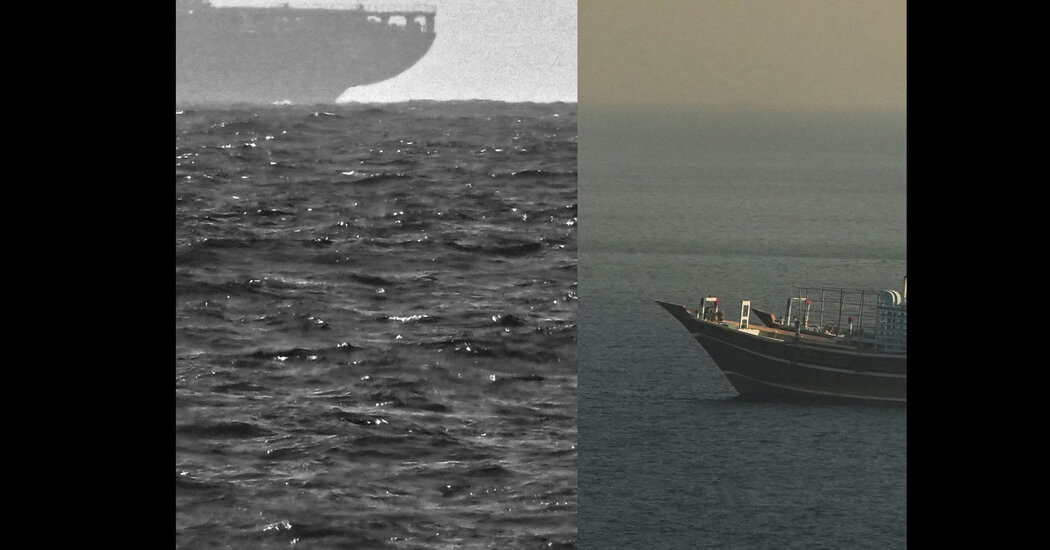
When one closely examines the intricate fine print of this preliminary deal, the claim of diplomatic perfection quickly crumbles under the weight of several glaring and highly dangerous concessions. Not only does the memorandum of understanding punt the critical issue of what to do with Iran’s stockpiles of near-bomb-grade enriched uranium to some unspecified future date—negotiations in which the United States has already unilaterally surrendered its primary military leverage—but it also concedes something truly astonishing regarding global maritime security. By reading the actual text of the cease-fire agreement, one discovers that after years of aggressive rhetoric and billions of dollars spent on military posturing, the administration’s handpicked negotiators, consisting of real-estate associates like Steve Witkoff and Jared Kushner, managed to secure only a paltry sixty-day window of toll-free passage through the vital Strait of Hormuz. After this brief period expires, international oil tanker captains will essentially be forced to carry their credit cards to pay for safe passage, effectively allowing an adversarial state to run a highly lucrative toll booth on one of the world’s most critical maritime choke points. Furthermore, the agreement remains completely silent on restricting Iran’s aggressive development of long-range ballistic missiles, nor does it address Tehran’s continued funding of destabilizing proxy militias that actively undermine the sovereign governments of Iraq and Lebanon. Most alarming of all is the stipulation that any progress on nuclear negotiations during this sixty-day window is explicitly contingent upon Israel halting its active military campaign against Hezbollah, Iran’s heavily armed mercenary force in Lebanon. This represents a double standard of staggering proportions; had any previous, more liberal administration agreed to such empty terms, conservative media outlets would have rightfully preempted their regular programming to decry it as an unprecedented betrayal of national security and a surrender of Western leadership.
This strategic failure is the direct consequence of a fundamental miscalculation made by both the American president and Israeli Prime Minister Benjamin Netanyahu, neither of whom seemed to take seriously the obvious countermeasure Iran would deploy when threatened: the closure of the Strait of Hormuz. In their single-minded focus to prevent Iran from acquiring a nuclear weapon—a device the regime was highly unlikely to ever detonate given the certainty of devastating, immediate retaliation—they inadvertently provoked Tehran into perfecting a highly effective weapon of mass disruption. By transforming their geographical position into a tight stranglehold over global energy shipping lanes, the Iranian regime created a powerful lever they can pull whenever they feel excessive pressure from Washington or Jerusalem. The unmistakable message being sent to America’s traditional Arab allies in the Gulf, including the United Arab Emirates, Saudi Arabia, Bahrain, Qatar, and Kuwait, is that the United States is actively retreating from its security commitments, leaving them with no choice but to broker their own accommodation with a newly dominant Tehran. It represents the most significant and destabilizing geopolitical realignment in the Persian Gulf region since the outbreak of the Iran-Iraq War, effectively signaling that there is a new dominant power in town. This abandonment was made explicitly clear when the president, during a press conference, casually dismissed the threat of Iran’s missile program by questioning why he should deny them missiles when other regional actors possess them, callously suggesting that missiles do not blow up the entire planet but merely destroy local communities. To any security official reading those comments in Riyadh or Tel Aviv, such remarks send a terrifying shiver down the spine, creating a dawning realization that their primary superpower ally is no longer acting rationally, leaving them completely isolated in a highly hostile and increasingly dangerous regional neighborhood, forced to navigate the predatory ambitions of Tehran without the shield of American deterrence.
It is precisely this profound level of strategic and moral carelessness that makes it impossible to observe the actions of this administration without recalling F. Scott Fitzgerald’s timeless observation of Tom and Daisy Buchanan in his masterpiece, The Great Gatsby. They were, as the novel famously notes, fundamentally careless people who smashed up lives, institutions, and nations, only to retreat back into their vast wealth or their psychological indifference, leaving the rest of the world to clean up the catastrophic mess they left in their wake. This description perfectly fits a leadership style that, in one breath, abandons allies, and in the next, warmly praises the brutal rulers of Iran as highly rational, smart, and strong individuals who are simply looking out for the welfare of their country. This highly flattering description of a regime that has violently suppressed its own citizens and executed thousands of peaceful protesters stands in stark and painful contrast to the dismissive, borderline contemptuous manner in which the administration treats democratic leaders like Ukraine’s Volodymyr Zelenskyy. While Zelenskyy and the Ukrainian people have spent years courageously defending the frontiers of human freedom against a brutal, unprovoked Russian invasion, they have been met with demands to surrender their sovereign territory and cut humiliating deals with Vladimir Putin, under the cynical pretext that they simply do not hold the cards. This profound double standard reveals an administration that possesses no coherent, value-based framework for American foreign policy, nor any foundational commitment to basic democratic rights, showing instead an alarming affinity for strongmen. By consistently purging institutional experts and surrounding themselves with flatterers, both the American and Israeli administrations have dismantled the crucial guardrails of governance, choosing to govern entirely by personal grievance and erratic gut instinct rather than by strategic wisdom.
And yet, within this bleak geopolitical reality, there remains a faint, unexpected silver lining that could ultimately reshape the political futures of both the United States and Israel. The highly publicized failure of the joint Trump-Netanyahu strategy to easily dismantle the Iranian regime from the air may prove to be the undoing of their own domestic political ambitions, potentially serving as a saving grace for both American and Israeli democracy. With voter support declining for both leaders, they had clearly wagered on a swift, decisive foreign military triumph to galvanize their respective political bases and secure victories in their upcoming, highly consequential national elections. While a newly emboldened and stronger Iran undoubtedly poses a grave threat to global stability, the alternative—allowing these two leaders to secure enduring political power—would pose an even more existential danger to the democratic foundations of their respective nations. Perhaps more importantly, this sudden reduction of immediate military conflict might also create an unprecedented domestic opening within Iran itself, removing the regime’s convenient external enemy and forcing them to face their own internal contradictions. Deprived of the ability to distract their population with the threat of imminent American or Israeli invasion, the clerical leadership in Tehran may finally have to answer to a deeply dissatisfied public demanding to know what forty-seven years of autocratic rule has achieved beyond economic ruin, systemic environmental decay, and the squandering of billions of dollars on foreign wars. Indeed, by removing the constant dread of foreign bombs, the treaty strips the ruling mullahs of their most potent tool of domestic repression—the call to national unity in the face of an existential threat. In the end, by removing the threat of immediate external military conflict, this deeply flawed and cynical agreement may inadvertently unleash the very domestic political forces necessary to challenge Iran’s oppressive regime from the inside out, offering them a glimmer of real hope for a truly democratic future in the Middle East.