






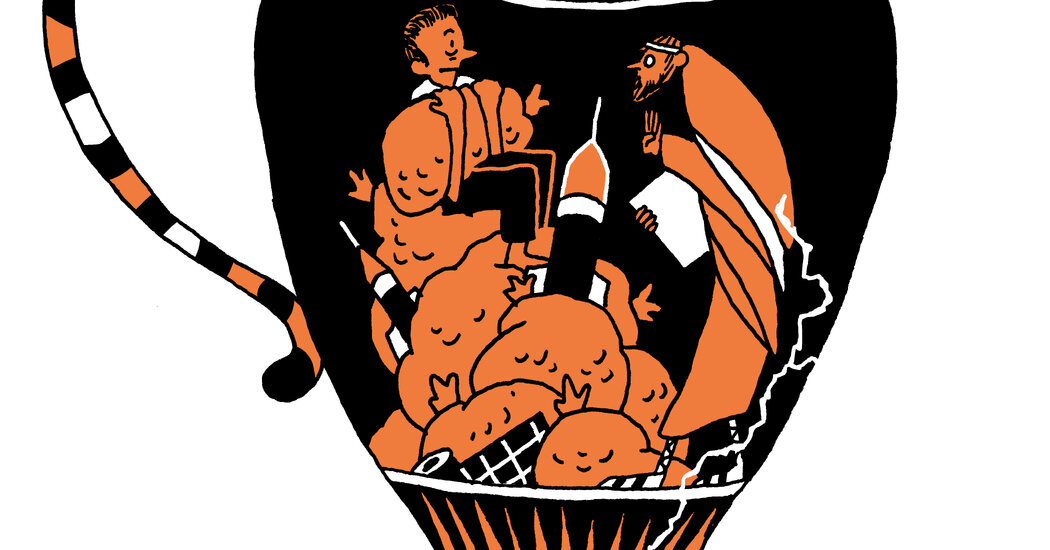
When Elon Musk officially crossed the unimaginable threshold into becoming the world’s very first trillionaire, it triggered a collective cultural scramble to comprehend a scale of personal wealth that completely defies ordinary human cognitive limits. To truly visualize what $1,000,000,000,000 looks like, commentators have resorted to increasingly absurd, almost cosmic comparisons: if you stacked crisp, tightly bound one-hundred-dollar bills representing that amount, the emerald tower would pierce through the stratosphere and extend an astonishing 679 miles into space, venturing far into the realm of low-Earth orbit. The eminent economist Steven Durlauf pointed out that even John D. Rockefeller, whose monopolistic Gilded Age fortune once controlled an unprecedented 1.5 percent of the United States’ gross domestic product, possessed only half of Musk’s relative economic footprint, which currently commands well over 3 percent of the entire American economy. Or consider the world of professional sports, where New York Knicks star Jalen Brunson earns a staggering, life-changing salary of $39 million per year; to amass Musk’s level of wealth, Brunson would have to dribble, shoot, and play professional basketball for over twenty-five thousand consecutive seasons, a span of time stretching all the way back to the peak of the last Ice Age. Yet, of all these staggering metrics, none lands with a heavier, more intimate thud than the calculation published by The New York Times, which noted that Musk’s net worth is approximately five million times greater than that of the average American household. This number is not just a financial indicator; it is a profound, tectonic rupture in our shared social fabric. For the typical family, struggling to balance rising grocery bills, mortgage payments, and childcare costs, trying to conceive of a resource pool five million times larger than their entire life’s work is like trying to stare directly into the sun. It forces us to ask deep, existential questions about what such an astronomical, alienating chasm does to our shared democracy, our mutual empathy, and our collective understanding of a fair and functioning community.
As a historian deeply immersed in the history of classical political thought, this staggering five-million-to-one disparity immediately brings to mind the warnings of Plato, the first major philosopher of the Western tradition to systematically analyze the corrosive dangers of economic inequality. In his late, deeply pragmatic work The Laws, speaking through the enigmatic persona of the Athenian Stranger, Plato argued that if a republic is to remain harmonious, unified, and politically healthy, no single individual should ever be permitted to acquire more than four times the wealth of the poorest citizen. If their fortune exceeded this strict threshold, they were expected to voluntarily donate the surplus to the city treasury for the public good, cementing their dedication to the community. While such an ultra-restrictive four-to-one ratio sounds entirely incompatible with the complex, hyper-connected dynamics of modern global capitalism, the underlying existential fears that drove Plato to this radical conclusion are painfully recognizable to us today. Plato did not write these proposals from an ivory tower of abstract theory; he grew up in an Athens that was repeatedly brought to the brink of self-destruction by what the historian Plutarch described as an unbridgeable “disparity between the rich and the poor.” Early in Athenian history, the crisis had grown so acute that the society was only saved from a bloody civil war by the heroic intervention of the lawgiver Solon, who instituted the Seisachtheia—a sweeping, radical cancellation of all debts that shrugged off the financial burdens of the impoverished, liberated citizens sold into debt-slavery, and deeply angered the wealthy oligarchy. During Plato’s own youth, as the city-state was engulfed in the grueling Peloponnesian War, this latent class warfare boiled over into three separate, deeply traumatizing domestic revolutions where the rich and the poor took turns violently overthrowing one another, proving that when wealth inequality becomes too severe, the very foundations of democratic governance are inevitably torn apart by resentment.
It was this firsthand experience of political instability and societal collapse that led Plato’s mentor, Socrates, to make his famous, chilling observation in The Republic regarding the consequences of unchecked economic division. Socrates argued that any society split apart by massive disparities in wealth cannot truly be called a single nation at all, but is rather “two states, the one of poor, the other of rich men, and they are living on the same spot and always conspiring against one another.” To Plato, this catastrophic fracturing of political community was not merely an administrative or economic failure, but a profound symptom of a deeper spiritual disease of the human soul which the ancient Greeks termed pleonexia—a pathological, insatiable lust for more. In the dialogue Gorgias, Socrates vividly illustrates this destructive condition by comparing the insatiable mind to a leaky copper jug. He contrasts the temperate, balanced man, whose storage vessels are perfectly sealed and filled with valuable wine, honey, and milk, with the intemperate man whose jugs are cracked and leaking; the latter is forced to spend his days and nights in a state of constant, panicked agitation, desperately trying to refill them under pain of extreme suffering. While a healthy, balanced individual seeks material goods only to the extent necessary to satisfy fundamental physical needs and secure a comfortable life of civic engagement, the person afflicted with pleonexia suffers from an unlimited desire that grows more ravenous with every acquisition, rendering them perpetual captives to their own greed. Plato viewed these insatiable individuals not as triumphant figures of success, but as tragic, spiritually enslaved captives who had allowed their rational minds to be utterly dominated by their basest desires. When a society begins to celebrate this endless accumulation as a virtue rather than diagnosing it as a collective affliction, it loses the capacity to sustain a shared civic life.
According to Plato’s psychological diagnosis, an individual who is completely possessed by unquenchable, infinite desires eventually suffers from a deep moral and intellectual distortion, developing a pathological self-love that completely eclipses any genuine concern for the rest of humanity. This obsessive self-focus ensures that the ultra-wealthy person becomes, in Plato’s evocative phrasing, “a poor judge of what is just and good and noble,” because they will always prioritize the gratification of their personal impulses over objective truth, common decency, and the public welfare. When one’s entire identity is wrapped up in maintaining an astronomical fortune, the suffering of others is easily rationalized away, and the concept of justice is warped to mean whatever serves the preservation of private wealth. This led Plato to deliver one of his most uncompromising, controversial moral declarations: “it is impossible that those who become very rich also become good.” To the modern ear, accustomed to the myth of the philanthropic billionaire and the meritocratic triumphs of the free market, this claim sounds shockingly harsh, yet it accurately captures the psychological isolation that occurs when an individual is elevated so far above their peers that they no longer share a common human experience. By severing the everyday bonds of mutual dependence that connect citizens to one another, extreme wealth creates an artificial aristocracy where the superrich live in private enclaves of their own design, entirely insulated from the practical consequences of their decisions. Over time, they succumb to the delusion that their financial success makes them experts on all subjects—from public health to foreign policy—and they increasingly view the rest of humanity not as fellow citizens with equal rights, but as passive audience members or disposable units of labor.
Plato’s ancient, dark warnings about the spiritual and societal costs of insatiable greed have found their ultimate contemporary validation in the public behavior of Elon Musk, who, unsatisfied with his historic trillion-dollar milestone, has already publicly fantasized about expanding paper net worth to an unprecedented ten trillion dollars. Musk has strikingly confirmed Plato’s deepest worries regarding the moral desensitization of the superrich by openly dismissing empathy—the core human capacity to feel and share another’s pain—as nothing more than “the fundamental weakness of Western civilization.” Freed from the grounding constraints of human sympathy, Musk has wielded his immense financial influence and political appointments with an alarming detachment, boasting of using his newly formed, ironically named “Department of Government Efficiency” to throw vital public programs, such as the U.S. Agency for International Development, “into the wood chipper” with gleeful abandon. The immediate real-world consequences of these ideological cuts are not abstract ledger entries or clever programming bugs; by dismantling vital global health, food distribution, and humanitarian aid networks, these actions have contributed directly to the preventable deaths of an estimated 600,000 vulnerable people worldwide, including starving children and displaced refugees. This terrible human toll is not an accidental byproduct of administrative oversight, but the direct, predictable consequence of a cold, engineering-driven philosophy that treats human lives not as sacred ends in themselves, but as mere obstacles or collateral damage in a personal quest for technological domination. When a civilization actively chooses to place no moral or legal limits on the accumulation of private power, it inevitably empowers individuals who view the state as their personal playground and the citizenry as expendable subjects in a massive socio-economic experiment.
Plato was a realist who understood perfectly well that implementing a perfect, utopian solution like his four-to-one wealth ratio is functionally impossible in an established society where massive inequalities have already taken deep root. However, he did not advise citizens or lawmakers to throw up their hands in defeatist surrender, nor did he suggest that we simply accept extreme wealth disparity as an inevitable law of nature. Instead, Plato urged everyday citizens, alongside the rare wealthy individuals who still possessed a lingering “sense of fairness,” to engage in a concerted cultural effort to restore balance, starting with the active social shaming of those who display excessive, ostentatious fortunes. We must collectively reject the cultural worship of billionaires and re-evaluate our definition of success, recognizing that true poverty, as Plato wisely wrote, “consists not in a lessening of one’s property but in an increase of one’s avarice.” True wealth lies in self-mastery, civic responsibility, and the cultivation of a supportive community, while the desperate, endless hoarding of capital is a sign of spiritual poverty. By reframing extreme greed not as an admirable achievement of individual genius but as a corrosive public health crisis of the soul, we can begin the difficult, vital work of rebuilding our democratic institutions. Only by actively teaching these ancient, humanizing truths can we hope to dismantle the cult of the trillionaire, check the power of modern oligarchs, and restore the healthy equilibrium of wealth, empathy, and justice necessary to sustain a truly free and flourishing republic. In doing so, we remind ourselves that a society is not merely an economic market to be dominated, but a sacred covenant of humans looking out for one another. Only through this profound shift in values can we transition from a culture of hyper-individualistic competition to one of genuine civic solidarity, ensuring that our shared future is determined not by the whims of the ultra-wealthy, but by the democratic voice of the clear-minded majority.