

Imagine walking into a dimly lit maternity ward in Havana on a sweltering April afternoon, the kind where the air feels heavy with both humidity and unspoken worries. That’s where we first encountered Alejandro, a tiny premature baby born weighing just two pounds, fighting for every breath in an incubator that hummed softly against the backdrop of a city gripped by routine blackouts. His fragile body, barely the size of an adult’s hand, lay there unaware of the global forces shaping his survival—U.S. sanctions that have crippled Cuba’s ability to import vital medical supplies. As congressional members of the House Foreign Affairs Committee, we stood there, notebooks in hand, hearts heavy with the reality that Alejandro’s incubator was one of the lucky ones. Many others in the hospital were rendered useless by voltage surges from power outages, their delicate circuits fried beyond repair because sanctions make it nearly impossible to get replacement parts from overseas. Picture the doctors and nurses, overworked and under-resourced, resorting to manual pumps on ventilators when the electricity fails. We watched as women in advanced stages of pregnancy climbed multiple flights of stairs, since elevators were out of order without power, their faces etched with exhaustion and determination. Hospital staff scraped for transportation, their cars idle without fuel—a crisis that echoed across the nation. Yet, despite these Herculean efforts, Cuba’s infant mortality rate has surged by 148% from 2018 to 2025 as sanctions tightened, while other hospitals weren’t as fortunate. In those moments, we glimpsed not just statistics, but real lives hanging in the balance, and it sparked a profound shift in our understanding of policy’s human cost.
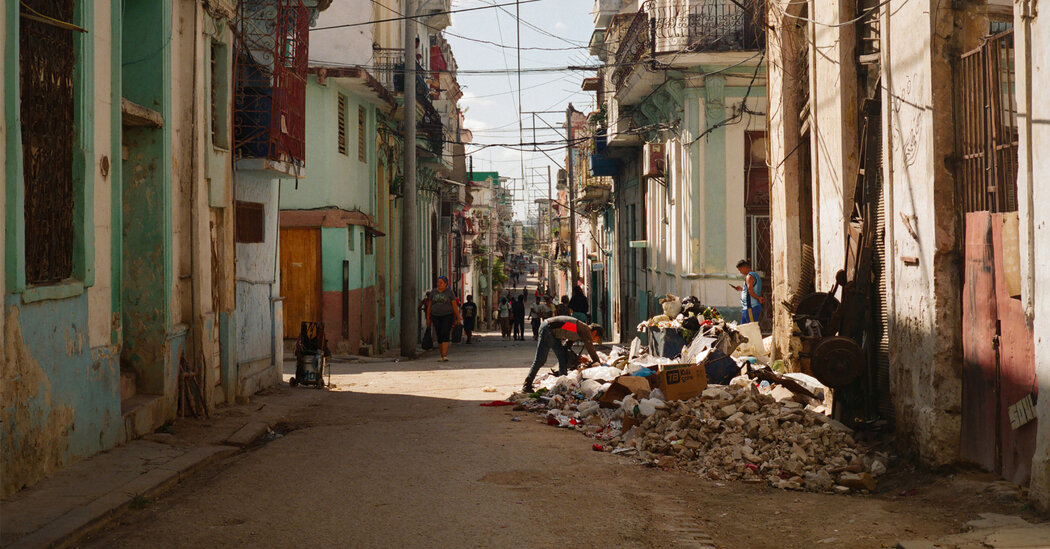
Our five-day immersion into Cuba’s realities began with a purpose: to witness firsthand the humanitarian fallout of America’s relentless energy blockade, layered atop the longest embargo in U.S. history. Arriving in a land where fuel deliveries had been choked off for over four months—feared seized by U.S. vessels in open waters, besides one Russian tanker barely covering 10-14 days—we encountered a society buckling under daily indignities. Long lines for scarce public transport, neighborhoods bathed in oppressive darkness after sundown, families rationing meals because agriculture limps without diesel for pumps and tractors. It wasn’t abstract; it was visceral. We toured hospitals like Eusebio Hernández Pérez, where the air smelled of disinfectant and desperation, and spoke with medical staff who described birthing during blackouts as a dance with death—literally pumping life into infants by hand. One doctor, a woman with weary eyes and a voice cracking under the strain, shared stories of babies lost not to illness alone, but to preventable failures in a system starved by sanctions. We interviewed entrepreneurs whose small shops had shuttered, religious leaders advocating for peace despite oppression, and families mourning imprisoned relatives. Their words unified: the blockade isolates and punishes innocents, violating international norms of sovereignty, trade freedom, and non-interference. It manufactures crises in healthcare, water supply, and transportation, punishing civilians for a regime’s sins. Leaving Cuba, we carried not just facts, but the echoes of cries unheard—the collective sigh of a nation yearning for an end to this economic strangulation.
Beyond the suffering, we saw glimmers of potential partnerships that could enrich both sides if sanctions lifted, painting a portrait of what mutual respect might yield. Cuba, with its fertile lands and strategic location, beckons as a natural U.S. trade ally, especially in agriculture. We’ve learned from officials in red and blue states alike—governors dreaming of exporting American produce to Cuba’s eager markets—how the embargo’s financial hurdles squelch these ambitions. Imagine American farmers, weathered by droughts at home, gaining access to this vibrant economy, boosting jobs and prosperity while Cuba’s fields flourish with affordable innovations. Then there’s healthcare, where Cuba’s public system has pioneered treatments for Alzheimer’s and lung cancer, potentially spanning oceans to benefit Americans in need. During our visits, we met scientists eager to collaborate, their labs humble yet filled with breakthroughs born from necessity. Tourism, too, holds transformative power; recall how Obama’s normalization sparked a tourism boom, with hotels blooming, restaurants buzzing, and independent shops empowering civilians—a silent revolution fueling civil society. Families we spoke with recalled those happier days, when dollars flowed freely and hope felt tangible, fostering reforms that even the Trump administration once claimed to desire. It’s a reminder that normalized ties aren’t just pragmatic; they’re bridges to shared humanity, where American generosity could light paths for Cubans like Alejandro, ensuring brighter futures for generations.
Of course, Cuba bears its own burdens—its government must accelerate reforms for political freedoms, ending arbitrary detentions and honoring basic rights. In a candid meeting with President Miguel Díaz-Canel, we urged just that, emphasizing the treatment of political prisoners as a barrier to genuine progress. Yet, we’re encouraged by steps already taken: the recent release of over 2,000 prisoners, termed a “humanitarian and sovereign” act by state media, and Cuba’s cooperation with the FBI on investigations, showing transparency. Cue the mother of a released dissident, her tear-streaked face a testament to these gestures’ impact—words like “forgiveness” and “healing” tumbling from her lips as she clutched old photos of her son. Entrepreneurial changes are blossoming too; Cuban Americans now invest in private businesses, with small and medium enterprises dominating the workforce, driving economic vitality. But these sparks are doused by U.S. sanctions, which Trump’s administration intensified under national security pretexts—targeting sectors, isolating banks, choking remittances. It’s ironic: the very liberalizations policymakers profess to want are undermined by this coercive war, leading to isolation, suffering, and mass exodus. We heard stories from refugees, their boats braving seas, families fractured, all fleeing a homeland made unlivable. This isn’t progress; it’s perpetuation of a Cold War relic, where America’s outdated enmity condemns Cubans to despair, with talk of invasions promising only more collapse.
The blockade’s human toll sank deeper as we delved into personal narratives, humanizing the blockades beyond headlines into intimate tragedies. Picture Rosa, a grandmother we met in a Santiago de Cuba slum, her home’s water tap dry for days due to failed pumps powered by scarce fuel. “I pray for rain from the heavens,” she murmured, holding Alejandro’s photo like a talisman, her voice thick with the ache of watching loved ones perish from preventable dehydration. Or Juan, a young farmer whose crops wilted as tractors sat idle, his dreams of exporting tropic fruits to U.S. markets crushed, leading him to desperation and dark thoughts of escape. In Sancti Spíritus, we attended therapy sessions for children traumatized by blackouts, their eyes wide with fear, parents recounting losses that echo the 148% infant mortality spike. These aren’t just numbers—they’re shattered families, like the widow who lost her husband to a heart attack during a outage-triggered riot, her kitchen now a makeshift altar of candles and photographs. Even dissidents, critical of their government, united against the embargo, viewing it as America’s imperial overreach. One activist, whispering in a dimly lit room to avoid surveillance, confessed, “Yes, we dream of freedoms, but sanctions starve us all—rich, poor, rebellious alike.” Our days filled with such stories, from Havana to rural outposts, exposed a truth: the blockade isn’t strategic; it’s sadistic, collective punishment disguised as policy, eroding the Cuban soul while emboldening divisions.
As we reflected on our return, advocating for change felt urgent, a call to reimagine U.S.-Cuba relations based on empathy and equity. Negotiations grounded in mutual respect could pivot toward benefiting both peoples—ending the blockade to safeguard lives like Alejandro’s, unlock trade booms, and share medical triumphs. We’ve seen the generosity of Americans in action before, during pandemics and disasters; why withhold it from Cuba now? Cuban children deserve that hope, free from the specter of ruin, their laughter unbound. We’ve proposed policies to lift sanctions, mirroring Obama’s openings, and urged diplomatic talks that honor sovereignty. Our trip wasn’t about politics alone; it was a journey into humanity’s frayed edges, where policies echo as cries in the night. If the American public saw these faces—Rosa’s resolve, Juan’s fruitless toil, the resilience in children’s games amid darkness—they’d demand accountability. It’s time to turn the page, transforming isolation into connection, suffering into solidarity, and ensure the next Alejandro grows up in a world of possibilities, not peril. The future hinges on this: treating Cuba as a partner, not a pawn, for the sake of all.