






The quiet, vaulted chambers of European libraries have long been regarded as secular sanctuaries—places where the dust of centuries settles over the collective memory of human thought, and where the only sound is the gentle rustle of turning pages. Yet, the solemn atmosphere of a Paris courtroom has recently become the unlikely stage for the dramatic final chapter of one of the most audacious, sophisticated, and culturally devastating literary heists in modern history. This week, six Georgian defendants stand trial under the watchful eyes of French prosecutors, accused of orchestrating a sweeping, transnational conspiracy that systematically pillaged prominent libraries across the European continent. Dubbed “Operation Pushkin” by international law enforcement, the investigation exposed a criminal enterprise of staggering precision that targeted more than 170 priceless Russian literary masterpieces, valued collectively at nearly $3 million. The thieves did not operate in the dark shadows of the night with crowbars, ski masks, and glass-cutters; instead, they walked boldly through the front doors of venerable institutions in France, Germany, Poland, Latvia, Lithuania, Estonia, Finland, Switzerland, the Netherlands, and the Czech Republic during regular operating hours. They carried meticulously falsified library cards, assumed sophisticated false identities, and possessed a deep, chilling understanding of the security vulnerabilities inherent in public and academic libraries—institutions built fundamentally on the principle of human trust rather than armed defense. For the tight-knit global community of bibliophiles, historians, and archivists, the shock of these systematic thefts was intensely personal, felt as a violation of a sacred covenant. It was not merely a loss of physically bound paper, glue, and leather, but a calculated assault on the archive itself. As the trial unpacks the intricate, multi-year conspiracy, the true gravity of what was lost begins to settle over the courtroom, highlighting a tragedy where a priceless portion of the world’s literary heritage has been scattered into the wind.
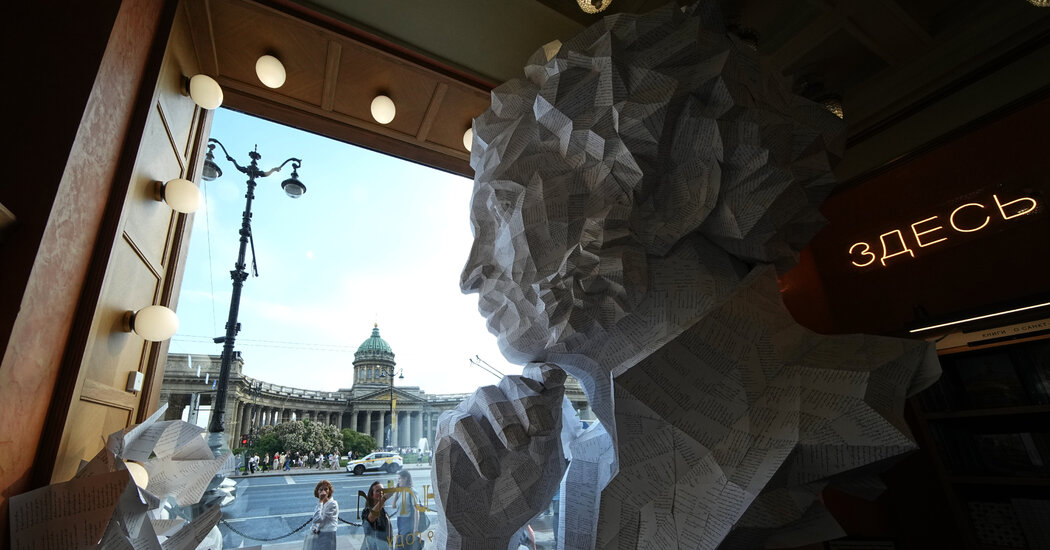
At the absolute heart of this gripping cultural drama is the ghostly, revered figure of Alexander Pushkin, the brilliant 19th-century poet and novelist celebrated globally as the father of modern Russian literature. Pushkin’s enduring legacy—characterized by his fierce rebellious spirit, his unmatched linguistic beauty, and his tragic death in a duel over honor—makes his early editions highly coveted by collectors, but it also placed his memory directly in the crosshairs of a modern geopolitical firestorm. The systematic series of thefts began in earnest around the spring of 2022, a highly volatile historical moment marked by Russia’s full-scale invasion of Ukraine. As the geopolitical landscape fractured and relations between Russia and the West disintegrated, Pushkin’s literary shadow became an unexpected cultural battleground. In Moscow, state leaders actively sought to weaponize Pushkin’s legacy, using his towering cultural weight to project imperial soft power and drum up nationalistic fervor. Meanwhile, across Ukraine and portions of Eastern Europe, citizens and local governments began to dismantle historic monuments dedicated to the writer and rename hundreds of streets that had borne his name for generations, viewing him through the painful, immediate prism of past and present Russian expansionism. It was in this hyper-politicized, emotionally charged environment that the criminal syndicate struck, astutely recognizing that the global market value and symbolic demand for physical artifacts of Russia’s cultural golden age would skyrocket. By targeting original editions of Pushkin, along with his celebrated contemporaries like Mikhail Lermontov and Nikolai Gogol, the thieves capitalized on a profound psychological irony: while the modern world wrestled with the toxic modern implications of Russian cultural identity, elite, shadowy collectors were willing to pay astronomical sums to privately possess its physical heritage, transforming romantic poetry into illicit, high-stakes contraband.
The execution of these brazen crimes revealed a brilliant yet deeply chilling understanding of human psychology, academic culture, and the quiet, trusting rhythms of scholarly life. Rather than deploying high-tech mechanical tools, the conspirators relied on the vintage art of social engineering, exploiting the baseline assumption of goodwill that librarians extend to passionate researchers. Working frequently in coordinated pairs, the thieves traveled across international borders by bus to avoid airport security, carrying forged passports and carefully cultivated intellectual personas. They presented themselves to scholarly institutions as humble, dedicated academics, often claiming to be conducting deep, laborious research into highly specific academic niches, such as the evolution of democratic ideals within nineteenth-century Russian prose. Once inside the quiet reading rooms, where the comforting scent of aged vellum and historical ink normally fosters a sense of intellectual sanctuary, the thieves executed their meticulous bait-and-switch. While one partner engaged the librarian in complex, highly distracting conversations about translations, catalog numbers, or historical context, the other quietly and methodically swapped the genuine, centuries-old masterwork for an incredibly sophisticated, high-resolution color facsimile copy. These duplicates were crafted with terrifying expertise, mimicking the exact discoloration of aging paper, the hand-bound texture of the stitching, and even the subtle wear of historical marginalia. When the deception was finally uncovered months later, the emotional impact on library staff was devastating, leaving many with a profound sense of personal betrayal as they realized their professional helpfulness had been weaponized against the very treasures they spent their lives protecting.
As the trial unfolds in Paris, the human portraits of the accused paint a complex picture of regional economic desperation, criminal specialization, and the underground networks that feed the global black market. Key among the defendants are individuals like Mikheil Zamtaradze and Beqa Tsirekidze, whose movements across Europe map out a tireless, calculated itinerary of cultural plunder. Zamtaradze, who was recently sentenced to more than three years in a Lithuanian prison for stealing books worth $700,000, is accused of visiting the illustrious National Library of France approximately 40 times over a seven-month period in 2023. He spun an elaborate web of lies about his research path, all while systematically coordinating the theft of nine Pushkin masterpieces valued at roughly $750,000 from under the noses of unsuspecting staff. Beside him sits Tsirekidze, a man with a long-standing history in the antique book trade whose criminal record stretches back to 2016, when he was convicted of stealing early 20th-century Russian avant-garde works from a museum in Georgia. Despite the mounting evidence, including matching travel records and digital footprints, the defendants steadfastly deny any formal connection to one another, claiming to have operated entirely as independent actors. Yet, international investigators and literary experts remain deeply skeptical of these claims, pointing out that the highly specific nature of the targeted volumes—focusing almost exclusively on incredibly rare Russian first editions—strongly suggests the hand of a centralized coordinator who possessed both the deep literary expertise to identify these works and the illicit connections required to liquidate them.
The courtroom proceedings in France may eventually provide legal closure, but they leave behind two gaping, deeply unsettling mysteries that haunt the literary world: who was the ultimate mastermind pulling the strings from the shadows, and where are the original treasures now? The insatiable appetite of wealthy Russian collectors, oligarchs, and cultural elites has long driven a booming, highly secretive underground market for historical relics, with first-edition literary masterpieces serving as the ultimate status symbols of intellectual pedigree. Some investigators speculate that this elaborate operation was commissioned by a shadow network of high-profile Russian dealers, or perhaps even orchestrated with the tacit approval of Kremlin-aligned figures seeking to aggressively repatriate valuable cultural heritage during a period of intense Western sanctions and isolation. However, others, such as Sergey Burmistrov, the prominent head of the Moscow-based auction house Litfond, offer a more pragmatic and cynical interpretation of the crimes. He suggests that the thefts were likely born of simple, mercenary opportunism rather than a state-sponsored geopolitical plot. In Burmistrov’s view, the conspirators merely identified a massive, systemic security blind spot—the relaxed, trust-based environment of Western European libraries housing Russian collections—and capitalized on the enduring, lucrative demand for nineteenth-century Russian classics. Regardless of whether these books now reside in the climate-controlled vaults of anonymous billionaires or the hidden safes of Moscow oligarchs, the human cost of their displacement is profound, as these democratic vessels of human thought have been stripped of public view and transformed into silent, stolen commodities.
As the judges prepare to deliberate on the fates of the defendants, who face up to ten years in prison if convicted of organized conspiracy and cultural theft, the global archive community is left to pick up the pieces of a fractured system. The legacy of “Operation Pushkin” will be felt far beyond the confines of the French courtroom or the prison cells of Eastern Europe, as it has forced an existential, painful reckoning within libraries, museums, and archives worldwide. The romantic, decades-old era of scholar-librarian trust is rapidly fading, replaced by stringent security protocols, biometric scanners, close-circuit cameras, and physical barriers that distance researchers from the fragile artifacts of human history. This defensive shift represents a tragic regression for the academic community, erecting cold walls of suspicion where open bridges of intellectual curiosity once stood. Despite the profound sorrow surrounding these events, there remains a resilient, quiet determination among the guardians of literature who refuse to let the thieves have the final word. International police agencies, auction houses, and dedicated bibliophiles continue to monitor the global market, keeping vigil in the hopeful belief that these irreplaceable physical voices of Alexander Pushkin and his contemporaries will one day be recovered. Ultimately, this gripping trial serves as a stark, humanizing reminder of the vulnerability of our shared cultural memory and the enduring, dangerous power of the written word—a power so immense that individuals will cross borders, fabricate entire lives, and risk their very freedom just to possess a few fragile pages of the human soul.