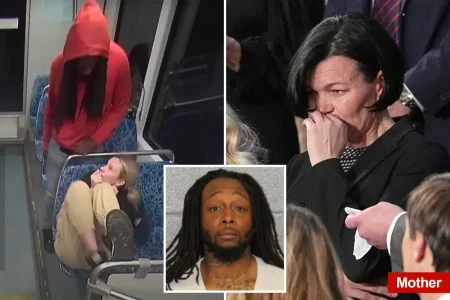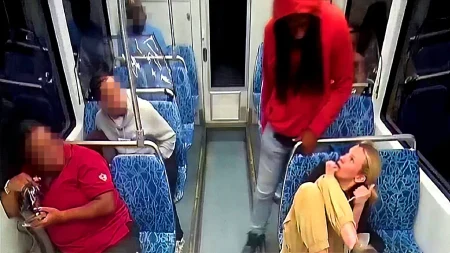



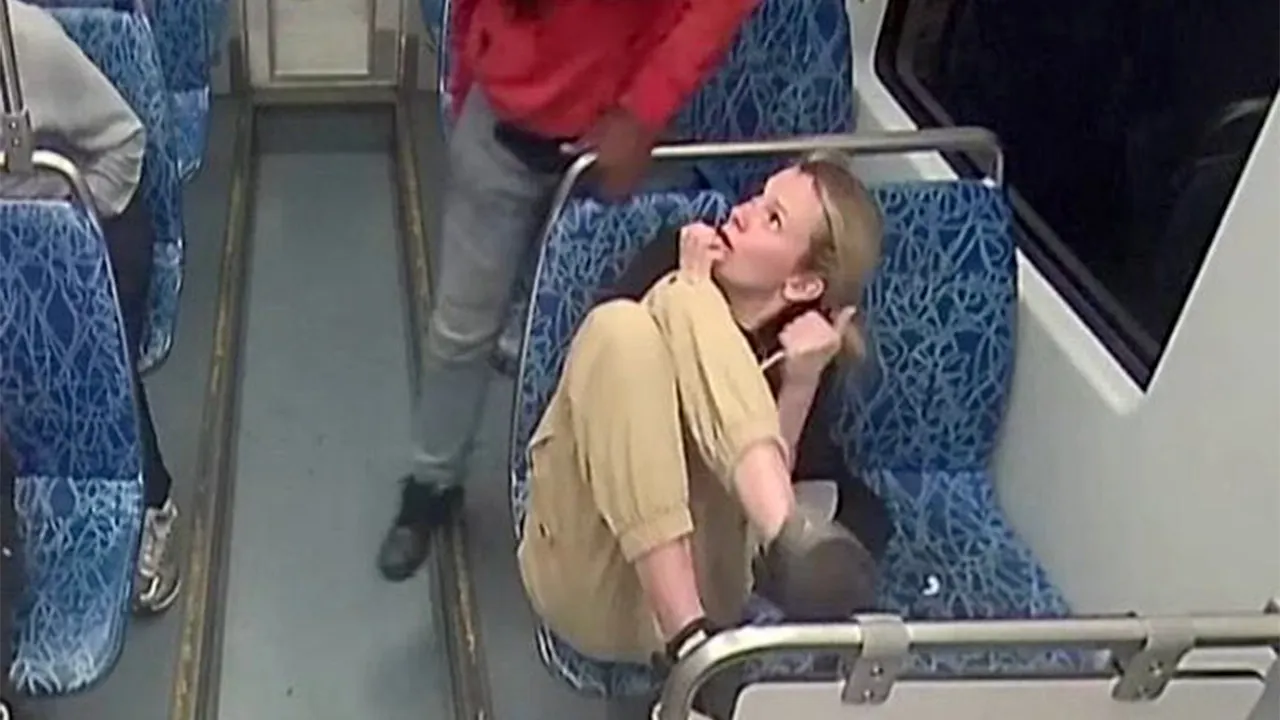
A year has passed since Iryna Zarutska, a 23-year-old Ukrainian refugee, came to Charlotte in search of safety—only to lose her life in a place where she should have been protected. On the evening of Aug. 22, 2025, she was riding the city’s Lynx Blue Line train, probably going about an ordinary day, when authorities say Decarlos Brown Jr. approached her from behind, pulled a knife and stabbed her three times. Then he left the train, and in the harrowing moments that followed, a sense of security on Charlotte’s public transit was shattered. It remains one of those cases that sticks with people, not simply because of the brutality, but because of the randomness. Iryna had already escaped the war in her homeland; her family thought she was safe. Instead, her story became a tragic symbol of a far larger debate about justice and repeat offenders in North Carolina. The one-year milestone has reopened that pain, and it has also renewed urgent questions about who should be standing on street corners, who should be out on bail, and whether the system is truly protecting vulnerable residents. Her death did not just leave a hole in the hearts of everyone who knew her. It also ignited a sorely needed conversation about a criminal justice process that too often fails to catch dangerous people before their next attack.
For many law-enforcement officers, Iryna’s death offered proof that the system needs a profound shift, one that prioritizes victims over procedural mercy. The North Carolina Fraternal Order of Police, representing around 6,000 officers, has now stepped into that fight by formally endorsing Republican U.S. Senate candidate Michael Whatley. The union’s president, Chet Effler, spoke with deep frustration about a broader pattern: the same offenders appearing in and out of courtrooms, being released after arrest, and then hurting other people. “We have lost accountability in this country,” Effler said. “There’s no reason to be soft on crime whenever you have victims who are going to be victims of those crimes for years to come.” His words are not just political rhetoric; they are rooted in frustration officer after officer describes, watching familiar names circulate through the criminal justice system with few meaningful consequences. In the meantime, Zarutska’s accused killer has been found incompetent to stand trial in both state and federal cases, which means the legal proceedings against him are paused, leaving the families and the public to wait to learn whether justice will ever be fully pursued. In response to the public outcry, North Carolina put “Iryna’s Law” in place, tightening bail rules and adding more oversight for defendants considered a risk to public safety. Still, many officers and residents wonder if it’s enough.
The debate reached a critical point this summer and fall as more violent incidents emerged involving the kind of people who should have been behind bars long ago. One crucial example: 32-year-old Di-Quan Schafar Hunt, a man police say filmed himself punching a woman on a Charlotte sidewalk and then posted the attack to social media. Officers arrived after an attempt-to-locate call and were shown a social-media account containing videos detectives had already been investigating. The video, from July 30, showed Hunt allegedly striking a woman, who suffered serious but non-life-threatening injuries before he ran from the scene. Hunt’s arrest record tells a dark story of a criminal life moving inand through the system: at least nine charges since 2023, including a December 2025 arrest for assault with a deadly weapon, communicating threats, second-degree trespass and two counts of carrying a concealed firearm. There are also simple assault charges, an assault-on-a-female charge, accusations of violating a domestic-violence protective order, breaking and entering, damaging property, and multiple misdemeanor convictions. For law-enforcement officers, people like Hunt are an indictment of relentless justice pipelines that are releasing suspects almost before the police form can be filed. Effler said it plainly: “You can’t hug your way out of crime. You have to hold people accountable.” It is the kind of approach that on a busy Charlotte street, no officer wants to explain why a man with a history of violence is still walking free enough to strike a woman at random.
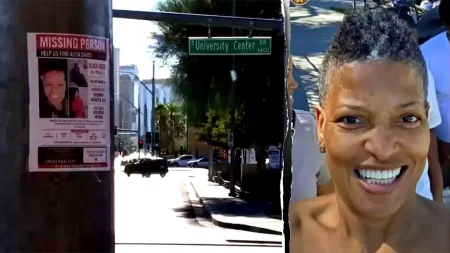
Sadly, these incidents are not isolated in the state’s largest city. In Jackson one system-wide pattern has kept community safety with vulnerable victims, both inside and outside the home. Christen Phillips, a mother of three and a DoorDash driver, became a reluctant symbol of business when she suffered cracked skull bones, brain bleeds and a fractured cheekbone during a work delivery near Jacksonville. Authorities say she had so much as honked at a man while stopped at an intersection, and this tiny moment of frustration cost her more than exhaustion and pain. The authorities identified the man as the driver as an OTC paycheck, but to our understanding, he followed her to the delivery address and allegedly attacked her with a bat as she was returning to her car. She was able to drive herself to a hospital, and was later charged with assault with a deadly weapon with intent to kill, inflicting serious injury. It is a harrowing, across-the-parking-lot nod to ordinary people who do their jobs and suddenly find themselves in a fight for their lives. And these kind of attacks from randoms make some neighborhood feel like a minefield.
The surge of similar crimes has now reached all corners of North Carolina, from urban centres to mountain towns and middle-school neighborhoods. In Winston-Salem, two people were killed and several more injured after what police described as a planned fight between juveniles that escalated into a shooting near Jefferson Middle School. The gunfire happened in Leinbach Park, not inside the school itself, but the psychological harm to the community was inescapable. An unnecessary and terrifying incident where kids and teachers prepared for the possibility of actual bullets flying outside the classroom altered how many people view public spaces. In Asheville, officials have repeatedly described a spate of deadly incidents among young people as “retaliatory violence,” but they have avoided the word “gang.” Effler has seen the trend directly and attacked the use of language says can hide the truth. A criminal gang is a gang, no matter how old the member is, he said. “You have to address it.” For Effler and others, this is about telling hard truths and facing violent crimes head-on, instead of softening them into vague categories that make an uneasy public feel calm while leaving their actual safety to chance. Meanwhile, in Charlotte, yet another repeat offender, David Simpson, was charged with killing a man only hours after being released on bond. That case became a broader flashpoint for pretrial release decisions, a question that now frames the Senate race and the direction of state criminal law.
Effler points to all these cases as evidence that North Carolina can climb out of a hole with stronger leadership, and he believes that political leadership begins in the Senate. He has sharply criticized former Democratic governor Roy Cooper, his Senate opponent, on criminal-justice issues, especially what he calls “cashless bail.” Effler says policies that allow people back on the street without monetary conditions have a direct, devastating impact on average people: “Cashless bail puts people on the streets that will arbitrarily walk up, like this Charlotte case and women getting assaulted and getting a video done,” he said. There are also deaths that will be difficult for the union to see in society and the fact that the accused repeat offenders can still be somehow released after so many warnings. A Cooper campaign spokesperson disputed that claim, saying the former governor opposed cashless bail and signed “the Pretrial Integrity Act” and put rapists and violent criminals in prison. “We’re not going to repeat old policies that failed,” the campaign said, and they also mentioned that they returned the FOP’s endorsement questionnaire on Aug. 10. The union’s support, which can move thousands of members, became one of the most prominent, but contested, endorsements in this election cycle. For voters, trial prevention is not just talking points; it is about whether street predators are kept at the margins of society before they can do another attack.
And here, the political drama takes shape. Michael Whatley, the GOP Senate candidate, said he was “honored” to receive the NCFOP’s backing and promised to favor policies that give officers greater protection and resources. These include the Protect and Serve Act, the HALO Act, and other causes that law-enforcement unions insist preserve practical authority rather than simply respond to the moment. These are not just pieces of legislation; they represent a different philosophy of justice: when injustice is committed, you take the wrongdoer’s liberty, not just to make a statement, but because restraint is what protects innocent families from the someone else’s next attacks. If lose one more account again, Effler said, you do need more than intense concern: you need to hold the line. “Michael Whatley has committed to the things that we believe in,” Effler said. “He’ll support actions that doesn’t defund law enforcement from doing the professional job that we need to do.” In the end, the story is not a little about a political ad. It is about Iryna, who came to the United States to escape conflict; about Christen, then a driver who went to work to support her three children; about kids running away from gunfire in a park; about a system that usually feels stretched beyond. Their pain and loss are the undeniable human cost of a broken pool. And their voices, one way or another, will echo in the November booths. The future of North Carolina’s streets, families and homes may be riding on those choices. And the rest of the country, equally afraid and angry, is also watching.