

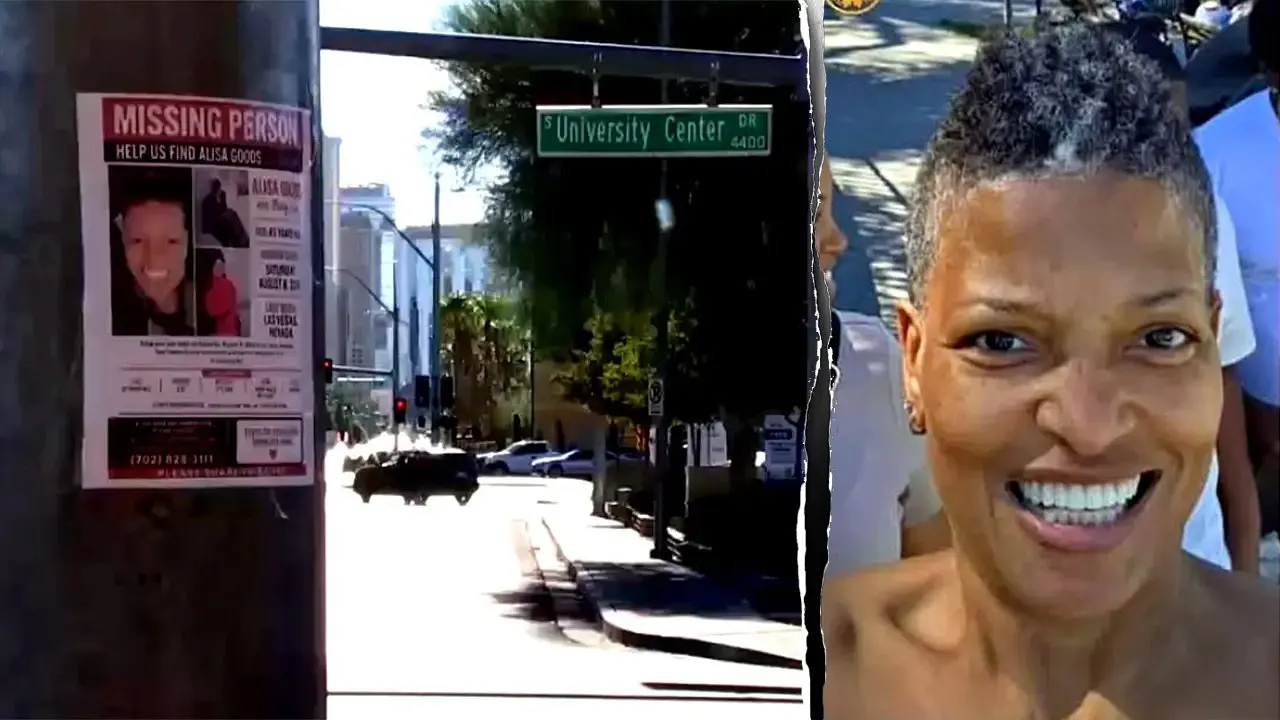
The announcement arrived with the crushing finality that only a missing person’s case can deliver, shattering the fragile hope that had been carefully nursed through days of frantic uncertainty. On Friday, the family of Alisa Goods, a 63-year-old grandmother of five from New York, released a statement confirming the worst possible outcome: their beloved matriarch had been found dead in Las Vegas. The news swept through the tight-knit circle of loved ones like a cold wind, transforming a desperate search for a living person into a solemn procession of grief. Just days earlier, the narrative had been one of a woman who had simply vanished into the sprawling desert metropolis—a place famous for its round-the-clock energy, but also for its unforgiving, shadow-draped edges where life can slip away unnoticed. For her family back home in New York, the geographical distance made the ordeal even more agonizing. They were forced to coordinate with law enforcement from across the country, watching news reports, fielding calls from well-wishers, and desperately trying to decode the cryptic messages that had surfaced from her phone. Now, the search was over, but the agony had only just begun, replaced by the heavy, suffocating silence of an unresolved tragedy. The family’s announcement did more than confirm a death; it marked the transition from the exhausting anxiety of the unknown to the permanent ache of a loss that would never be fully explained, leaving them to piece together the final, fragmented hours of a life that had been filled with the ordinary rhythms of love, routine, and familial duty.
The story of Alisa’s disappearance began on a deceptively normal Thursday, August 8th, when she was staying at the apartment of her longtime friend, Roger John, in the eastern part of the Las Vegas valley. The plan was simple, almost mundane: she needed to buy iron pills from a nearby CVS pharmacy. At approximately 12:45 p.m., she walked out of the apartment, descended the stairs, and headed towards the bus stop, a journey that should have taken her less than an hour to complete. For a woman of established routines—a grandmother who had raised a family and knew the importance of punctuality and keeping loved ones informed—this errand was a mere blip in her day. However, when she failed to return home in a timely manner, a flicker of concern began to grow in Roger John’s mind. Hours passed, and the flicker became a flame. He began calling her phone, but it went straight to voicemail, a hollow digital echo that offered no clues. He sent texts, but they remained undelivered and unread. It was entirely out of character for Alisa to disappear without a trace, especially without notifying anyone of a change in plans. By late evening, the initial concerns had morphed into outright alarm, prompting John to contact Alisa’s family back in New York, who immediately reported her missing to the Las Vegas Metropolitan Police Department. The subsequent investigation would reveal that she had indeed boarded a bus headed in the general direction of the CVS, but the trail went cold after that, swallowed up by the city’s labyrinthine network of roads and the immense, barren spaces that separate its populated zones. The mundane nature of her errand made the disappearance all the more haunting—a stark reminder that catastrophe often finds its opening in the most ordinary of moments.
The grim discovery came on the morning of Thursday, August 15th, nearly a week after Alisa was last seen alive. Las Vegas police responded to a call from a distressed individual who had stumbled upon a heartbreaking scene: a deceased woman lying in a drainage ditch near Wayne Newton Boulevard, a desolate stretch of land situated awkwardly between the bustling Terminal 1 parking garage at Harry Reid International Airport and the harsh, sun-scorched desert that surrounds the city. The location is a stark contrast to the glittering tourist corridor of the Strip; it is a faceless, utilitarian zone of cracked concrete, chain-link fences, and the distant roar of jet engines. Officers arrived to confirm the report, and the woman was later positively identified as Alisa Goods. However, the circumstances surrounding her death were not immediately clear, and a chilling piece of evidence emerged that painted a tragic picture of her final moments. Surveillance footage, reviewed by authorities, appeared to show Alisa falling down an embankment near the drainage area. In the video, she could be seen struggling to regain her footing, rising shakily before collapsing once more. After the second fall, there was no further movement observed—the footage cut to a final, static image of a woman who had succumbed to whatever exhaustion or medical event had overtaken her, lying alone in a forgotten corner of the city. The discovery raised more questions than it answered. Was she disoriented after taking a wrong turn? Had she suffered a heat stroke, a heart attack, or a stroke while wandering, the oppressive Las Vegas heat in August acting as an unrelenting adversary for anyone without shelter? The footage offered a heartbreaking window into her final moments—a solitary struggle for survival that went unnoticed by the bustling world just a few hundred yards away, the planes taking off and landing in blissful ignorance of the life that was fading below them.
In the wake of the identification, the family’s grief poured forth through a poignant statement delivered by Alisa’s niece, Alana Calloway. “This is an unimaginable time,” Calloway said, her words carrying the weight of a loss that no family should have to bear. “Words cannot describe the pain our family is experiencing right now.” The statement acknowledged the unbearable irony of the situation: they had clung to hope for days, only to be met with the shocking reality of her death. Yet, even amid their profound sorrow, Calloway expressed deep gratitude for the support they had received. “We just want to thank the public for the outpouring of love, support, and prayers. We also want to thank the media for helping bring attention to this situation,” she added. But gratitude quickly gave way to the raw ache of loss, as she concluded with a plea for understanding: “This hurts so deeply. We are still trying to learn the details surrounding her death. We ask for continued prayers and privacy as we grieve.” The statement painted a portrait of a family in the throes of a collective breakdown, trying to navigate the impossible task of mourning a woman who had been an anchor in their lives. Alisa was more than a victim in a police report; she was the grandmother who baked cakes for birthdays, the aunt who remembered every holiday, the friend who offered quiet wisdom over a cup of tea. The family’s public words were a testament to her enduring presence, transforming the stark facts of her death into a deeply human story of love, devotion, and the shattering void left in her wake.
Adding a layer of cruel confusion to the tragedy was the strange sequence of events that unfolded in the days before her body was discovered. On August 12th, four days after she vanished, Alisa’s family and friends began receiving bizarre text messages from her personal phone. The messages, sent from her number, contained requests for gas money and, in a particularly odd twist, Bitcoin. These demands immediately raised red flags for her niece, Alana Calloway. “I said, ‘What do you need gas for? The car?’ My aunt does not drive. There is no car,” Calloway recounted to CBS News, highlighting the absurdity of the requests. Alisa had not brought a car to Las Vegas and had been relying on public transportation during her stay. The requests for Bitcoin, a digital currency unfamiliar to most people in her demographic, seemed utterly disconnected from her lifestyle and capabilities. The family became convinced that these messages were not from Alisa at all, leading them to suspect that her phone had fallen into the hands of an opportunistic scammer—or, more ominously, that someone might be attempting to impersonate her in a twisted scheme to exploit her absence. The texts added a layer of psychological torment to an already agonizing situation, as the family grappled with the horrifying possibility that a stranger was toying with them while their loved one was missing or already dead. The theory of a kidnapping briefly surfaced, fueled by the unnatural content of the messages, but law enforcement kept their findings close to the chest as they worked to trace the origin of the texts. Ultimately, the strange digital breadcrumbs led nowhere conclusive, leaving the family with a lingering sense of unease and a bitter taste of what might have been—a cruel, digital ghost haunting the margins of a profoundly human tragedy.
As the investigation continues, questions linger in the air like the oppressive desert heat that likely played a role in Alisa Goods’ final hours. Did she suffer a sudden medical emergency—a stroke, a cardiac arrest, or a seizure—that disoriented her and caused her to wander into the drainage area? Was she merely attempting to take a shortcut or find her way back to the bus stop when she stumbled and fell, the August sun beating down without mercy until her body could no longer endure it? Or was there another, darker explanation that has yet to come to light? The Las Vegas Metropolitan Police Department has not released an official cause of death, pending a full autopsy and toxicology report, leaving the family in a painful limbo of unanswered questions. For the community, the story serves as a stark reminder of human vulnerability, even in a city designed for escape and entertainment. For Alisa’s family, it marks the end of a harrowing journey that began with a simple trip to buy iron pills and ended with a phone call no one ever expects to receive. As they retreat to the private sanctum of their grief, they carry with them the memory of a woman who was taken too soon, and the unresolved mystery of her final steps. The grandmotherof five, the aunt, the friend, the New Yorker who traveled to the desert—she leaves behind a legacy of love, a trail of shattered plans, and a profound reminder that life is fragile, that the ordinary can become extraordinary in a heartbeat, and that sometimes, even in a city of millions, a soul can slip away into the lonely shadows, leaving only questions in her wake. As they await answers, their only consolation is that Alisa is no longer a missing person but a found one, and that they can now begin the slow, painful process of honoring her memory and saying goodbye.