

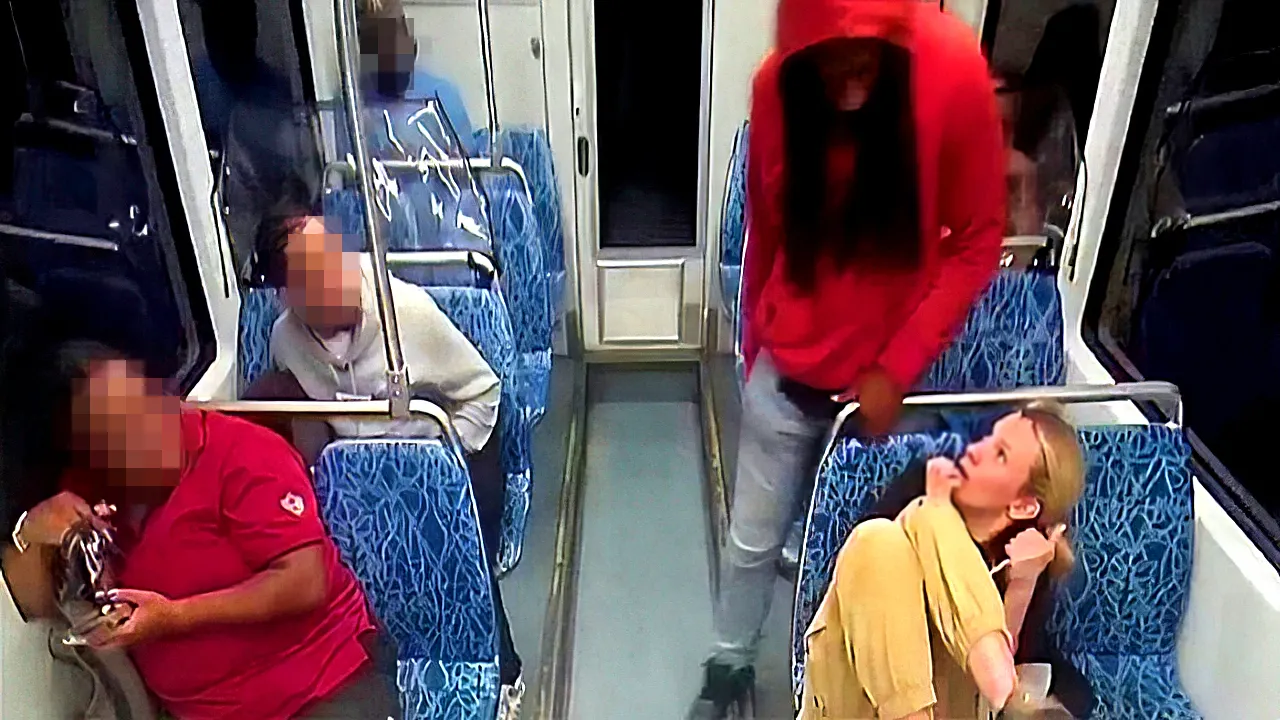
One year after a bright life was cut short in a shocking act of violence, the family of Iryna Zarutska is still searching for answers—and justice. What began as an ordinary ride on Charlotte’s light rail ended in a nightmare no family should ever have to endure. Iryna was stabbed to death on the Lynx Blue Line on August 22, 2025, and her loved ones have spent every day since wrestling with an unbearable loss. Now, they are channeling their grief into a legal fight, hoping to ensure that no other mother, daughter, or friend is taken so senselessly while riding public transit. The lawsuit they have filed against the City of Charlotte and its private security contractor is not a dry legal document; it is a cry of anguish from people who believe this tragedy could have been prevented. They are not asking for sympathy. They are asking for accountability. And in doing so, they are exposing a system they say failed Iryna in her final moments, leaving a vulnerable woman alone and unprotected on a train that should never have been allowed to become a place of terror.
The heart of the complaint is a painful accusation: that systemic failures within the Charlotte Area Transit System left the Blue Line dangerously exposed to violent crime, and that those responsible knew it. According to the lawsuit, no security guard was present on the train when Iryna was attacked. The family’s attorney, Lauren Newton, has been blunt about what that meant: “If there had been a security guard on that train, Iryna Zarutska would be here.” That statement has not been proven in court, and the allegations remain unresolved, but it captures the deep conviction driving this case. The lawsuit alleges that Professional Police Services Inc., doing business as Professional Security Services or PSS, failed to adequately staff and deploy both armed and unarmed personnel. The numbers are stark. Charlotte’s amended contract with PSS provided funding for 219 security personnel for fiscal years 2025 and 2026, but at the time of Iryna’s killing, the company had hired only 183. Even more troubling, the lawsuit claims that despite the contract allowing for up to 39 armed guards, PSS had only 11 on staff. To the family, this is not just a shortfall on a spreadsheet. It is a direct failure to protect real people, and Iryna paid the ultimate price for that neglect.
The lawsuit also points to a broader culture of lax enforcement that made the light-rail system a target for dangerous individuals. Iryna’s accused killer, Decarlos Brown Jr., was allegedly able to ride CATS transportation without paying a fare before the attack, according to the complaint. There were no physical barriers, the lawsuit alleges, preventing non-ticketed riders from simply walking onto the platform and boarding a train. In a system already struggling with crime, the absence of fare enforcement felt like an open invitation to chaos. “There’s been literally no fare enforcement and those things, at a basic level, are what’s necessary for safety,” Newton told reporters. “And there’s been none of that.” The family’s attorneys argue that Charlotte and PSS knew—or should have known—that the Blue Line and its stops had been the site of repeated criminal activity long before Iryna stepped onto that train. “Violent crime was absolutely foreseeable,” Newton said. The idea that a city would allow its transit system to become a place where violence is an accepted risk is hard to reconcile, but Iryna’s family believes the evidence will show a pattern of negligence that made tragedy inevitable.
The legal claims in the lawsuit are as serious as the circumstances that gave rise to them. Iryna’s estate is seeking damages exceeding $25,000, including punitive damages against PSS, based on allegations of wrongful death, negligent and inadequate security, and gross negligence. Notably, the lawsuit does not seek punitive damages against the city itself, though it names Charlotte as a defendant. That decision may reflect a desire to focus on the private company tasked with day-to-day safety, but the family’s grief is not limited to one entity. They want the city to confront its role in a transit system that they believe was set up to fail. There is also a painful legal twist in this case: Decarlos Brown Jr. has been ruled incompetent to stand trial, at least for now, and has dodged a potential death penalty. For Iryna’s family, that ruling means the person who took her life may never face a jury, adding another layer of frustration to an already agonizing ordeal. The lawsuit is their way of insisting that someone, somewhere, be held responsible for the failures that allowed this tragedy to unfold.
Beyond the legal arguments, there is a deeply human dimension to this case that cannot be ignored. Every statistic in the complaint represents a choice made by someone in power, and every failure to act represents a chance to save a life that slipped away. Iryna was not just a victim in a news headline; she was a person with a family who loved her, with dreams and routines and a future that was stolen. Her loved ones have had to relive the horror of her death through police reports and court filings, all while carrying the weight of knowing that better decisions might have kept her alive. Newton captured that sentiment when she said, “The family doesn’t want this to happen to anyone else’s loved one.” That is the true purpose of this lawsuit. It is not about money, although economic damages are part of the claim. It is about ensuring that Iryna’s death is not in vain, that the city and its security contractor are forced to look at what went wrong and make changes so that no future rider has to suffer the same fate. The family is asking for nothing less than a transformation of how transit safety is prioritized, from empty promises to real, meaningful action.
In the year since Iryna’s death, the world has moved on in many ways, but for her family, the pain is as fresh as the day they got the news. They have had to endure not only their own grief but also the slow, grinding process of legal discovery, where every document and deposition reopens old wounds. The city of Charlotte has declined to comment on the active litigation, and PSS did not immediately respond to requests for comment, leaving the family to wait for answers in a public forum. Yet they remain determined, in part because they know that silence is not the same as justice. This lawsuit is a demand for light to be shone on a tragedy that should never have happened. It is a reminder that public safety is not an abstract concept but a promise made to every person who boards a train, walks down a platform, or trusts that the institutions meant to protect them will take that responsibility seriously. Iryna Zarutska’s name is now forever tied to a challenge for change, a challenge her family hopes will echo far beyond Charlotte. They want her death to be the moment when a city finally woke up to the dangers lurking in its own transit system and decided to act. As the case moves forward, the family’s resolve remains unshaken. They are not seeking revenge; they are seeking truth, accountability, and a safer world for everyone else’s loved ones. In that sense, Iryna’s legacy will be measured not by the tragedy that claimed her life, but by the courage of those who refuse to let her story fade into silence.