

Pauline Hanson’s One Nation Secures Key Victory in Australian Politics
In the ever-shifting landscape of Australian politics, where populist voices are gaining traction amid growing debates over immigration, national identity, and economic reform, Pauline Hanson’s One Nation Party has notched another significant win. The recent victory by party candidate David Farley in the seat of Dunkley has underscored the party’s resilience and its alignment with broader conservative movements worldwide. As the nation grapples with challenges ranging from climate policy debates to border security, Hanson’s rhetoric echoes the brassy confidence of leaders like former U.S. President Donald Trump, signaling a potential resurgence for right-wing populism Down Under. This election result, though not a seismic shift, highlights how grassroots movements can capture the imagination of voters disillusioned with traditional parties. Experts are now watching closely to see if this momentum translates into lasting influence, especially as Australia heads toward its next federal election cycle. The victory speech alone, delivered with trademark flair, has sparked conversations about the future direction of the country’s political discourse. As Farley, an agricultural businessman with roots in regional Australia, takes his place in parliament, he brings a wealth of practical experience in farming and rural issues, promising to advocate for those often overlooked by urban-centric policies.
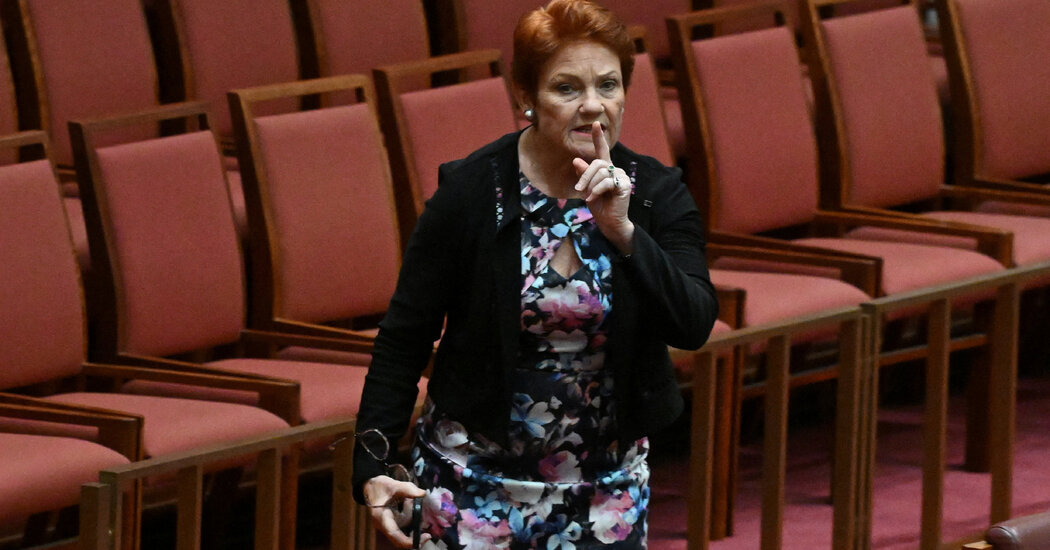
David Farley’s win in Dunkley wasn’t just a statistic; it was a testament to the enduring appeal of Hanson’s vision. Speaking at the Conservative Political Action Conference in Mar-a-Lago last year, Hanson praised Trump’s policies on immigration and economic nationalism, explicitly stating her intention to adapt those ideas for an Australian context. Her victory speech on election night echoed this sentiment, blending patriotic fervor with a direct nod to Trump’s “Make America Great Again” mantra. “We have a plan for the future of this nation,” she declared, her voice resonating through the jubilant crowd at her party’s headquarters. With a fiery insistence, she added, “I don’t want Shariah law on our doorstep. I want true people that want to come on board to be Australians, and join us in this journey of making our country the greatest country in the world again.” This language, reminiscent of Trump’s rallies, taps into deep-seated anxieties about cultural identity and sovereignty. It’s a message that resonates in communities feeling the pressures of globalization and demographic shifts. Hanson, a former fish shop owner turned political firebrand, has long positioned herself as a voice for the “forgotten people”—those in regional towns and working-class neighborhoods where economic opportunities have dwindled. Her speeches often weave personal anecdotes with policy promises, creating an authentic connection that traditional politicians struggle to match. By invoking Trump, Hanson internationalizes her appeal, drawing parallels between U.S. and Australian experiences while positioning her party as a bulwark against perceived threats from abroad. This strategic alignment isn’t merely rhetorical; it’s part of a broader playbook that has seen her party champion anti-immigration stances, support for local industries, and critiques of progressive policies on issues like climate change.
Yet, despite this victory, One Nation remains a fringe player in the grand scheme of Australian federal politics. With Farley’s seat now added to their tally, the party has two in the lower house of parliament—the other being a defector from the National Party last year—and four senators, including Hanson. Senate seats are allocated proportionally based on statewide votes, giving parties like One Nation a channel to influence legislation even without dominating the House of Representatives. However, true power in Canberra still eludes them; the next federal election, not expected until 2028, will provide a clearer national picture. Political analysts note that while One Nation has capitalized on voter discontent in specific regions, transforming that into widespread support across the diverse Australian electorate is no small feat. Australia’s parliamentary system, with its preferential voting and proportional representation elements, can amplify niche voices, but it also demands broad coalitions for real change. Hanson’s party has historically been viewed as a protest vehicle rather than a governing force, much like smaller populist outfits in Europe. Their policies on reducing immigration, boosting coal mining, and opposing multicultural initiatives have attracted a vocal base but alienated moderates and urban liberals. As the party navigates this balance, the Dunkley result serves as a litmus test for whether their message can evolve beyond controversy. Farley’s background as an agricultural businessman could help humanize One Nation’s image, shifting focus from Hanson’s polarizing persona to practical solutions for rural Australia’s challenges, such as water rights and trade policies.
The momentum behind One Nation’s rise is palpable, fueled by recent wins and influential backers. Just months before the Dunkley victory, the party edged out the Coalition in South Australian state elections, securing seats that bolstered their statewide presence. This string of successes has experts like political commentator Andrew Moffitt sensing opportunity. “There’s wind in their sails,” he observed, pointing to the party’s ability to harness discontent in an era of economic uncertainty and political fragmentation. One key factor in this upward trajectory is newfound financial support from deep-pocketed figures, notably mining magnate Gina Rinehart, Australia’s richest woman. Rinehart, whose Hancock Prospecting owns vast mineral resources, gifted Hanson a private plane, a gesture that symbolizes both patronage and alignment with One Nation’s pro-mining stance. This backing underscores how populist movements can attract elite allies when their agendas intersect with business interests. Rinehart’s influence, drawn from her experience in resource extraction and philanthropy, adds a layer of credibility to Hanson’s anti-regulation platform, particularly in energy and mining sectors. The party has also benefited from grassroots organizing, leveraging social media to amplify stories of everyday Australians grappling with high living costs and job insecurity. As they build coalitions with like-minded groups, One Nation’s narrative is evolving from outsider agitation to a viable alternative for conservatives tired of the major parties’ infighting. Moffitt suggests this could pave the way for collaborations with the Nationals or independents, potentially reshaping regional politics. Yet, with great power comes scrutiny; accusations of xenophobia and misinformation have dogged the party, forcing them to refine their messaging to appeal beyond their core demographic.
In the Dunkley race itself, the rivalry was far from typical. Michelle Milthorpe, an independent candidate who came in second, presented a contrasting vision focused on local community issues and sustainable development. Without a Labor Party contender in the mix, and with the Coalition barely registering as a contender, the election highlighted the fragmentation of traditional Australian political blocs. Milthorpe’s platform emphasized transparency and grassroots advocacy, appealing to voters wary of ideological extremes. Her finish as runner-up speaks to a segment of the electorate seeking pragmatic, non-party-affiliated leadership—a trend that’s been emerging in several by-elections across the country. Labor’s absence from Dunkley, likely a strategic decision amid internal party machinations following recent leadership changes, allowed One Nation to dominate the narrative. The Coalition, meanwhile, faced their own challenges, as internal divisions and loss of trust in figures like former Prime Minister Scott Morrison continue to erode their base. This dynamic underscores a broader shift in Australian democracy, where independents and minor parties are filling voids left by the Labor-Coalition duopoly. Milthorpe’s campaign, though unsuccessful, could inspire similar efforts elsewhere, challenging the entrenched power structures. Hansen’s triumph in this context avoids a stark binary fight, instead highlighting how populist appeals can thrive in polarized, low-turnout scenarios. Analysts argue this could set a precedent for future elections, as voters increasingly punish incumbents and reward outsiders who promise straightforward solutions to complex problems.
Looking ahead, the implications of this victory extend far beyond Dunkley’s borders. As One Nation gains traction, it raises questions about the polarization of Australian society and the potential for further fragmentation in politics. Hanson’s Trump-like approach, with its emphasis on national pride and skepticism toward global institutions, mirrors movements in other Western democracies where populism is on the ascent. Her party’s ability to court diverse supporters—from farmers in Queensland to miners in Western Australia—demonstrates a nimble adaptability that could influence policy on immigration, trade, and energy. However, experts caution that without broadening their appeal to urban centers and younger voters, One Nation risks remaining a regional force. Moffitt notes that sustaining momentum will require disciplined campaigning and policy substance beyond rhetorical flourishes. Internationally, this echoes Trump’s impact in shaping electoral strategies, reminding Australians of how borrowed ideas can galvanize local movements. As the nation prepares for 2028, the Dunkley result may well be remembered as a turning point, one where populist winds began shifting the sails of change. For Hanson and her party, this is not just a win—it’s a platform to redefine what it means to be Australian in an interconnected world. Whether this leads to greater inclusion or further division remains to be seen, but the stage is set for One Nation to play a larger role in shaping the country’s future. The journey ahead will test their resolve, but for now, the echoes of victory resonate loudly.