





Tragedy on the tracks: One dead, dozens injured in major British rail collision near Bedford
A devastating Friday commute: horror on the midland main line
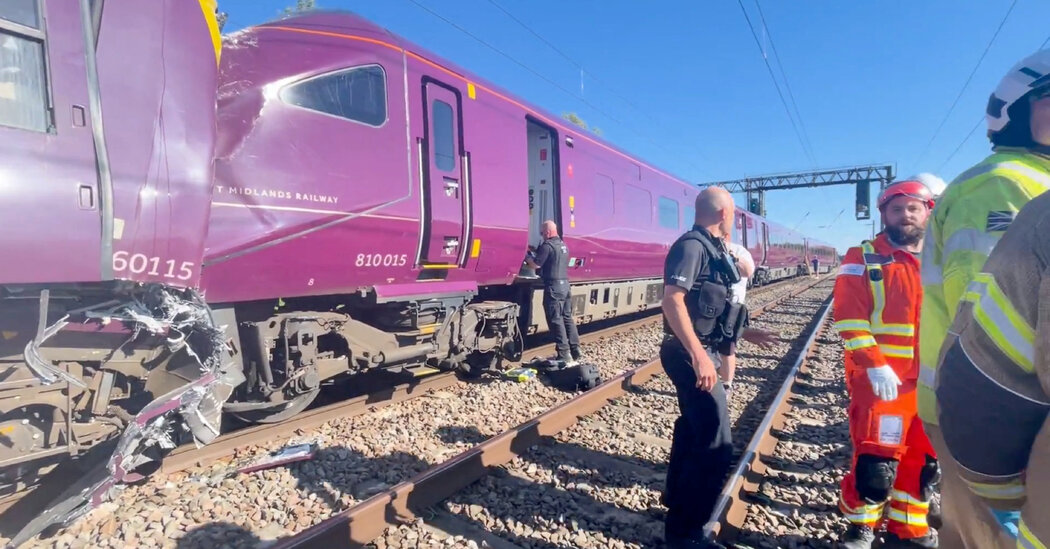
The quiet rhythm of a Friday evening commute was shattered in south-central England when two passenger trains collided on a busy stretch of track near the town of Bedford, leaving at least one person dead and casting a dark shadow over the region’s transport network. The catastrophic incident occurred at approximately 5:15 p.m. local time, a peak hour when hundreds of weekend-bound travelers and daily commuters packed the carriages heading toward the heart of London. Emergency services were instantly mobilized to the crash site, located about 45 miles north of the British capital, where they were met with scenes of twisted metal, shattered glass, and widespread panic. According to the British Transport Police, the crash triggered an immediate, large-scale emergency response as local police officers, medical teams, and search-and-rescue personnel rushed to the scene to pull survivors from the wreckage. For a nation that prides itself on the safety and reliability of its extensive passenger rail infrastructure, the sudden violence of the collision sent shockwaves through the community of Bedfordshire and beyond, raising immediate and troubling questions about the signaling and operating safeguards designed to prevent such disasters.
Mobilizing the front lines: emergency services confront a mass casualty event
The sheer scale of the casualty toll quickly turned the rescue operation into one of the most complex emergency responses the region has seen in recent years, prompting hospital staff and paramedics to brace for a protracted crisis. Representatives from the East England Ambulance Service confirmed the tragic fatality at the scene and detailed the grim breakdown of injuries: at least eleven passengers sustained critical, life-threatening injuries, while another twenty-two required urgent, immediate medical intervention for severe trauma. An additional fifty-six passengers were treated for minor injuries, ranging from lacerations to severe shock, bringing the total number of victims to nearly one hundred. As sirens echoed across the Bedfordshire countryside, the East England Ambulance Service dispatched a fleet of emergency vehicles, specialist trauma teams, and an air ambulance to airlift the most critically wounded to regional trauma centers. Simultaneously, administrators at Bedford Hospital declared a “major incident,” clearing wards, mobilizing off-duty surgical teams, and preparing emergency bays to handle the sudden, massive influx of wounded travelers. Authorities quickly cordoned off the surrounding roads, urging the public to avoid the area to allow emergency vehicles unimpeded access to the trackside triage camp that had been hastily constructed in the fading evening light.
Eyewitness to disaster: the harrowing survival story of Peter Knapp
For those inside the carriages, the transition from a mundane commute to a fight for survival was instantaneous, violent, and utterly terrifying. Peter Knapp, a 40-year-old air quality scientist and documentary filmmaker who was traveling in the front carriage of the rear train, described the impact in stark, visceral terms, comparing the physical shockwave to a sudden bomb blast. “It felt like a bomb, like I was in an explosion,” Knapp recalled in the aftermath of the collision, expressing profound disbelief that he managed to escape the mangled carriage with his life. The force of the impact dislodged heavy train seats, throwing passengers across the compartment, which was instantly filled with a thick, choking cloud of dust and debris that blinded the survivors. Amid the darkness and the screams of trapped passengers, Knapp observed several fellow travelers with severe, life-threatening lacerations and head injuries, their faces covered in blood as they struggled to orient themselves in the wrecked carriage. Knapp himself suffered injuries to his legs, bleeding heavily from his shins, and experienced a severe back spasm that left him temporarily unable to walk, requiring transport from the wreckage in a wheelchair.
A community in mourning: honoring a fallen driver and union advocate
The human cost of the Bedford rail disaster became even more poignant when Britain’s transit workers’ union released a statement confirming that the sole fatality of the crash was the driver of one of the trains, an esteemed former union representative who had dedicated his career to the railway and his colleagues. The loss of a veteran driver—respected not only for his professional skill but also for his advocacy on behalf of railway workers—sent a wave of profound grief through the close-knit community of British transit staff. Colleagues described him as a dedicated professional who prioritized the welfare and safety of his peers, making his death at the controls of his own train a bitter irony for those who worked alongside him. Labor representatives and railway workers across the country expressed their solidarity with the driver’s family, emphasizing that the tragedy highlights the daily, calculated risks taken by transport workers who keep the nation moving. As tributes began to pour in from across the network, union leaders vowed to closely monitor the subsequent investigation, demanding absolute transparency to ensure that no other driver or passenger is ever subjected to such preventable dangers.
Political tremors and arterial paralysis: the fallout at London St. Pancras
The political and operational ramifications of the collision immediately reached the highest levels of the British government, with Prime Minister Keir Starmer issuing a statement expressing his deep concern and offering condolences to the victims and their families. The Prime Minister emphasized that the government is monitoring the situation closely and is committed to providing all necessary resources to support the ongoing rescue and recovery efforts. The two trains involved in the collision were both bound for London St. Pancras, one of the busiest and most vital transportation hubs in the United Kingdom, which serves as a gateway for both domestic commuters and international travelers via the Eurostar. Operated by East Midlands Railway, the trains had departed their respective stations about an hour apart, raising critical questions among transit analysts as to how two trains on the same route became aligned on a path of direct impact. The resulting suspension of service along the Midland Main Line paralyzed regional transit, leaving thousands of commuters stranded, forcing operators to implement emergency bus replacement services, and highlighting the vulnerability of the UK’s rail network to localized disruptions.
Unraveling the cause: the Rail Accident Investigation Branch begins its inquiry
As the immediate emergency response transitioned into a recovery and salvage operation, investigators from the Rail Accident Investigation Branch (RAIB) arrived on site to begin the meticulous process of determining how the disaster occurred. Armed with specialized forensic tools, the RAIB team is tasked with examining track conditions, testing the functionality of the local signaling systems, and analyzing the “black box” data recorders from both East Midlands Railway trains. Investigators will look closely at whether a mechanical failure, a signaling malfunction, or human error played a role in the collision, particularly focusing on why safety systems failed to alert the drivers to the proximity of the train ahead. Modern British railways rely on sophisticated automatic braking and warning systems designed precisely to prevent rear-end collisions of this nature, making the Bedford crash a rare and deeply troubling anomaly in contemporary rail travel. The findings of the RAIB’s comprehensive investigation will not only seek to provide closure to the grieving families and the injured passengers but will also likely dictate future regulatory reforms and safety protocols across the entire British transport sector for years to come.