




After the smoke cleared from the battlefields of Yorktown, Saratoga, and Valley Forge, the young United States faced the monumental task of rebuilding a shattered economy and rewarding the battle weary patriots who had secured its independence. Lacking hard currency, the fragile, fledgling federal government and several cash-strapped state legislatures turned to their most abundant resource: land. Millions of fertile, untamed acres nestled in the Northwest Territory, the rugged wilderness that would eventually become the state of Ohio, were carved into military bounty parcels and deeded to these veterans. For thousands of brave, aging soldiers who had risked everything, these land grants represented not just payment for years of hardship and bloodshed, but a promise of renewal, a chance to carve a prosperous future out of the ancient forests. Gathering their families, their modest belongings, and the heavy memories of war, these pioneer soldiers ventured westward into the dense, untested frontier, axes in hand instead of muskets. They cleared the thick sugar maple and oak forests, tilled the rich black soil, established bustling settlements, and laid the literal and societal foundations of the Buckeye State. Today, historians estimate that roughly seven thousand of these Revolutionary War veterans found their final resting places in Ohio soil. They were the very first generation of Ohioans, individuals who transitioned seamlessly from defying a tyrannical king to building a democratic society from the ground up. Yet, as the decades rolled into centuries, the physical markers of their presence began to fade. Headstones crumbled under the relentless march of time, wooden markers rotted away, and the encroaching wilderness reclaimed many of these sacred sites. The quiet resting places of these brave men, who had once stood shoulder to shoulder against the grandest military empire on Earth, became shrouded in deep anonymity, forgotten by the very communities that blossomed directly from their immense sacrifices, and they now wait silently in the shade of ancient trees to be rediscovered, restored, and remembered by a grateful nation.
As the United States rapidly approaches its semi-quincentennial, the monumental 250th anniversary of its founding, a passionate movement is sweeping across Ohio to rescue these foundational heroes from the dust of obscurity. At the heart of this poignant, sprawling endeavor is Krista Horrocks, a remarkably dedicated project manager, historian, and passionate cemetery preservationist with the esteemed educational organization, the Ohio History Connection. Overseeing the statewide Revolutionary War Veterans Graves Project, partnered closely with the America250-Ohio commission, Horrocks is on a deeply personal mission to locate, catalog, and honor every single Revolutionary patriot resting within the state’s borders. For Horrocks, this project is far more than a dry, academic exercise in historical bookkeeping; it is a profound act of restorative justice and a celebration of human resilience. She speaks of these veterans not as distant, mythologized figures painted in static oil portraits, but as real, breathing human beings who survived the unfathomable horrors and privations of war, picked up their lives, and courageously marched westward to cultivate a new beginning for their families. It is an intimate exploration of the quiet, hardworking, and deeply meaningful lives these patriots led long after the grand stage of the revolution fell dark and the drums of war finally ceased to beat. The initiative seeks to bridge the chasm between the past and the present, inviting today’s Ohioans to walk the same ground as those who birthed the nation. By systematically uncovering exactly where these veterans lie, this project aims to permanently restore their names to the public consciousness, ensuring that their contributions to both the founding of the American republic and the physical birth of Ohio are never again lost to the shadows of history. The ultimate, grand vision of this program is to transform these forgotten, overgrown, and weathered gravesites back into vibrant, respected touchstones of local heritage, reminding citizens in every small farming town and sprawling metropolis across the entire state that they are walking daily upon the sacred ground of revolutionary struggle and triumph.
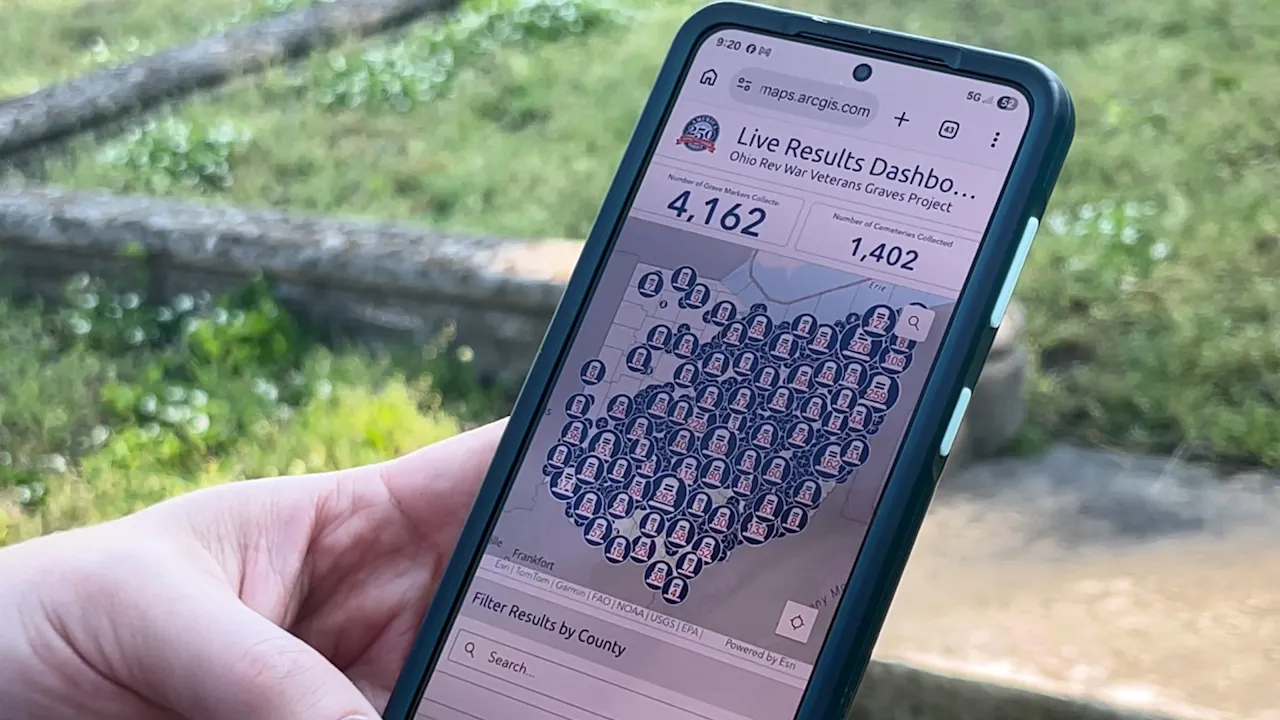
To successfully accomplish this truly monumental, challenging task of historical detective work, organizers recognized that they could not rely solely on professional historians; instead, they turned to the most powerful resource at their disposal: the public. By dynamically crowdsourcing the search through citizen science, this creative project warmly invites everyday Ohioans, from amateur genealogists and tech-savvy teenagers to local history buffs and civic organizations, to become active participants in this grand historical rescue mission. The primary tool facilitating this sprawling grassroots movement is Survey123, a highly structured and remarkably accessible mobile software application that instantly transforms any standard smartphone or hand-held tablet into a powerful, high-tech portal for historical preservation. Using the app on their phones, volunteers can venture out into their local communities, wandering through quiet, tree-shaded churchyards, forgotten family plots tucked behind suburban housing developments, and vast municipal cemeteries to match known archives with physical reality. When an enthusiastic volunteer steps through the weeds and locates a weathered headstone belonging to a Revolutionary War soldier, the intuitive mobile application carefully guides them through an exceptionally user-friendly but comprehensive set of structural and biographical questions designed specifically to capture vital historical data. Using their devices, dedicated participants input the veteran’s full name, precise birth and death dates, the exact geographic coordinates of the grave, and upload high-resolution photographs of the weathered headstone, the engraving details, and the surrounding scenery. This wonderfully interactive process has successfully turned ordinary family weekends into exciting historical scavenger adventures for households across the state, sparking deep, meaningful, multi-generational conversations about ancestry, civic duty, and community roots. So far, this collective army of modern-day scouts has successfully documented more than 4,100 of these long-buried patriots, creating an invaluable, living digital archive that bridges centuries. Through this simple mobile application, the daunting wall of historical anonymity is being dismantled brick by brick, allowing the names of forgotten infantrymen, scouts, and officers to be illuminated once again by the bright screens and expanding networks of the modern world that we inhabit today.
The arduous search for these elusive historical gravesites, however, is rarely a smooth or straightforward path; instead, it is a complex, exhausting journey fraught with lost documents, historical riddles, and structural challenges. Randy Rogers, the dedicated executive director of the historic Green Lawn Cemetery in Columbus, the second largest cemetery in Ohio, knows these administrative and emotional complexities all too well. While Green Lawn was established in 1848, several decades after the conclusion of the Revolutionary War, it serves as the final resting place for numerous patriots whose remains were lovingly relocated there by their descendants. In the transitional years of the mid-19th century, as Columbus experienced rapid urban expansion, smaller, older municipal and church burial grounds within the rapidly growing and modernizing city center were forced to close. Loving descendants desperately sought to preserve their ancestors’ sliding legacies of patriotism by carefully transferring their actual remains and original headstones directly to the serene, park-like sanctuary of Green Lawn. Yet, this historic migration of sacred memory and fragile skeletal remains created an incredibly tangled, frustrating web of clues for modern historians and researchers to untangle. Rogers explains that families often possessed immense pride in their patriotic ancestors, which sometimes led them to place ornate memorial markers, or cenotaphs, on family plots at Green Lawn even if the actual physical remains of the veteran were buried elsewhere in a family farm plot miles away. This deceptive phenomenon of double marking requires painstaking genealogical detective work, including checking old deeds, simply to verify exactly where a soldier truly rests. Compounding the issue are centuries of weather damage that have rendered slate and sandstone inscriptions entirely illegible, and the bittersweet reality of abandoned private family plots that have long since been paved over or reclaimed by nature. To date, Rogers and his deeply dedicated team of professional staff and local volunteers have officially documented nine Revolutionary War heroes on the state app, though they have identified a total of thirteen potential patriots within their sprawling grounds, continuing to sift through historical dust to separate fact from family legend.
As the highly anticipated Memorial Day deadline quickly approaches, the race to document these heroes takes on a heightened sense of urgency and emotional resonance. Memorial Day, originally established to decorate the graves of those who fell in the Civil War, serves as the perfect, poetic culmination for this intensive search, uniting veterans of all subsequent American conflicts under a single, eternal banner of deep, enduring, and nationwide gratitude. While Krista Horrocks candidly and realistically acknowledges list-building limitations, noting that reaching the absolute ceiling of seven thousand documented graves is an impossible dream because some sacred sites have simply been permanently erased by the passage of time, rapid urban development, or the total absence of any written burial records, the insurmountable nature of the total figure does not deter the volunteers. Rather, it intensifies their commitment to climb as close to that summit as humanly possible before the clock runs out. This collective push to meet the Memorial Day deadline has successfully mobilized entire rural and urban communities across the Buckeye State, warmly inspiring local Boy Scout troops, county historical societies, high school history classes, and proud direct descendants of the patriots to spend their spring weekends clearing thick brush, carefully scraping green lichen off weathered tombstones, and meticulously verifying ancient ancestral lineages. Visually and physically connecting with these quiet, sacred graves brings a profound, raw humanization to the otherwise academic and abstract concept of the American Revolution, transforming cold history into a deeply tangible reality. When a volunteer clears away overgrowth to reveal a name carved by hand in the late 1700s, it ceases to be a name in a dry textbook and becomes an intimate encounter with a person who sacrificed their youth for the promise of a free nation. This emotional driving force transforms the Survey123 app from a simple database into a digital monument of appreciation, proving that even though a grave might be physically lost, the collective memory of the sacrifice remains vibrant, resilient, and fiercely protected.
The ultimate, long-term goal of the Revolutionary War Veterans Graves Project extends far beyond merely curating a massive database of names to be filed away; instead, it is about initiating a powerful, long-term renaissance of community-led stewardship, civic education, and physical restoration of historical grounds. Once the crucial Memorial Day deadline passes and this massive, exhaustive historical data is meticulously compiled, the professional leadership at the Ohio History Connection and America250-Ohio plan to publish the verified database online, making it completely open and fully accessible to passionate researchers, public schools, and searching families worldwide. Armed with this incredibly accurate geographic and verified historical data, local communities will be fully empowered to secure brand-new, federally funded headstones from the Veterans Administration for long-lost graves that have sat completely unmarked for over two centuries. Indeed, Krista Horrocks warmly envisions a spectacular future where these newly identified, verified resting sites are beautifully adorned with gleaming white marble markers, major historical bronze placards, and freshly planted American flags, successfully transforming once-forgotten corners of quiet local cemeteries into active centers of community pride, historic remembrance, and public education. This meticulous, deeply respectful grassroots effort serves as the perfect, inspiring prelude to America’s upcoming semi-quincentennial birthday, offering a tangible, deeply personal, human-scale way to celebrate this monumental national milestone by honoring the very individuals who built its foundational brickwork. It reminds us that the grand sweep of American history is not composed merely of famous generals and legendary statesmen, but of thousands of ordinary, hardworking individuals who fought bravely, loved deeply, and quietly laid down their burdens in the fertile soil of Ohio. By rescuing these forgotten heroes from the silence of history, the people of Ohio are not just preserving the cold past; they are actively breathing fresh life into it, ensuring that as this country celebrates two and a half centuries of absolute freedom, the precious whispers of its original pioneer guardians are finally heard, respected, and loudly echoed for all future generations of Americans to come.