



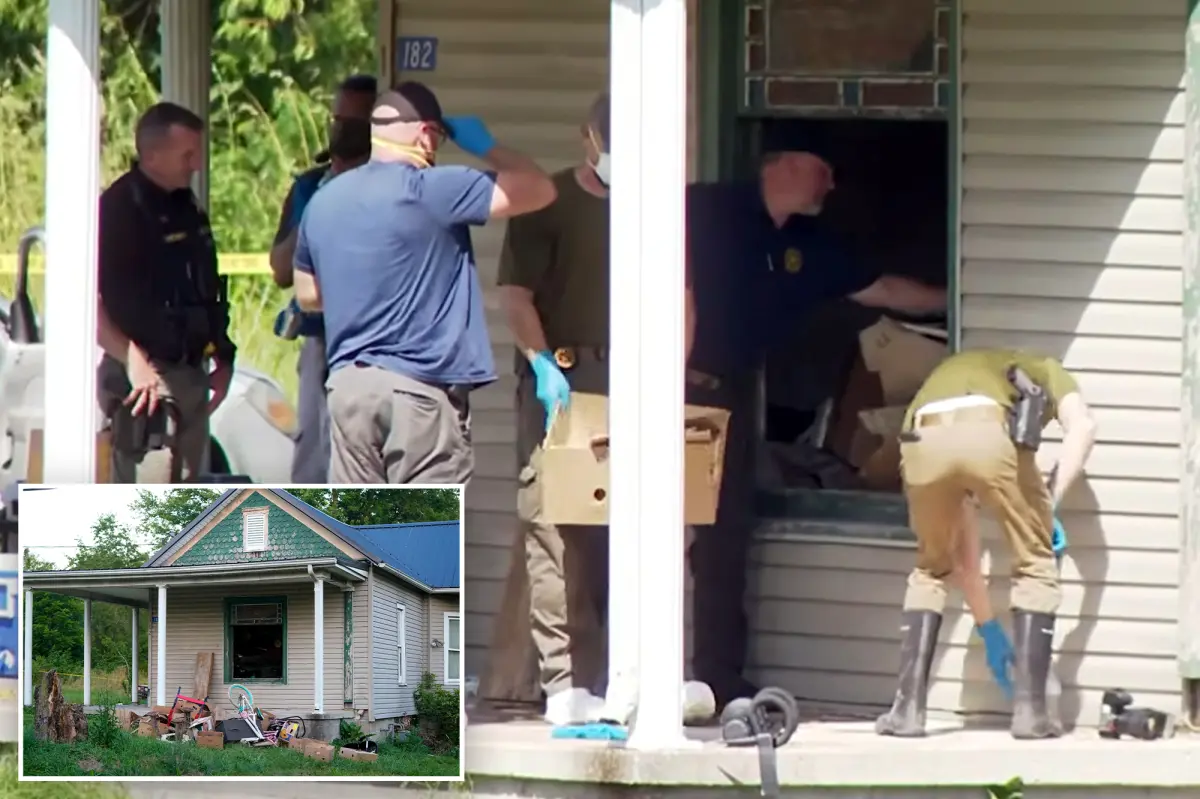
Nestled deep within the picturesque, rolling hills of southeastern Ohio, the tiny, close-knit village of Hamden has long been the kind of place where life moves at a quiet, undisturbed, and reassuringly predictable pace. With a population hovering just under one thousand residents, this peaceful rural community, located roughly sixty miles southeast of the bustling state capital of Columbus, is characterized by its tranquil country roads, modest historic homes, and a profound sense of peaceful, historic isolation. It is a scenic and gentle landscape where neighbors generally look out for one another, families have lived on the same plots of land for generations, and the harsh, complicated, and often terrifying realities of the wider modern world rarely seem to intrude on daily life. Yet, the idyllic silence of this Vinton County enclave was permanently and violently shattered on a tragic Tuesday afternoon when a convoy of law enforcement vehicles, bearing determined agents from the Ohio Bureau of Criminal Investigation and local sheriff’s deputies, descended upon a seemingly nondescript, isolated local residence. Guided by a freshly issued search warrant, investigators stepped across the threshold of the home, expecting to conduct a routine search for regulatory or minor violations, but were instead immediately thrust into a living nightmare that would deeply scar the collective psyche of the entire region for decades to come. Within the dark walls of that rural dwelling lay an unimaginable, heartbreaking secret that shattered the quietude of the town and sparked a massive, multi-agency emergency response. This shocking discovery altered the lives of sixteen innocent young souls in an instant and left seasoned, battle-hardened law enforcement officers grappling with the sheer, complex depth of human suffering and severe neglect existing right under their noses in their own beloved, quiet community. This alarming event reminded everyone that tragedy does not discriminate by zip code, forcing a sleepy town to confront a localized horror that seemed entirely foreign to its peaceful, rural identity.
Inside the house, authorities were confronted with a scene of utter devastation and physical neglect, discovering sixteen children living in conditions so profoundly disturbing that state officials struggled to find the vocabulary to adequately describe the squalor. Ranging in age from a mere eighteen months old to eighteen years of age, this highly vulnerable group of boys and girls had been subjected to an environment characterized by extreme isolation, severe deprivation, filth, and acute physical suffering. The air inside the locked home was thick with the suffocating, heavy weight of prolonged abandonment, and the physical state of the children told a silent, agonizing story of long-term survival against unimaginable, horrifying odds of human cruelty. Several of these youth were found in such critically compromised medical states that first responders had to immediately triage the scene, treating the house not just as an active crime scene but as an urgent, mass-casualty medical crisis requiring rapid logistical coordination. The situation was so incredibly dire and life-threatening that emergency medical helicopters had to be urgently dispatched directly to the rural property, airlifting two of the most severely injured and suffering children to level-one trauma centers to receive immediate, lifesaving intervention from highly trained pediatric specialists. For these children, who had spent their formative years tucked away from the eyes of a society that should have proactively protected them, the sudden rescue was a chaotic, overwhelming moment of profound deliverance, transitioning them instantly from a prison of neglect to the sterile, healing light of intensive hospital care where their long-delayed physical recovery could finally begin under safe, professional guardianship. The psychological transition from darkness and deprivation to the bright, sterile environment of an emergency room was undoubtedly terrifying, yet it represented the very first step toward reclaiming their basic human rights and dignity.
The profound psychological and emotional toll of this discovery rippled immediately through the ranks of the seasoned professionals who were tasked with processing the horrific scene and comforting the traumatized victims. For Ohio Attorney General Andy Wilson, a public servant with a long, distinguished career dedicated to law enforcement, child advocacy, and public safety, the interior of the Hamden home presented a level of horror that defied professional detachment and left him visibly and deeply shaken. During an emotional and highly charged press conference, Wilson wrestled with the gravity of what he and his team had witnessed, candidly stating to reporters that it was the absolute worst scene he had ever encountered in his entire career. He did not mince his words, describing the environment and the horrific treatment of the young victims as “pure evil,” a chilling, heavy phrase rarely uttered by objective law enforcement figures but one that perfectly captured the profound moral outrage of the situation. Officers, deputies, and forensic specialists, many of whom are parents themselves, found themselves navigating a delicate balance between their professional duties and the raw, human necessity of holding back tears as they gently wrapped terrified, neglected children in clean blankets and carried them out of the darkness and toward safety. This was not merely an administrative raid; it was a deeply emotional rescue mission that left an indelible mark on the hearts of every first responder who crossed that threshold, serving as a sobering, permanent reminder of the darkness that can lurk behind closed doors in any quiet corner of the country. For years, these professionals will carry the memories of the sights, smells, and sounds of that Tuesday afternoon, proving that the scars of child abuse are not borne by the victims alone, but are shared by the community that rises up to rescue them from the jaws of despair.
In the immediate aftermath of the raid, authorities arrested four adults who were residing in the home: Gary Siders Jr., Gary Siders Sr., Christina Siders, and Elizabeth Siders, all of whom now face severe legal consequences for the immense suffering inflicted upon the children. Rather than being established, familiar members of the quiet Hamden community, investigators quickly determined that the four adults were transient out-of-towners who appeared to have been traveling through the region, using the isolated rural property as a temporary shelter to evade the watchful eye of child welfare agencies and local authorities. Vinton County Prosecutor William Archer announced that all four individuals have been charged with second-degree felony child endangering, a charge specifically elevated due to the presence of “serious physical harm” inflicted upon the young victims, reflecting the severe systemic neglect and bodily trauma documented by medical experts. While officials firmly clarified that this was not a case of human trafficking—a detail that provided some clarity to the nature of the crisis—they did not immediately confirm the exact biological or legal relationships between the adults and the sixteen children, adding an extra layer of complexity to the ongoing investigation. As the four suspects awaited their initial arraignments, scheduled for a tense Wednesday morning where they would be assigned public defenders, investigators returned to the property with a secondary search warrant, painstakingly combing through the debris to piece together the timeline of abuse, gather personal documents, and compile the evidence necessary to build an airtight case that would secure long-term convictions. The legal journey ahead promises to be as meticulous as the physical rescue, as prosecutors work tirelessly to ensure that the individuals who facilitated or ignored this profound abuse are held fully accountable under the eyes of the law, sentencing them to the maximum penalties allowed.
The revelation of such immense suffering occurring in their own scenic backyard sent massive, unprecedented shockwaves through the tightly knit population of Vinton County, triggering a profound sense of collective sorrow, anger, and deep introspection among the locals. In a town of fewer than a thousand people, where daily conversations usually center on local high school sports, agricultural harvests, or community church events, the realization that sixteen children were suffering in silence just down the road was a devastating blow to the community’s identity. Neighbors began to question how such a monumental tragedy could go completely unnoticed for so long, leading to widespread discussions about the level of vigilance required to protect the most vulnerable members of society in rural areas. In rural America, where personal privacy is deeply respected and houses are often set far back from county roads behind thick lines of trees, the line between respecting a neighbor’s independence and failing to intervene when red flags emerge is incredibly thin and difficult to navigate. Yet, even as the community grappled with a mixture of guilt and disbelief, an overwhelming wave of compassion began to swell, with local residents, regional church groups, and community organizations immediately offering to gather clothing, food, toys, and monetary donations to aid in the children’s eventual transition back to safety. This rapid, grassroots outpouring of love highlighted the resilient, empathetic spirit of the Ohio countryside, proving that while a small town can unfortunately be the site of immense darkness, it is also a place where the human instinct to heal, comfort, and protect neglected children remains incredibly strong and active. In the face of unspeakable tragedy, the people of Hamden chose unity over division, transforming their collective shock into a powerful, community-wide shield of support designed to wrap these children in the warmth and security they had been denied for so long.
Looking ahead, the path toward long-term healing for these sixteen young survivors will undoubtedly be an incredibly arduous journey, requiring extensive medical care, intensive psychological support, and the patient recreation of a sense of safety that was systematically stolen from them. While the physical wounds of the two children airlifted to trauma centers will be treated by state-of-the-art medical teams, the invisible emotional scars borne by all sixteen siblings will take years, perhaps even a lifetime, to truly mend under the care of specialized social workers, pediatric therapists, and loving foster families. On the legal front, the commitment to securing a measure of peace and accountability for these young victims remains absolute, with both state and local officials vowing to pursue the maximum possible penalties under the law to ensure this never happens again. “Justice will be served for these children,” Attorney General Andy Wilson declared with unwavering, solemn resolve, echoing the sentiments of a community and a nation that demands accountability for such an egregious breach of basic human decency. As the legal system begins its slow, formal march toward trial, the focus remains firmly where it belongs: on the welfare, safety, and rehabilitation of sixteen young lives who have finally been brought out of the shadows of neglect and into the warmth of a system designed to protect, nurture, and ultimately restore their stolen childhoods. The road to recovery may be long, winding, and fraught with challenges, but the strength shown by these survivors in their darkest hours suggests a profound capacity for resilience. Step by step, with the support of a compassionate state and dedicated advocates, they will learn to trust again, shifting from a tragic headline into a triumphant story of survival, healing, and hope for a brighter, safer future where their dreams can finally be realized.