

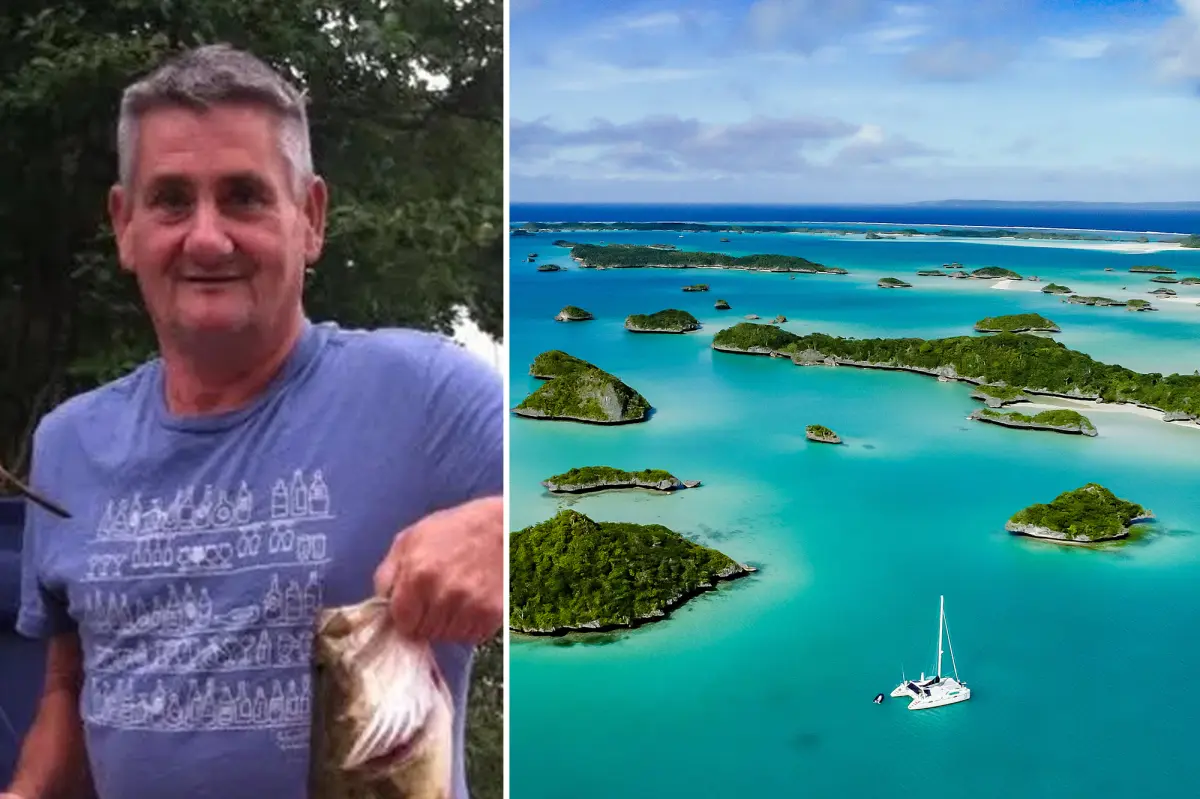
For decades, Scott and Claire Winslow held onto a beautiful, shimmering vision of what their golden years would look like—a grand, sun-drenched voyage across the mesmerizing, azure waters of the South Pacific. It was a dream cultivated over a lifetime of dedicated hard work, raising three beloved children in Massachusetts, and weathering the daily grinds of suburban life. In April, that long-cherished aspiration finally manifested into reality when they cast off the ropes of their ordinary lives to embark on an ambitious, three-month sailing odyssey. Accompanied by their close-knit family, including their nephew, they set out to explore the vast, pristine expanse of the ocean, searching for peace, natural beauty, and the quiet joy of a well-earned reward after decades of selfless contribution to their community. They envisioned navigating the gentle currents, exploring hidden coves, and integrating themselves into the vibrant local cultures of the islands they had only ever read about in books. This was not just a vacation, but a structural milestone, a spiritual pilgrimage to mark the completion of their formal careers and the beginning of a peaceful transition into retirement. The wind in their sails stood as a symbol of pure, unadulterated freedom, and the initial weeks of the journey were filled with the breathtaking beauty of remote horizons, starry tropical nights, and the profound, unifying connection that only the open sea can forge among people who share a deep history and bond. It was supposed to be the ultimate chapter of their lives, an unforgettable adventure where memories would be minted in gold, and the stresses of the modern world would dissolve. They breathed in the warm salt air, utterly unaware that beneath the seemingly pristine and tranquil surface of their tropical paradise, a silent, microscopic threat was quietly waiting to dismantle their plans and transform their ultimate family dream into a devastating, living nightmare.
Just a few weeks into the voyage, as their vessel glided through the remote and isolated waters of the South Pacific, Scott noticed a small, seemingly inconsequential mark on his skin—what appeared to be nothing more than a routine, frustrating bug bite. In the tropical environment, such minor irritations are incredibly common, and there was absolutely no reason to suspect that this tiny puncture would become the catalyst for a catastrophic, life-threatening medical emergency. However, within days, the situation turned terrifyingly grim as Scott’s health began to rapidly and mysteriously deteriorate while they were still far out at sea, removed from any immediate medical infrastructure. For nearly two agonizing weeks, with only the endless blue horizon surrounding them, Scott’s body waged a silent, losing war against an aggressive, unidentified pathogen. As the days dragged on, the fever burned hotter, and Scott’s cognitive sharpness began to slip away, replaced by a terrifying lethargy that alarmed everyone on board. The boat, which had once felt like a sanctuary of exploration, suddenly felt like a floating prison, isolating them from the modern medicine that could have easily halted the infection in its infancy. His nephew and wife watched in mounting horror and helplessness as the vibrant, robust patriarch grew increasingly frail, his natural strength steadily siphoned away by an unseen, invasive enemy. By the time their boat finally managed to navigate the vast distances to make landfall in the island nation of Fiji, the transition was complete and utterly devastating: the active, highly capable sailor who had proudly steered their vessel was now so profoundly weakened that he was completely unable to stand or walk on his own. The tropical paradise they had sought suddenly became a stark, alien backdrop to a frantic, terrifying race against time, as he was rushed from the docks directly to a local medical facility, his life hanging by an incredibly thin, frayed thread.
Upon reaching medical professionals, the sheer, terrifying scope of Scott’s systemic infection became agonizingly clear, instantly shattering any lingering hopes that this was merely a temporary heat illness or a mild, treatable tropical bug. The father of three was initially admitted to a private clinic, but as his vital signs plummeted and his major physiological systems began to shut down one by one, he was desperately transferred to the Intensive Care Unit at Lautoka Hospital, located on Viti Levu, the main island of Fiji. There, amidst the clinical hum of foreign life-support machinery, Claire was forced to confront every spouse’s ultimate nightmare when doctors gently but gravely instructed her to prepare for the absolute worst-case scenario. Scott currently lies critically ill in a foreign ICU, entirely dependent on a mechanical ventilator to take each breath, while his body is ravaged by the devastating, cascading effects of septic shock and multi-organ failure. The clinical vocabulary of the doctors—terms like systemic inflammatory response syndrome and acute organ dysfunction—sounded like a foreign, terrifying language. The sterile, fluorescent-lit environment of the hospital stood in shocking, painful contrast to the sunlit beaches and sparkling waves they had experienced just days prior. The relentless, aggressive infection has colonized his lungs and gallbladder, throwing his entire system into inflammatory chaos, while his kidneys struggle to function at a mere fraction of their normal, healthy capacity. Medical staff in Fiji are doing everything within their power, working tirelessly close to the limits of their local resources, but the etiology of the infection remains a frustrating and terrifying mystery to this day. Whether it originated from the initial insect bite, an unnoticed, infected wound, or some other marine pathogen, the specific diagnosis matters far less than the cold, terrifying reality that his body is losing the battle in a regional facility that simply lacks the highly specialized equipment required for long-term critical care of this immense complexity. The family is left to watch a beloved patriarch suffer in an unfamiliar environment, far removed from the comfort of their home, adding a profound layer of emotional torment to an already unbearable medical catastrophe.
Back home in Massachusetts, the painful distance of over eight thousand miles amplifies the absolute helplessness felt by Scott’s three children, who are forced to watch their father’s life-and-death struggle through agonizing, middle-of-the-night phone calls, text messages, and sporadic medical updates. This distance creates a cruel psychological barrier, where every ring of the phone causes a spike in heart rate and every hour of silence is filled with the worst imaginable outcomes. They are forced to carry on with their daily routines in New England while their minds are entirely consumed by the image of their father fighting for his life on an island in the Pacific. His daughter, Lisa Babbin, has become the brave, desperate voice of a family suspended in a state of perpetual trauma and grief, noting with heartbreaking urgency that every single hour that passes is absolutely critical to her father’s chances of survival. To those who know him, the image of Scott hooked up to a tangle of tubes and monitors in a foreign intensive care unit is deeply discordant with the vibrant, independent man he has always been throughout his life. Scott is widely known as a fiercely hardworking, loyal, and incredibly generous soul who spent his entire life putting the needs of others far before his own comfort. He is the quiet anchor of his community, the kind of person who would intuitively notice when a neighbor or friend was struggling and quietly step in to offer his mechanical skills, his strong hands, his time, or his financial resources without ever asking for recognition or anything in return. Now, the selfless man who spent a lifetime rescuing others from their own difficulties is the one who desperately needs a literal lifeline, and his family is refusing to let distance, bureaucracy, or despair prevent them from pulling him back from the edge of the abyss, clinging tightly to hope even as the medical prognosis threatens to overwhelm their emotional reserves. The stark reality of their separation is a constant, aching wound, forcing them to navigate the terrifying prospect of losing their guiding light while separated by oceans and continents, desperately clutching onto memories of his laughter to keep their spirits afloat.
The path to potentially saving Scott’s life is medically clear, yet it is blocked by a towering, heartbreakingly steep financial wall that highlights the brutal, cold realities of global medical emergencies. The family has successfully secured a highly coveted, empty ICU bed for him at Newton-Wellesley Hospital in Massachusetts, where state-of-the-art medical technology and familiar, English-speaking doctors stand ready to fight aggressively for his recovery, but the physical challenge of transporting a critically ill patient on active life support across an entire ocean is astronomical. The only viable option to save his life is a specialized medical evacuation flight—a flying intensive care unit equipped with specialized doctors, ventilators, heavy medication, and monitoring equipment capable of sustaining his fragile vitals over the long, grueling journey home. However, the price tag for such an 8,000-mile medflight from Fiji to Boston is a staggering, mind-boggling $250,000, a sum that is completely out of reach for any average working family, particularly as medical bills from foreign hospitals accumulate rapidly without the safety net of their standard domestic health insurance. This financial hurdle represents the dark underbelly of international travel, a stark reminder that when tragedy strikes far from home, the systems designed to protect human life are often bound by geographic and financial limitations. It is a grueling, undignified reality where a family must spend their hours checking bank accounts and filling out loan paperwork instead of sitting by their loved one’s bedside holding his hand. In a desperate, coordinated effort to bridge this massive financial chasm before time runs out, the Winslows have launched an urgent GoFundMe campaign to appeal to the collective empathy of strangers and have applied for emergency loans from the United States government, begging for the financial means to simply bring their patriarch back to American soil so he has a fighting chance to live. This eye-watering sum represents more than just a logistical expense; it is the literal ticket between life and death, an agonizing barrier that transforms a human life into a transaction of dollars and cents, leaving his family to grapple with the terrifying ethical weight of a world where survival is so closely tied to one’s financial capability.
In the face of this overwhelming, catastrophic nightmare, the Winslow family’s journey has transformed from a private holiday tragedy into a profound, moving testament to human empathy, solidarity, and the enduring power of community. As prayers and financial contributions slowly begin to trickle in from old friends, extended neighbors, and compassionate strangers touched by Scott’s tragic plight, his family remains resolutely anchored in their collective faith, refusing to surrender to the darkness of their current circumstances. They are sustained by the belief that love, when amplified by the voices of many, can move mountains—or in this case, cross oceans. Every donation, no matter how small, is a brick in the bridge that will carry Scott back to the people who need him most. The story of the Winslows is a loud, ringing call to our shared human experience, a reminder that we are all interconnected, and that at any moment, the fragile vessels of our own lives could be tossed into a storm. They are fighting not just for a generic patient’s survival, but to reclaim the warm, laughing heart of their family—a dedicated husband, a loving father, and a cherished uncle whose long-awaited retirement dream was cruelly hijacked by an invisible twist of fate. The agonizing distance between a state-of-the-art hospital bed in Boston and a quiet, clinical ICU room in Fiji serves as a poignant, universal reminder of how quickly life can alter its course, turning a voyage of joyful discovery into a desperate, agonizing crusade for a single human life. As the clock ticks relentlessly forward and every second counts, the Winslows continue to plea for help, believing that the collective kindness of the world can build an invisible bridge over the vast Pacific Ocean, bringing Scott home to the family that loves him so dearly, where he can finally begin the long, difficult road to healing and peace. Their story is a deeply moving reflection of the fragile threads that connect us all, proving that even in our darkest hours, when we are stranded on the far side of the globe, the power of love, community, and shared humanity can illuminate a path forward through the deepest and most terrifying storms.