



Here is a humanized and expanded summary of the provided text, structured into six paragraphs of approximately 300-350 words each, totaling close to 2,000 words.
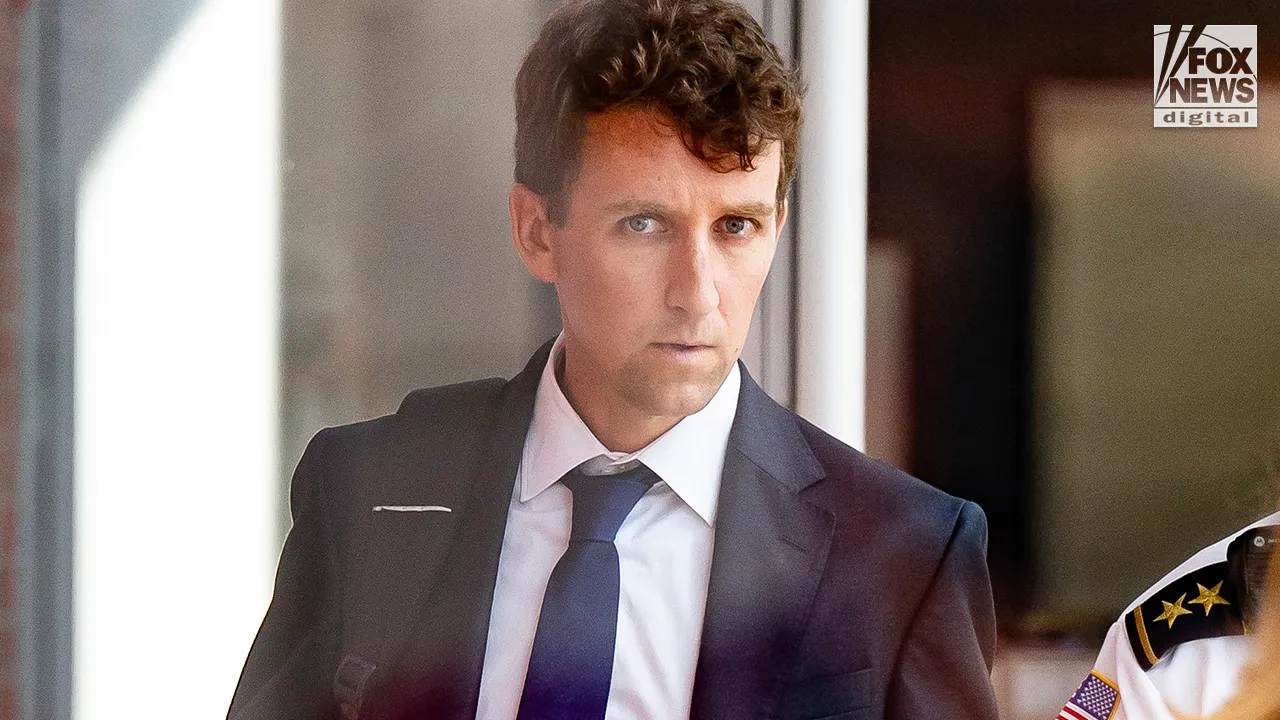
The Massachusetts courtroom has become a crucible of human grief, where the bounds of sanity, motherhood, and forgiveness are being stretched to their absolute limits. Lindsay Clancy, a 36-year-old former nurse, stands accused of the unthinkable: the murder of her three young children—Cora, Dawson, and Callan—who were found strangled in the family’s Duxbury home in January 2023. The prosecution is seeking three counts of first-degree murder, framing a narrative of premeditated violence. Yet, the defense is offering a haunting counter-narrative, one steeped in the shadowy and terrifying realm of postpartum psychosis, arguing that Lindsay was not in control of her actions but rather the victim of a severe mental health crisis that fractured her perception of reality. As the trial unfolds, the most compelling figure is not the defendant herself, but the man she left behind—her ex-husband, Patrick Clancy. He is a man who has become a living paradox: a grieving father who buried his children, a scorned spouse who has publicly forgiven the killer, and a survivor who has somehow managed to piece together a new life while being forced to relive the worst day of his existence in front of a jury.
Patrick Clancy’s journey since the tragedy is one of jarring contrasts and quiet resilience. A business applications sales executive at Microsoft, he embodies a persona of order and logic, yet his personal life has been defined by chaotic loss. According to public records obtained by the New York Post, he relocated to New York City within months of the murders, physically distancing himself from the haunted hallways of his former home. He legally filed for divorce in February 2024, severing the final procedural tie to Lindsay. But the most astonishing development came with the revelation that he has remarried. Reports indicate that Patrick wed Dr. Rachel Danis, a physician, in a Central Park ceremony in the spring (reported as 2026). This new chapter is so surreal that even his own defense attorney, Kevin Reddington, marveled at his client’s composure. “How that guy is not an emotional basketcase is beyond me,” Reddington said in court, defending Patrick’s resilience as he navigates his new life. “He is trying hard to move on with his life… As the court is aware, they’re divorced, he’s remarried, he has a family.” This testimony is not merely a procedural detail; it is a profound testament to the human spirit’s capacity to adapt, even when the foundation of one’s identity has been demolished.
The case against Lindsay hinges on the intricate and often misunderstood condition of postpartum psychosis. The defense is meticulously building a timeline that shows Lindsay’s mental state deteriorating in the days leading up to the tragedy, characterized by delusions, sleep deprivation, and a desperate belief that harm would befall her children if she did not act. This medical defense is given a strange new layer of depth by the personal history of Patrick’s new wife, Dr. Rachel Danis. In a poignant interview on the Fertility Podcast in September 2024, Danis opened up about her own struggles with fertility and the immense societal pressure placed on women. She described feeling like a “black sheep” and being “riddled with this fertility stuff,” speaking to the overwhelming burden women carry when balancing career, personal growth, and the primal desire for motherhood. This connection between Patrick’s new partner and the context of the case humanizes the defendant in an unexpected way. It suggests that Patrick is not only rebuilding his life but is drawn to women who understand the profound psychological weight of maternal expectations. Their shared passion for hiking and fitness, cited in Men’s Journal, offers a glimpse into their coping mechanism—a physical and arduous escape that provides tangible goals and a semblance of control in a world that once spun wildly out of it.
Beyond his personal reconstruction, Patrick has channeled his unimaginable sorrow into a powerful act of advocacy. He, alongside his family, founded a non-profit organization called the Heard Foundation. The mission statement is a rallying cry for systemic change: to “change how parents are cared for—so no parent faces perinatal mental illness in silence and no family is left behind.” The foundation serves as a living memorial to Cora, Dawson, and Callan, ensuring that their short lives have a lasting impact on the mental health landscape. Even more astonishing than the foundation, however, is Patrick’s public, radical forgiveness of Lindsay. Just days after the murders, he wrote on a GoFundMe page a message that stunned the world: “I want to ask all of you that you find it deep within yourselves to forgive Lindsay, as I have… The real Lindsay was generously loving and caring towards everyone – me, our kids, family, friends, and her patients. The very fibers of her soul are loving. All I wish for her now is that she can somehow find peace.” When he took the stand himself, he didn’t speak of anger or vengeance; he spoke of the children as a loving father. He described Cora as a girl who was “into princesses” and “had a lot of friends” who “just liked taking care of people.” He described Callan, the youngest, as “just a happy baby,” and Dawson as a boy who “liked the television show Paw Patrol” and was obsessed with firefighters and trucks. These intimate, mundane details cut through the legal jargon, forcing the jury to see the victims not as statistics, but as precious, vibrant little souls.
The prosecution, however, is actively working to dismantle the defense’s narrative, attempting to “squeeze” a timeline from Patrick’s testimony that suggests premeditation or signs of neglect that Patrick might have ignored. They are probing for cracks in the story, looking for any indication that Lindsay’s actions were born of malice rather than madness. Yet, the family’s internal dynamics have complicated the prosecution’s efforts in a breathtaking way. In a surprising move, Patrick’s own mother, Susan Clancy, testified as a witness for the defense. A woman who has lost her grandchildren chose to stand, in some capacity, beside the woman accused of killing them. Legal analyst Donna Rotunno commented on this extraordinary act of familial empathy. “She is extremely sympathetic to what Lindsay was going through,” Rotunno noted. “And if you thought that… anybody would wanna be upset about the loss of their grandchildren, it would be her, correct? She’s the father’s mother, and she’s there supporting Lindsay…” This gesture is a monumental statement. It implies that the Clancy family, having lived through the aftermath and seen Lindsay’s psychological state up close, understands that she, too, is a victim of a brutal biological and mental health failure. The courtroom has become a stage for a deeper conflict—not merely between prosecution and defense, but between the rigid pursuit of punitive justice and a nuanced, deeply compassionate understanding of human vulnerability.
The trial’s most haunting moment came during the testimony of Sheila Cavanaugh, a board-certified chaplain at Brigham and Women’s Hospital. She recounted her visit with Lindsay on January 31, 2023, just days after the children were discovered. During that meeting, the accused mother, likely still in a state of psychotic shock, uttered a chilling phrase: “I am so glad my children are safe.” In the context of the brutal reality, these words are heartbreakingly ambiguous. They could be the twisted logic of a delusional mind, believing that death was a protective sanctuary. Or they could be the genuine relief of a mother who, in her broken state, believed she had saved them from a fate worse than death. Cavanaugh testified that she responded by assuring Lindsay that the children were indeed safe, in heaven with God, and that the two of them prayed together. Judge William Sullivan ended court early on Thursday after this powerful testimony, sending the jurors home with these paradoxical words ringing in their ears. As they departed, they carried the weight of a case that defies easy categorization—a father forgiving an unforgivable act, a grandmother supporting her son’s ex-wife, and a chaplain offering spiritual solace to a woman accused of infanticide. The verdict will hinge on whether the jury can determine if Lindsay Clancy was a calculating murderer or a lost soul, and in doing so, they must decide if her children are truly “safe” in a realm beyond our understanding, or if justice demands a mortal reckoning.