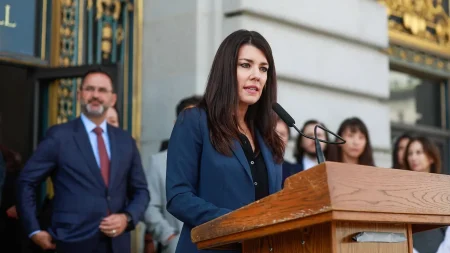






The television screen has a unique way of flattening public figures into two-dimensional caricatures, stripping away their complexities to serve a prepackaged narrative of conflict or compliance. Yet, in her recent high-profile interview, Representative Alexandria Ocasio-Cortez disrupted this predictable broadcast formula by presenting herself not as an uncompromising ideological symbol, but as a deeply reflective, evolving human being navigating the turbulent waters of national politics. Sitting under the studio lights, the congresswoman from New York’s 14th district demonstrated a palpable maturity, a far cry from the freshman insurgent who shocked the political establishment in 2018. Once known primarily as the fiery bartender-turned-legislator who took Capitol Hill by storm, Ocasio-Cortez used this media appearance to signal a profound shift in both her rhetorical strategy and her legislative identity. She chose to speak not to the echo chambers of social media, but to the broader, often anxious American electorate, demonstrating that her time in the halls of Congress has been marked by genuine intellectual and emotional growth. This interview was a masterclass in political translation, where she sought to bridge the immense chasm between the uncompromising ideals of grassroots activism and the messy, pragmatic realities of national governance, proving that personal evolution is not a sign of weakness, but an essential component of resilient leadership.
Central to this transformation was her deliberate effort to distance herself from polarizing, activist-driven slogans, most notably the phrase “defund the police.” During the summer of 2020, amid a global reckoning over racial injustice and systemic police violence, that slogan became a powerful rallying cry for activists, but it also became an incredibly divisive political weapon that opponents used to paint the entire Democratic Party as soft on crime. In her interview, Ocasio-Cortez addressed this head-on, explaining that while the underlying desire to address systemic inequality and reallocate resources toward mental health, education, and social services remains vital, the specific framing of “defunding” often failed to capture the nuances of what working-class communities actually need. She noted that in her own diverse district, which spans parts of the Bronx and Queens, residents are deeply concerned about both police misconduct and the very real threat of neighborhood violence. By acknowledging that safety and reform are not mutually exclusive, she validated the fears of ordinary citizens who feel left behind by abstract ideological debates. Her pivot away from the slogan was not an abandonment of her commitment to criminal justice reform, but a recognition that in the arena of public policy, the words we use must build coalitions rather than erect walls, and that true progress requires speaking a language of collective safety and shared dignity.
This rhetorical shift highlights the profound human cost of operating under the constant, unrelenting microscope of modern political celebrity. For years, Ocasio-Cortez has been a lightning rod for both adoration and vitriol, carrying the heavy burden of representing the hopes of millions of progressives while simultaneously serving as the ultimate villain in conservative media narratives. To admit publicly that certain activist tactics or slogans were politically counterproductive requires a rare level of vulnerability, especially in an era where political consistency is often valued over growth. Her willingness to openly reflect on her past positions reveals a leader who is actively grappling with the responsibilities of real power, learning that the purity of activism must eventually adapt to the realities of legislating. It is easy to shout demands from the steps of the Capitol, but it is infinitely harder to sit at the negotiating table and draft legislation that actually passes into law. By showing this level of introspection, she humanized herself to an audience that has long been trained to view her with suspicion, demonstrating that she is not a static political brand, but a living, breathing person who listens, learns, and is capable of changing her mind when confronted with the complex realities of governing a highly fractured nation.
When the conversation inevitably turned to her future political ambitions, specifically regarding a potential run for the United States Senate or even the presidency, Ocasio-Cortez responded with a refreshing, calculated honesty that bypassed standard, rehearsed political evasions. Rather than flatly denying any interest in higher office to appease party leadership, she openly stated that she hasn’t ruled out these paths, showcasing a quiet confidence in her own leadership potential and her place in the future of the Democratic Party. This candid admission is particularly significant given her background; as a young, working-class Latina who entered politics without dynastic wealth or establishment backing, her journey to the national stage is already historic. By keeping the door open to the Senate and the White House, she signals to her supporters that her voice is not meant to be confined to a single congressional seat, but is instead part of a long-term movement to reshape the American political landscape. Her ambition is presented not as a self-serving quest for personal power, but as a strategic commitment to ensuring that the working-class families she champions will always have a seat at the highest tables of decision-making, challenge by challenge, cycle by cycle.
Her individual evolution mirrors a much larger, systemic struggle currently taking place within the broader Democratic Party as it seeks to reconcile its pragmatic, moderate wing with its passionate, progressive base. In many ways, Ocasio-Cortez’s journey is a microcosm of this ideological tug-of-war, illustrating the path that progressives must walk if they wish to transition from outside agitators to effective inside policymakers. By softening her more polarizing rhetoric and demonstrating a willingness to work within party structures, she is positioning herself as a crucial bridge-builder who can unite these disparate factions. This strategic recalibration is essential for the survival of the progressive movement, as it proves that left-wing policies—such as economic equity, climate action, and healthcare access—can be championed in a way that appeals to a majoritarian coalition rather than alienating moderate voters. Her actions suggest that she understands that holding power requires more than just winning online arguments; it requires building a broad-based, diverse coalition that can successfully govern, pass meaningful legislation, and protect the democratic institutions that are currently under threat from extremist forces.
Ultimately, Alexandria Ocasio-Cortez emerged from this interview not as a compromised version of her former self, but as a far more formidable, grounded, and human leader who is prepared for the long, arduous road ahead. She continues to represent a powerful symbol of generational change, but she has traded the blunt instrument of political protest for the refined, strategic tools of a seasoned lawmaker, recognizing that both have their place in the slow march toward progress. As she looks to the future—whether that path eventually leads her to a lifelong career in the House, a seat in the Senate chamber, or a historic campaign for the presidency—she carries with her the invaluable lessons of her early years in the national spotlight. Her journey is a compelling reminder that in the volatile theater of American politics, true strength and political longevity do not lie in stubborn, dogmatic inflexibility, but in the courageous, deeply human capacity to listen to the people, adapt one’s strategy, and grow in public service. By embracing this evolution, she has secured her position not just as a transient political phenomenon, but as a enduring and influential architect of America’s political future.