





Paragraph 1
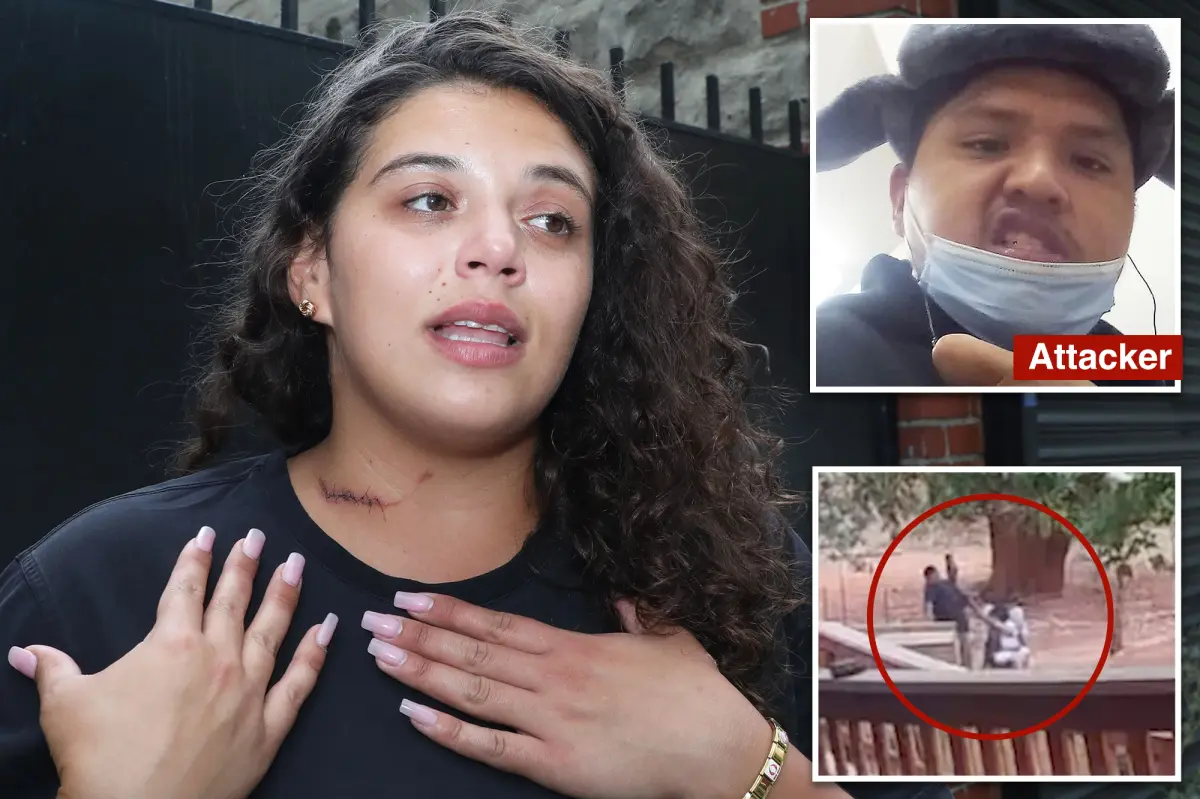
The world narrows to a single, terrifying moment. For 27-year-old Alexis Rowan, a mother of two from New York City, that moment arrived not in the chaos of her urban home, but on a sun-drenched hiking trail in the breathtaking wilderness of Arizona. The beauty of the Havasupai Reservation formed a stark, brutal contrast to the violence that exploded there. On August 12, she was simply asking for directions, a moment of basic human interaction that turned into a near-death experience. The attack by Taylor Nardo Paya, a 29-year-old local tribe member, was so sudden, so monstrously quick, that her mind couldn’t process the physical reality. She would later recall to The Post that all she could register was not the searing pain of a knife, but the overwhelming, horrifying fact that “everything was bloody.” Her hand was covered, her clothes were soaked, and the world had become a crimson blur. The initial shock was so profound that she didn’t feel her hand being stabbed; she felt only the warm, sticky eruption of her own life force. In that instant, as she processed the neck slice that would become her defining memory of the ordeal, a chilling thought crystallized in her mind: this is it, this is how it ends. Just one day before her 27th birthday, on a remote hiking trail, she was convinced she was going to die alone, a victim of pure, inexplicable evil.
The attack wasn’t a prolonged struggle; it was a sudden, catastrophic rupture of peace. In the aftermath, as she stood frozen in shock, her thoughts were about her loved ones. She was overwhelmed by a primal desperation and a fierce refusal. “All I know is like this is not the way I’m going out, like this is not the way I’m ending my life,” she would later tell The Post. This internal declaration was a powerful mix of denial and resolve, becoming the force that pushed her to move, to fight, to live. The physical pain was secondary to the overwhelming need to survive. Her mind was already racing, grappling not just with the blinding pain but with the utter senselessness of it. She had met the predator’s eyes and felt the idea that something was deeply wrong, that gut instinct that had told her, “This is not okay,” was now brutally realized. The moment she felt the neck slice was terrifyingly final – but the desire to see her children, her family, again, was stronger than the fear and the pain and the hopelessness. The fight for survival had begun in earnest, compressing a lifetime of emotion, fear, and love into a fight for each desperate breath.
Paragraph 2 In the midst of this chaos, a faint glimmer of hope appeared in the form of a kind heart. Hearing Alexia’s cries for help, a neighbor, a woman, flung her door open, creating an act of courage that would change the course of her life. For Alex, that lady wasn’t just a good Samaritan; she was “an angel sent from heaven.” The woman’s decision to open her door and appear on the scene had two immediate effects: it terrified the attacker, who saw his environment become uncertain, and it provided a crucial sanctuary. The shredded skin and muscle of the world Amy’s wound, but her life was likely saved by this simple act of humanity. Alex recalled that the woman’s home was covered in blood, a testament to the violence that had just been unleashed, and that this act of shelter had caused her attacker to flee. “She saved my life. Her opening the door made this man afraid away,” Alex said. With that, the only response was that silent guardian, whose arrival wasn’t just a physical rescue but a reintroduction of hope into a reality she had thought would soon be ending. The woman’s act of opening her door was a declaration that evil could not have the final word.
The trauma of that moment resonated far beyond the trail, reaching the heart of Alex’s mother, Tricia Rowan, back in New York. Tricia’s anger was as immediate as Alex’s fear, a protective, lioness-like fury that took over. From her description, her view of Alex’s attacker was simple and absolute. “People are evil,” Tricia stated, leaving no room for nuance or a second chance. “You can’t fix him. People like that deserves to never see the light of day and walk free.” In Tricia’s eyes, Pay was not a man with an unfortunate past, but an indomitable predator, a threat to society that outweighed any chance of rehabilitation. Her comparison was unwavering; she saw him as an animal in a cage, a predator whose instincts would always be to prey on the innocent. Tricia’s pain was a reflection of the fear she had for her own daughter, but it transcended the personal to a broader, societal indictment of the justice system. “You cannot rehabilitate” someone like this, she insisted, her terrified mother’s voice underscoring a fear for everyone else’s children as much as her own. She was not simply demanding justice, but demanding a lifetime of containment, a perspective forged by the grotesque violation her daughter had suffered. Her fury was the fury of a parent who has seen a nightmare, and she would not be silenced. The discussion was no longer just about Alex; it was about the entire threat posed by individuals like Paya, and the urgent need to protect the world from such a man.
**Paragraph 3: The lie of a man who could commit such an act wasn’t low, but painted a chilling picture that underlined his brutal actions. Online court records showed Taylor Nardo Paya was not a stranger to violence, but a repeat offender with a long rap sheet in Arizona that included previous misdemeanor offenses and a stay in prison. The most disturbing detail was his previous sentencing in September 2016, which was designed for a five-year prison term and a mandated order to undergo sex offender treatment and counseling. That sentence was the result of pleading guilty to a heinous crime: the December 2015, he had robbed and assaulted a woman. The fact that he had been granted freedom after this, only to violently attack again, painted a troubling picture of a justice system that had failed to protect the innocent. The word “ex-con” suddenly took on a more sinister, more complex meaning, encompassing a pattern of behavior that had escalated in violence and terror. It wasn’t just a man being in a fight; it was a predator with a history of preying on women, who, one day after Alex’s attack, would be arrested on the Reservation. The attack on Alex wasn’t a random act of madness, but the latest culmination of a man with a dark, violent history. The fact that the attack occurred on tribal land increased the complexity of the case, putting the arrest in the hands of federal authorities, but for the Rowan family, the primary concern was the fact that her attacker had been allowed to be free in the first place. The shadow of his past hung over the present, making her near-death experience feel even more tragic.
Alexis is now in the phoenix that resulted from that traumatic event. More than a week removed from her bloody ordeal, she was physically recovering, bearing the durable scars of the encounter: 10 stitches in her neck and three on her left hand. But the internal healing process is far more complex. She is also stepping back into the sun while in a different light, trying to reclaim her life in New York City after facing down an act of brutality she could never have imagined. The horror of the attack along with the miracle of her survival have now become intertwined with the person she is becoming, and she is determined not to be defined by that moment. She described herself as “mentally aware” that she was in danger, a rational detail that shows she wasn’t a passive participant in her fate. When she looks out at the New York City skyline, her home, she doesn’t see beauty, but a symbol of security and safety. She told The Post that she “never wants to look at another mountain again” – evidence that the psychological trauma is now a permanent part of her new reality. Mountains, once perceived as a challenge or an adventure, are now forever associated with pain and fear. Her primary driving force is her children, her family, and the city which represents all the parts of her life that were almost taken away. Her return isn’t just physical; it’s a re-affirmation of an identity that her attack had tried to destroy.
Paragraph 5:
Alexis’s fiercest determination is now a challenge against those who would try to diminish her story. It’s about not letting the attack break her spirit. The emotional pain is as real as the physical, but he is refusing to be made a victim. She is consciously putting in the work to heal, knowing that the “next person may not be as strong, may not be prepared mentally that someone is going to attack them or able to put this on them.” She is aware that her strength was a factor in her survival, but that seems a tragic truth: not everyone will have the same chances. In her fight, she is not just fighting for her injury but for her future, her children’s future, and her mental health. She acknowledges the mental strength was crucial in the moment of attack, which is both a source of pride and a heavy burden. This experience of being “mentally aware” has given her a layer of resilience, but it is also a constant reminder of just how real the threat was. She is not just a survivor; she is now an involved figure in the journey through, using her own story to warn others of the danger that exists. The thought that she will not let fear define her is likely to be a new reality, one that is decided to reclaim her life and share her story. The process will be slow and complete, but with the same strength that kept her alive on that mountain, she will rebuild her life from the inside out.
Her return to New York, to the arms of her loved ones, is not the end of the journey but the beginning of the one. She is faced with the paradox of having survived and having to live with what happened. The visceral memory of the “neck slice”, the sense of blood and being covered in it, would haunt her for a long time. Yet, her determination to not be defined by it is strong. She’s coming home to her children, her city, and everything that holds meaning in her life, now with a new hard-won weight of being a survivor. The physical scars will remain, but her strength of character is the more permanent thing. She will have to navigate the world with a heightened sense of alertness, but she is also to find moments of normalcy. She wants to move past the fear and the helplessness she felt on the trail, to reclaim her understanding of the world and her place in it. In the wake of the trauma, New York City is now more than a city; her sanctuary. Her voice, once full of pain and fear, can now be a beacon of strength and resilience, an enduring reminder that even in the darkest moments, the choice to fight and live is the most powerful one.
Paragraph 6: The Rowan family’s voice, particularly Tricia’s, has become an unwavering bell of justice. “I am that mom. Don’t mess with my babies,” Tricia declared, a clear warning to both her attacker and the system that she won’t rest until justice is not just served but feels fully, completely served. Her language is clear, fierce, and committal. She is “not going to let this go,” and her promise is a plaintiff’s strength. The trail of Paya is the centerpiece for the family’s hope, and it is a desire to ensure that he will never threaten another life again. The first step in that is for the justice system to acknowledge the full weight of his actions and past, and to stop him from ever seeing free. Tricia, looking at the situation with brutally clear eyes, sees the truth in the fact that a community is not safe as long as men like Paya walk among them. For Tricia, this fight is not just about him getting a punishment, but about what his potential release would mean for other mothers, other daughters. “So if he comes out, what next? Someone doesn’t survive. It’s just because she fought back and the cameras caught the assault,” her frustration and fear are mixed. Behind the fierce drive for retribution lies a mother’s love that was trying to create a world that doesn’t allow such monsters to walk free again. An acknowledgment that luck—her daughter’s strength, a neighbor’s courage, the presence of cameras—is what stood between life and death, seems like an unacceptable risk.
In the end, competing claims are in direct contrast to Taylor Paya’s moment of violence. While he is in custody, the remnants of his attack persist in the specifics of Alexis Rowan’s story-a physical wound, an invisible trauma. Yet, the family narrative is not one of despair, but of survival and a demand for a world that takes the threat of evil seriously. Tricia’s Pride is palpable, “He picked the wrong one. My daughter is a fighter, she is a warrior. She wasn’t going to take it.” This is a bottom-line truth: a man trying to end a life has, instead, in a way, revealed the strength of the victim, and the true worth of a mother’s love. Speeding through the valley of a near-death experience, the Rowan family emerges with their resolve sharpened, their voices unified, and their plea clear. They are not just seeking justice for the attack; they hope to be a turning point, a prevention to prevent this from happening again. The question is now whether the system they’re addressing will listen, and whether it will be smart enough to ensure that the monster is not let out of its cage. The hills of Arizona hold a world of darkness, but within that story also demonstrates the powerful fight for light, love, and its right of every young mother to simply live and enjoy life.