



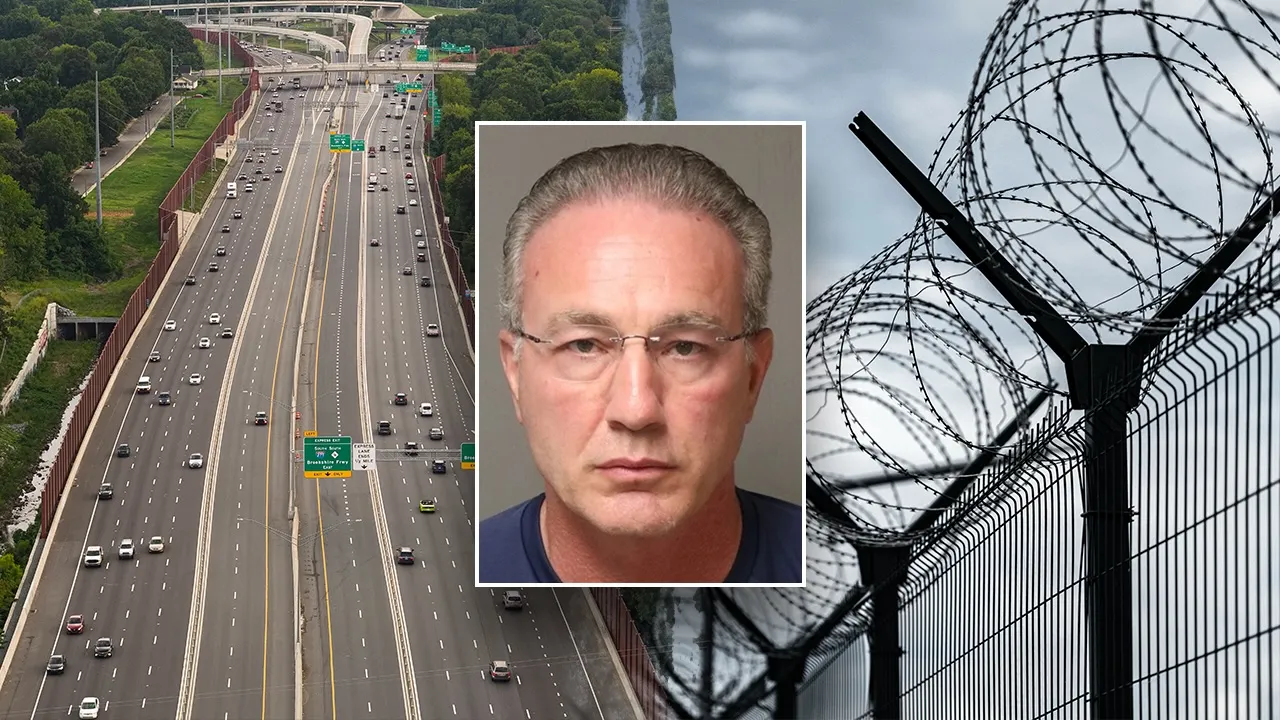
On a quiet late-summer morning along Interstate 77, the kind of morning when families are simply trying to get where they need to go, ordinary travel turned into sudden, terrifying violence. Around 8:50 a.m. on August 22, a driver in a Mercedes-Benz was headed north on the highway when something went wrong between him and the occupants of a Jeep. No one outside the two vehicles knows exactly what sparked the confrontation—maybe a lane change, a moment of impatience, or a perceived insult that escalated far beyond reason. But what happened next is now part of the public record: the man behind the wheel of the Mercedes-Benz, later identified as Dr. Richard Thomas Arriviello, a 61-year-old emergency medicine physician from Charlotte, North Carolina, allegedly fired into the moving Jeep. Inside that Jeep were two sisters, ages 12 and 20, both struck in the legs by gunfire. In a heartbeat, a routine drive became a scene of chaos, blood, and sirens, with two young women fighting to keep calm as the world around them dissolved into shock and pain. Their injuries, while serious enough to require airlifting to a hospital, were not considered life-threatening. Still, the emotional scars of being shot at on a public highway by a stranger—and by a doctor, no less—will likely linger far longer than the physical wounds. The alleged shooter did not stop to help. He did not pull over to face what he had done. Instead, he kept driving, hoping perhaps to outrun the consequences of a moment of fury that changed multiple lives forever.
The identity of the accused has made this story especially jarring. Richard Thomas Arriviello is not a name most people would associate with gun violence. According to the North Carolina Medical Board, he has been licensed as an emergency medicine physician in the state since 2010, with no public disciplinary actions on his record. His professional life tells a story of healing, of responding to emergencies, of being the person others turn to when their bodies fail them. He is listed as the owner of Family Urgent Care in Monroe, North Carolina, a medical practice designed to serve everyday people with everyday ailments—cuts, fevers, infections, and accidents. That a man trained to preserve life stands accused of firing into a vehicle containing a child is a stark and painful irony. It forces a deeper, more uncomfortable question: What happens inside a person when the skills, training, and oaths of a healer are overwhelmed by rage? The same hands that may have stitched wounds and delivered comforting words to frightened patients were allegedly used to pull a trigger and send bullets into the body of a twelve-year-old girl. The cognitive dissonance is almost too much to process. Friends, colleagues, and patients who know Dr. Arriviello as a trusted professional must now wrestle with the notion that the doctor who cared for them may have an entirely different face, one hidden behind the wheel of a luxury car on a lonely interstate. The case is a reminder that no title, degree, or social standing makes a person immune to the kind of reckless anger that turns ordinary moments into nightmares.
From a legal perspective, the case is serious and moving quickly. Virginia State Police say troopers spotted and stopped the Mercedes-Benz about fifteen miles from the scene of the shooting, taking Arriviello into custody without further incident. He now faces multiple felony charges: malicious shooting into an occupied vehicle, maliciously causing bodily harm to another with intent to maim, and use of a firearm while committing a felony. As of the latest reports, he remains jailed without bond at the New River Valley Regional Jail, waiting for a court appearance scheduled for September 29. These charges carry significant weight, reflecting not only the act of firing a weapon but the intent to cause lasting harm, even if the injuries themselves did not prove fatal. The fact that one of the victims was only twelve years old compounds the gravity of the situation, as does the fact that the shooting occurred on a busy interstate highway, where a stray bullet could have struck any number of innocent drivers or passengers. Police have not disclosed what led to the alleged road rage encounter, nor have they confirmed whether a firearm was recovered from the Mercedes-Benz. The Jeep’s driver was also cited for reckless driving, leaving room for speculation about whether the lead-up to the shooting involved aggressive driving on both sides. But no citation can begin to balance the scales against deliberately shooting at people. Investigations are ongoing, and authorities have remained tight-lipped about the details, likely to protect the integrity of the case and to avoid prejudicing the legal process. For the public, however, the unanswered questions are haunting: Was there a moment when the doctor could have stopped himself? Did he see the faces of the sisters before he fired? Did he hear their screams as he sped away?
The victims, two sisters traveling together in what should have been the safety of a family vehicle, now face a long and uncertain recovery. They were airlifted to a hospital, a measure reserved for the most serious of emergencies, and by all known accounts they are alive and expected to heal physically. But the word “recover” means more than just surviving bullets. A twelve-year-old girl who has been shot must process not only the pain of her injury but the shattering realization that a stranger wanted to hurt her. A twenty-year-old woman who watched her little sister bleed must live with the memory of that helplessness. Their parents, who must have felt their hearts stop when the phone rang with news of the shooting, are left to navigate a maze of medical appointments, legal proceedings, and the impossible task of helping their children feel safe in the world again. There will be surgeries, scars, and physical therapy. There will be nights when the sound of a car backfire or a door slam sends a jolt of fear through their bodies. There may be years of counseling and quiet struggles to understand how someone could do such a thing. And all of this might have been avoided if a grown man, a physician, had chosen to breathe deeply, look away, or simply let go of whatever insult had triggered his rage. The justice system will now attempt to hold him accountable, but it cannot undo the trauma inflicted on these two young women. It cannot give them back their sense of safety, nor can it erase the image of a gun pointing toward their vehicle.
Beyond the immediate players, this incident sends a ripple through communities in both North Carolina and Virginia. The town of Monroe, where Arriviello owns Family Urgent Care, is a place that likely values its local doctors, the familiar faces people rely on in moments of illness. Now that familiarity is shadowed by an accusation of brutal violence. Patients who have sat in his waiting room may wonder if they truly knew the man in the white coat. Colleagues who worked alongside him must reconcile their professional respect with the public horror of his alleged actions. And the broader community, especially those who travel Interstate 77 regularly, may feel a creeping unease every time they see a vehicle driving too close or a driver acting erratically. Road rage incidents are not rare in America, but they usually involve harsh words or aggressive maneuvers, not gunfire. This case is a reminder that the ordinary frustrations of driving—traffic jams, late arrivals, perceived slights—can explode into lethal violence in a matter of seconds. It also underscores the strange and tragic randomness of such events: two sisters on their way somewhere important, never imagining that a stranger in a Mercedes-Benz would change their lives forever. The phrase “road rage” feels almost too mild for what happened, too clinical, too ordinary. This was not a shouting match. It was a shooting. It was a choice made by a man who took a weapon into his hands and fired it at human beings, one of them a child still years away from adulthood.
In the end, this story is about the collision between who we are and who we are capable of becoming in our worst moments. Dr. Richard Arriviello built a career around saving lives, and that will forever be part of his identity. But on August 22, he allegedly did something that threatens to define him in a far darker way, something that will echo through courtrooms and news headlines for months to come. The scheduled court date on September 29 will be the next milestone, and the legal system will do its best to sort out the facts, assign blame, and deliver consequences. But for the two sisters, the aftermath is not a headline; it is a lived reality. They will carry the scars, visible and invisible, for the rest of their lives. And for all of us, the story is a sobering reminder that anger is a fire that must be controlled before it consumes everything in its path. No job, no reputation, no amount of education or social standing makes a person immune to that fire. The only thing we can do, as individuals and as a society, is to remind ourselves again and again that the person in the next lane is a human being, someone with a family, dreams, and fears just like our own. When we forget that, when we allow a moment of irritation to become something more, we risk becoming the very thing we would never want to be. This case, painful and disturbing as it is, offers an opportunity for all of us to reflect on our own impulses, to choose patience over fury, and to remember that every road trip is a journey shared with neighbors we do not know but must still respect. The hope is that justice will be done, that the sisters will heal, and that somewhere in the wreckage of this event, there is a lesson worthy of learning.