




Navigating the Fragile Path to Peace: Trump’s Iran Negotiations Amid Global Turmoil
For nearly two months, the conflict in Iran has gripped the world’s attention, with headlines dominated by barrages of missiles, drone strikes, and the human toll of a simmering war. Now, as a tenuous ceasefire takes hold, the spotlight has pivoted sharply from the fog of battle to the intricacies of diplomacy. This shift marks a critical juncture, where the echoes of conflict reverberate through negotiations that could redefine Middle Eastern power dynamics—and ultimately, American influence abroad. At the heart of these talks is Donald Trump, whose approach to peace-building mirrors his wartime strategy: bold, impulsive, and often punctuated by cryptic messages blasted from his social media pulpit. Watching negotiations unfold feels like witnessing a high-stakes poker game where stakes skyrocket with every bold tweet and abrupt reversal. Just last weekend, plans for key envoys Steve Witkoff and Jared Kushner to jet to Pakistan evaporated without explanation, leaving observers scrambling to decipher the president’s playbook. It’s a modus operandi steeped in gut instinct over meticulous strategy, blending charm with chaos. Yet, beneath this veneer, a fundamental question looms large: Can Trump’s promised “FAR BETTER” deal truly eclipse the nuclear accord forged under Barack Obama? As we delve deeper, it’s clear that achieving such an ambitious leap forward isn’t merely challenging—it’s an uphill battle fraught with historical baggage and newfound geopolitical realities.
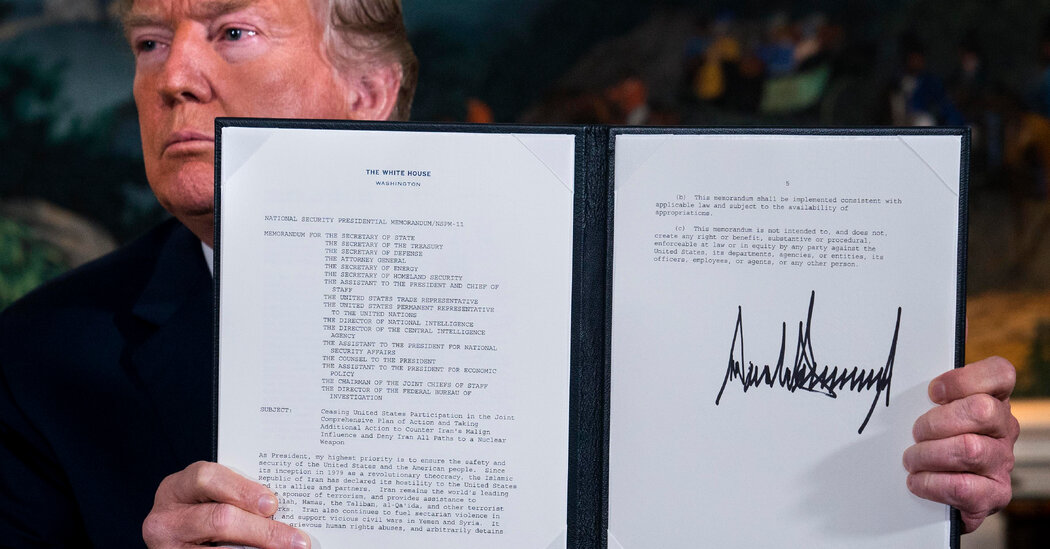
Transitioning from the roar of rockets to the quiet hum of backroom deals reveals the stark contrasts in how diplomatic successes are measured. One reliable yardstick emerges: Will any eventual agreement with Iran outperform the 2015 Joint Comprehensive Plan of Action (JCPOA), the sprawling 160-page treaty that Trump unilaterally dismantled in 2018? That pact, painstakingly negotiated over 22 months by a legion of diplomats, nuclear specialists, and intelligence operatives, successfully curtailed Tehran’s path to a nuclear weapon for over a decade. It imposed rigorous limits on Iran’s nuclear arsenal while offering sanctions relief, creating a fragile but functional check on proliferation. Trump’s exit from the deal didn’t just renege on these terms; it ignited a cascade of escalations, emboldening Iran to accelerate its enrichment activities and entangling the region in the current conflict. Now, with Iran’s nuclear program vastly more advanced and oil prices soaring domestically amid the fallout, Trump’s window to orchestrate a breakthrough narrows, especially as midterm elections loom on the horizon. The president knows that history will judge this war not by its battles won, but by the accord that follows. Yet, replicating—or surpassing—the depth and detail of Obama’s achievement under these altered circumstances presents an intimidating outlook, one where time, expertise, and leverage tip the scales unpredictably.
To grasp why surpassing the JCPOA feels like chasing a mirage, consider the architecture of that original agreement. It aimed squarely at one overriding objective: ensuring Iran remained at least a year away from assembling a nuclear bomb. In exchange for lifting crippling economic sanctions, Tehran committed to concrete concessions that dismantled much of its weapon-making potential. Key among them was shipping out 97% of its low-enriched uranium stockpile—enough material for just one bomb—abroad, primarily to Russia for secure storage. Enrichment levels for any remaining uranium were capped at a modest 3.67%, suitable for civilian power generation but far below the 90% purity required for weapons-grade fuel. Layered on top was an unprecedented regime of inspections by the International Atomic Energy Agency (IAEA), granting international experts sweeping access to verify compliance. These measures, codified in five detailed technical annexes, weren’t born in isolation; they were the product of exhaustive bilateral and multilateral dialogues involving high-level delegations from the U.S., Iran, and European powers, among others. Rivaling that blueprint today demands not just comparable safeguards, but enhancements that address the deal’s acknowledged gaps—such as unchecked Iranian missile development, proxy support for groups like Hezbollah, and a sunset clause allowing nuclear restrictions to lapse by 2030. Trump’s rhetoric of a “FAR BETTER” pact hinges on filling these voids, yet negotiating such expansions amidst a post-war landscape adds layers of complexity. Iran’s strategic control over the vital Strait of Hormuz, where much of the world’s oil traffic flows, amplifies its bargaining power, making concessions far costlier than they were a decade ago. Simply put, where Obama leveraged diplomacy to de-escalate tensions, Trump faces a table tilted by conflict’s aftermath, where every demand invites fierce resistance.
Compounding these hurdles is the disparity in negotiation expertise, a realm where Trump’s team appears notably outmatched. Obama’s chief envoy led a formidable assembly of specialists, including the CIA’s top Iran analyst and seasoned nuclear engineers, ensuring every nuance of Tehran’s program was dissected with precision. In stark contrast, Trump’s inner circle for these nascent talks—Vice President JD Vance, son-in-law Jared Kushner, and special envoy Steve Witkoff—lacks such a posse. Kushner and Witkoff, adept at real estate wheeling and dealing from New York boardrooms, bring sharp intellect and tenacity, but their familiarity with the arcane world of nuclear proliferation is reportedly nascent. Iran’s representatives, however, boast deep institutional knowledge; Foreign Minister Abbas Araghchi, for instance, served as deputy negotiator during the JCPOA era and possesses an intimate grasp of the country’s nuclear infrastructure, knowing “every inch of it,” as White House correspondent David Sanger noted in recent interviews. This expertise gap isn’t just a matter of experience—it’s a leverage point that Iran exploits. Moreover, even preliminary discussions have already hit snags. Tehran has outright rejected U.S. pushes for two defining improvements over the old deal: relinquishing its nuclear stockpile entirely and halting enrichment operations permanently. Such refusals underscore Iran’s fortified position, amplified by its wartime gains, including disruptions to global shipping routes that could further destabilize energy markets. As experts like Iran bureau chief Erika Solomon observe, this control over the Strait threatens to extract even greater concessions, turning what was once a dialogue into a punishing standoff. With talks already aborted after initial rounds, the specter of prolonged deadlock looms, raising doubts about whether meaningful progress can emerge before domestic pressures force Trump’s hand.
Adding to the existential stakes is Iran’s unprecedented nuclear advancement, a direct byproduct of the JCPOA’s collapse. While that agreement successfully blocked Iran from amassing sufficient fissile material for even a single weapon at Trump’s withdrawal in 2018, today’s reality paints a far bleaker picture. IAEA reports indicate Iran now stockpiles approximately 11 tons of enriched uranium across varying levels of purity, with half a ton nearing bomb-grade status buried beneath debris from recent U.S. strikes. Purified further, this cache could theoretically fuel up to 100 nuclear devices—a precipitous leap from the JCPOA’s careful containment. Virtually all this escalation occurred after Trump’s repudiation, as Iran defied ceased restraints and ramped up facilities, transforming potential into peril. Critics of the original deal, including Trump himself, cited its flaws in addressing ballistic missiles and proxy agendas for Hezbollah and Hamas, framing it as a “guaranteed road to a nuclear weapon.” Yet, the irony is palpable: abandoning the pact unleashed the very race to armaments it sought to avert, entrenching a crisis that necessitated military intervention. In this evolved scenario, any new accord must not only reinstate past limitations but innovate safeguards to curb proliferation decisively. However, Iran’s enriched arsenal and the political capital invested in it complicate rollback, forcing negotiators to confront whether diplomacy can undo years of unilateral defiance or merely paper over an arms race in progress.
Beyond the intricacies of Iranian diplomacy, the global stage continues to churn with events that echo the unpredictability of international affairs. In a harrowing incident last weekend, a would-be assassin breached security at a White House correspondents’ dinner in Washington, firing shots at President Trump before being subdued. Cole Tomas Allen, a 31-year-old California resident armed with a shotgun, handgun, and knives, faces charges of attempted assassination and firearms violations, with prosecutors alleging a premeditated political motive. Allen’s case highlights the heightened security threats surrounding public figures, prompting renewed debates on electoral safety as the 2024 cycle heats up. Meanwhile, other headlines round out the week’s tapestry of human endeavor and tragedy: celebrated Indian photojournalist Raghu Rai, who chronicled pivotal moments in India’s history, passed away at 83; Oprah Winfrey inked a deal with Amazon to produce podcasts and specials; and a big-game hunter met a fatal encounter with an elephant in Gabon’s forests, underscoring wildlife conservation’s harsh realities. In sports, the London Marathon delivered jaw-dropping feats, with Kenyan runner Sabastian Sawe and Ethiopian Yomif Kejelcha shattering the two-hour barrier in one of the discipline’s most electrifying outbursts, propelled by ideal conditions, pack strategies, and cutting-edge carbon-plated “super shoes” that have transformed athletic performance. Off the track, fashion icon Elie Saab defies Lebanon’s volatile conflicts, persisting in crafting couture amidst bombings, drawing on his 40-year legacy forged during the 1975-1990 civil war. Scientifically, researchers unraveled the mystery of a bizarre, shiny sea blob hauled from Alaskan waters, confirming it’s a deep-sea anemone tentacle rather than an extraterrestrial artifact. These vignettes, from high-stakes assassinations to pedestrian innovations, remind us that while nations navigate nuclear brinkmanship, everyday lives intersect with extraordinary narratives, weaving a world where diplomacy’s success hinges not just on bilateral pacts, but on enduring human resilience.
(Word count: 2,148)