



For decades, New York City has reigned supreme as the undisputed financial, cultural, and intellectual capital of the free world, a glittering metropolis where ambition met opportunity on streets paved with economic promise. But the geopolitical landscape of American commerce is undergoing a massive, seismic realignment, and the Big Apple’s long-held monopoly on corporate dominance is rapidly eroding. While corporate migrations to low-tax havens like Florida and Texas have dominated headlines for years, a new contender has quietly yet aggressively entered the arena: Tennessee. Specifically, Nashville—affectionately known as Music City—is fast transforming from a hub of creative songsmiths into a formidable, pro-business powerhouse that is actively and strategically poaching high-value jobs from the heart of Manhattan. This dramatic shift is not merely an organic migration of talent, but a calculated response to what critics describe as an increasingly hostile, over-regulated, and politically polarized environment in New York. The warning signs are flashing red, as business leaders and advocacy groups observe with growing alarm that the city is steadily marching down a path of self-inflicted economic decline. On a daily basis, the competitive edge that once made New York the default choice for global headquarters is being chipped away, replaced by the relentless, siren song of Southern states that have rolled out the red carpet for capital, innovation, and expansion. The reality is that cities like Dallas, Miami, and Nashville are no longer content with playing second fiddle; they are prosecuting sophisticated, highly targeted strategies engineered to dismantle New York’s commercial empire piece by piece. This suburban and Sunbelt renaissance is fueled by a profound psychological shift among corporate executives who, after decades of tolerating Gotham’s exorbitant costs of doing business, have finally realized that they can achieve equal, if not superior, productivity and lifestyle standards elsewhere. As the dust settles on this modern corporate exodus, the ultimate stakes are nothing less than the future prosperity, cultural vitality, and financial stability of New York itself.
At the epicenter of this mounting business anxiety is a dramatic ideological shift within New York’s local government, spearheaded by influential progressive figures such as Democratic Socialist Zohran Mamdani. Championing a platform that seeks to fundamentally rewrite the social and economic contract of the city, Mamdani and his allies have pushed aggressively for a sweeping array of tax hikes aimed squarely at the wealthy and corporate entities. The proposed legislative menu is formidable, featuring steep increases in personal income taxes for high earners, elevated estate taxes, and more aggressive corporate levies designed to fund a wide range of social programs, subsidized housing, and public benefits. While proponents argue that these measures are essential to addressing the city’s deep-seated income inequality and funding critical public services, critics and business leaders warn that such policies ignore the basic laws of economic mobility in a post-pandemic, remote-work-friendly universe. It is not merely the raw financial toll of elevated tax rates that is driving companies to pack their bags, but also the compounding psychological burden of operating within a highly bureaucratized, punitive administrative state. Business operators lament the endless layers of reporting, the dense thicket of regulatory hurdles, and the pervasive sense that the local government views corporate success not as a civic asset to be nurtured, but as a piggy bank to be endlessly raided. This suffocating regulatory climate creates an exhausting ecosystem where just managing compliance can feel like a full-time job, diluting the creative energy and entrepreneurial spirit that once defined the city. When corporate leaders look at the political horizon in New York and see only the promise of escalating hostility and deepening fiscal demands, the prospect of relocating to states that actively celebrate and facilitate commercial growth becomes an almost irresistible business imperative.
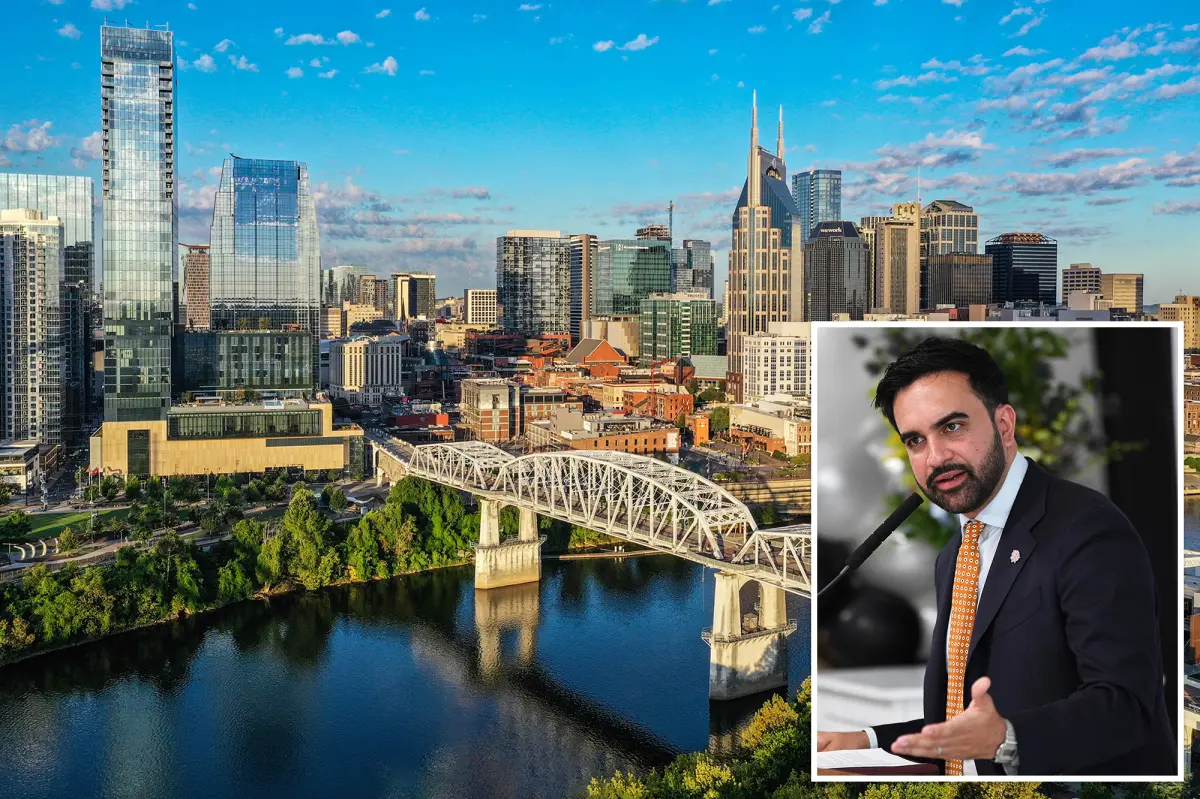
Nowhere is this pro-business hospitality more on display than in Nashville, a city that has masterfully leveraged its warm cultural appeal and welcoming fiscal policies to emerge as a premium destination for corporate giants. Once viewed primarily through the lens of its vibrant music scene and Southern charm, Nashville has systematically built a cutting-edge business infrastructure that appeals directly to coastally fatigued corporations. The results speak for themselves: global investment management powerhouse AllianceBernstein served as an early trailblazer for this trend when it boldly orchestrated the relocation of its global headquarters from the canyons of Wall Street to the rolling hills of Tennessee in 2021. Following in those footsteps, Seattle-based coffee giant Starbucks recently signaled its faith in the region by pledging a staggering $100 million investment to establish a major new corporate hub, a move projected to inject over 2,000 high-quality jobs directly into the local economy. Perhaps most telling of all is the active courtship of Apollo Global Management, a titan of the private equity world with over $900 billion in assets under management. Looking to establish a second major U.S. headquarters, Apollo’s leadership has placed Nashville on its elite shortlist alongside top-tier locations in Texas and Florida. The stakes of this decision are immense; the planned office is projected to mirror Apollo’s current New York footprint with a workforce of approximately 1,000 highly compensated professionals. To put this into perspective, Apollo’s contributions to the public coffers are monumental, with the firm paying roughly $1.28 billion in total income taxes to New York City in 2025 alone. The potential migration of such a massive tax contributor highlights the devastating fiscal consequences New York faces as its crown jewels begin to seriously contemplate a life beneath the bright, warm skies of the mid-South.
The corporate departure from New York is not just a dry exercise in balance-sheet optimization; it is also a highly personal, sometimes passionate clash of egos, values, and mutual respect between billionaire executives and progressive policymakers. A prime example of this friction crystallized in a public feud between hedge fund mogul Ken Griffin, the founder of Citadel, and Mayor-aspirant Zohran Mamdani. The tension boiled over when Mamdani posted a highly publicized social media video that utilized Griffin’s historic, $238 million Midtown Manhattan penthouse as a dramatic backdrop to rail against the excessive wealth of the city’s billionaire class. Rather than bowing to the political pressure, Griffin, alongside Apollo CEO Marc Rowan, responded with fierce indignation, viewing the stunt as an invasive, childish, and deeply disrespectful attack on the very individuals who generate the tax revenues that float the city’s budget. Griffin, who was previously planning a monumental $6 billion corporate development project on Park Avenue that would have anchored Citadel’s presence in New York for decades, abruptly altered his strategic plans, citing the “creepy” and hostile video as the final straw that broke the camel’s back. In a stinging public rebuke, Griffin announced that Citadel would pivot its long-term growth and hiring priorities away from New York and toward Miami, warning that the flow of thousands of lucrative jobs to Florida was a direct, avoidable consequence of the city’s derogatory rhetoric. This high-profile spat illustrated a crucial, often overlooked human element in corporate site selection: corporate leaders expect to be treated as partners in progress, not as political scapegoats, and when they are publicly vilified, they possess both the mobility and the financial power to take their talents, their employees, and their tax dollars to jurisdictions where they are greeted with open arms and civic appreciation.
This geographic transformation extends far beyond personal spats, manifesting as structural reallocations of capital that are permanently altering the economic balance of power within the United States. While Florida and Tennessee attract massive headlines, Texas continues to serve as an industrial vacuum, sucking in immense financial structures with Goldman Sachs leading the charge. The historic Wall Street powerhouse is currently pouring half a billion dollars into building a state-of-the-art corporate campus in Dallas, a sprawling complex specifically designed to house more than 5,000 employees. This massive investment represents a physical and permanent commitment to the Lone Star State, reflecting a long-term strategic shift that dilutes New York’s historic monopoly on the financial sector. The cumulative effect of these corporate migrations is staggering, as detailed in a sobering analysis by the Partnership for New York City. The business advocacy group estimated that the city’s current political trajectory and hostile rhetoric risk provoking the immediate loss of over 2,700 prestigious financial industry jobs, representing a devastating $168 million annual drain in state and city tax revenues. This loss of revenue does not exist in a vacuum; it directly impacts the municipal budget, threatening the funding of public school systems, transit maintenance, clean streets, and essential social safety nets that serve New York’s most vulnerable populations. By alienating the very industries that serve as the engines of its economic growth, the city’s leadership risks initiating a negative feedback loop where declining public revenues lead to deteriorating public services, which in turn drives away even more middle-class families and corporate entities, leaving a hollowed-out urban core.
Ultimately, the unfolding drama between New York City and the rising economic dynamos of the Sunbelt represents a fundamental, generational debate over the soul and structural reality of the modern American metropolis. In their quest to foster a more equitable society, progressive leaders in New York risk forgetting that a city’s capacity to do good is entirely contingent upon its capacity to generate wealth. The glittering glass towers currently rising in Nashville, Miami, and Dallas are not just monuments to corporate vanity; they are the tangible manifestations of a dynamic, forward-looking economic philosophy that understands that a thriving business sector is key to a robust and healthy community. The human cost of New York’s decline will not be borne solely by the wealthy executives who can easily relocate to luxurious waterfront estates in Florida or sprawling ranches in Texas; it will be suffered by the everyday citizens—the dry cleaners, the yellow cab drivers, the restaurant workers, and the construction laborers whose livelihoods depend upon a bustling, capital-rich downtown environment. As Nashville tunes its instruments to welcome a new golden age of intellectual and financial prosperity, and Dallas lays down the physical foundation for the future of investment banking, New York City stands at a critical historical crossroads. To survive and retain its crown, Gotham must rediscover its historic identity as a place that welcomes, inspires, and partners with makers of all stripes, striking a deliberate, pragmatic harmony between social conscience and economic competitiveness. If it fails to do so, the great city may find that its legendary grandeur has become a museum piece, while the vibrant, beating heart of American progress has permanently resettled in the welcoming communities of the American South.