





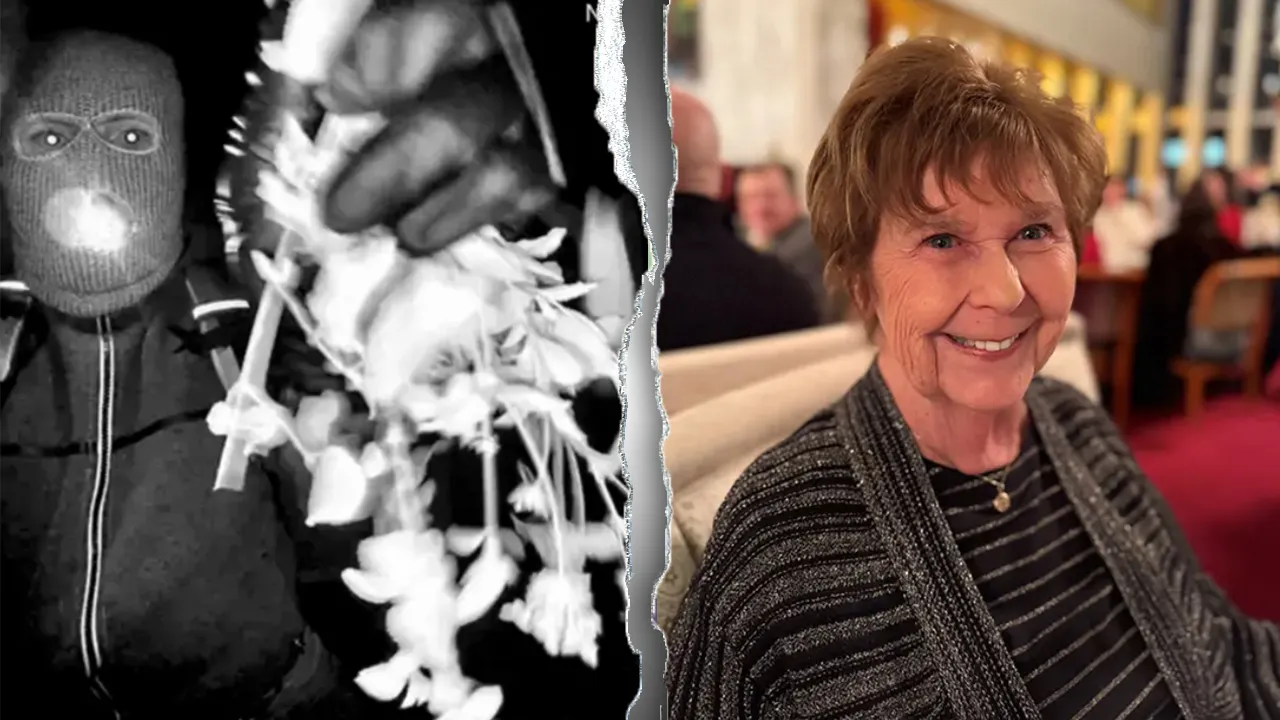
The sudden and terrifying disappearance of Nancy Guthrie from her peaceful Tucson, Arizona home on the chilly morning of February 1st represents every family’s worst nightmare brought to life, leaving an agonizing void that ripples far beyond her quiet neighborhood. Nancy, a devoted mother known widely to the broader public as the matriarch of “Today” co-host Savannah Guthrie, was a gentle, quiet presence in her suburban community, making her sudden, violent abduction all the more shocking and incomprehensible to those who loved and knew her. In the dark, early hours before dawn, a masked predator breached the sanctuary of her home, leaving behind chilling physical traces of a struggle but taking Nancy and her home security hardware with him into the dark desert night. For her family, including her highly public daughter who has spent a lifetime reporting on the misfortunes and crises of others on national television only to find herself living a deeply personal broadcast tragedy, the days stretching since have been a grueling, suspended animation of grief, terror, and desperate hope. Grounding the narrative in this stark human reality reminds us why we care about these procedures; it is about a vulnerable woman stolen from her home, not just a set of legal proceedings or a cold case file. The silence that now hangs over the Tucson property is not just the absence of a beloved mother and grandmother; it is a heavy, suffocating reminder of how quickly safety can be shattered in the place we feel most secure. As the community struggles to grasp how such a brazen crime could happen in their quiet, upper-middle-class enclave, the emotional toll on Nancy’s family deepens with every single sunrise that passes without news of her safety, rendering the ongoing investigation a breathless race against the agonizing ticks of a clock that shows absolutely no mercy to those left behind.
At the core of the mounting frustration and sorrow surrounding the search for Nancy is a heartbreaking digital tragedy: critical video evidence that could have unmasked her captor was almost certainly lost to the inexorable march of automated technology due to a series of institutional delays. When the abductor fled the scene, he did not just take Nancy; he physically ripped her Nest doorbell camera from its mount, a calculated move to or erase any digital record of his existence or his vehicle. To complicate matters further, Nancy did not have an active cloud subscription for her home security system, meaning her camera was not designed to archive or store footage for long-term review, leaving federal investigators faced with an almost impossible technical challenge. This drove the FBI to collaborate directly with Google engineers in a high-stakes, frantic race to recover temporary, cached data from the backend servers before it was systematically overwritten and deleted forever by automatic security protocols. FBI Director Kash Patel described this exhaustive digital salvage operation as looking for the ultimate “needle of all needles in all haystacks,” explaining that because no storage plan was active, the data was never meant to be preserved by the system. Though technicians managed to miraculously rescue a few precious frames of video and static images just moments before they were wiped from the digital ether, the sickening reality remains that other, potentially definitive footage showing the suspect’s face, his getaway vehicle, or his previous surveillance of the home had already vanished into the digital void, lost forever to the strict, unforgiving timelines of automated data cleanups. As Morgan Wright explained, the successful recovery of this backend cache data implies that other, older videos were automatically expunged beforehand to make way for new temporary files, and if investigators had been given access to the system days earlier, they could have retrieved these older files before the system’s routines deleted them.
This catastrophic loss of irreplaceable digital evidence has ignited a fierce and public debate over the timeline of the initial police response, revealing a deeply troubling tactical rift between local law enforcement and federal agencies whose cooperation should have been seamless from the start. Despite the FBI being fully prepared to deploy massive, specialized resources on the very first day Nancy vanished, local authorities in Pima County waited a critical four days before formally requesting the Bureau’s elite assistance. During this costly window of bureaucratic hesitation, the crime scene was tragically released prematurely, allowing neighbors, delivery drivers, and well-wishers to walk up to the house and knock on the front door, inadvertently contaminating a porch that still bore the horrific physical evidence of Nancy’s blood. Adding to the controversy, accusations emerged that Pima County Sheriff Chris Nanos actively scolded a county official for sharing a tip with the FBI, highlighting an environment of territorial friction rather than collaborative urgency. While Sheriff Nanos has fiercely defended his department’s slow-measured pace—arguing that a member of a regional FBI task force was present from the beginning—federal officials have pointed out that this individual was a local officer, not a fully credentialed federal agent with direct access to the vast analytical and technical machinery of the FBI. This agonizing delay meant that by the time federal agents finally secured the perimeter and spent hours meticulously sweeping the yard and collecting neighboring security cameras, the freshest physical clues had been compromised, and the trail of the kidnapper had grown dangerously cold, leaving experts to wonder how the trajectory of the search might have changed had federal power been unleashed immediately without jurisdictional infighting.
What little evidence did survive the digital purge painted a deeply unsettling picture of a calculated, patient predator who had been watching Nancy’s home long before he finally chose to strike. The recovered Nest footage showed a masked man appearing on the front porch twice: once on the horrific morning of her abduction, and once approximately three weeks earlier, a revelation that sends a chill down the spine of anyone who understands the clinical behavior of stalkers. This masked intruder, described by experts as a man of medium build standing between 5 feet, 9 inches and 5 feet, 10 inches tall, wore a distinct black Ozark Trail backpack, navigating the darkness with a chilling familiarity that suggests he had carefully scouted his target. The existence of that single public image from the first visit highlights the devastating tragedy of the lost cache; if the FBI had been brought in just days earlier, there is a very high probability they could have recovered full video files of that prior night, perhaps capturing the suspect’s unmasked face, his posture, or even the make, model, and license plate of the vehicle he used to stalk the neighborhood. Instead, investigators are left with a grainy, haunting silhouette of a predator who faded into the Arizona desert, leaving the community to obsess over the terrifying reality that a dangerous man could plan, execute, and get away with a kidnapping just yards from neighboring homes without leaving a clear trace of where he went. The lingering question of whether other accomplices were involved remains unanswered, casting a shadow of fear over the entire neighborhood where residents are now locking their doors with a newfound sense of vulnerability.
The tragic truth of this investigation underscores an ironclad rule known to every seasoned criminal investigator: time is the most relentless enemy of justice and the absolute thief of fragile, vital evidence. As Morgan Wright, the founder and CEO of the National Center for Open and Unsolved Cases, poignantly observed, the physical and digital remnants of a crime scene behave like melting ice; once they are gone, there is absolutely no way to reconstruct them or claw them back from history. Every hour of delay in those crucial early stages does not merely slow the investigation, it actively destroys the very tools needed to solve it, meaning that the four-day lag in this case may have proved fatal to recovering the one piece of evidence that could have cracked the mystery wide open. The agonizing “what ifs” now haunt the entire operation, torturing investigators who know that the key to finding Nancy might have once rested securely in Google’s backend servers, only to be permanently erased while bureaucrats debated jurisdictional boundaries and protocol. This harsh reality leaves a family suspended in a continuous loop of unresolved shock, forced to imagine the terrifying moments of Nancy’s abduction while knowing that the system designed to protect and find her stumbled when time was the most precious commodity of all. The lost opportunities in this case serve as a stark warning to law enforcement agencies nationwide about the high cost of pride and territoriality when a human life hangs in the balance.
Despite the tragic missteps and the heartbreaking loss of early digital evidence, the search for Nancy Guthrie remains an active, desperate crusade fueled by the unwavering determination of her family and a massive, collective outpouring of community support. A staggering reward of more than $1.2 million has been gathered from various sources, reflecting the deep desperation to bring Nancy home and hold her captor accountable, proving that the public’s resolve has not wavered even as the months drag on without a breakthrough. The FBI continues to urge anyone who may have seen something unusual in the Tucson area on or around February 1st—no matter how seemingly insignificant—to contact their dedicated hotline at 1-800-CALL-FBI or to submit anonymous tips through 520-88-CRIME. In the end, this case is about far more than jurisdictional friction, technological limitations, or forensic debates; it is about a beloved grandmother, mother, and friend whose life was violently disrupted, and the desperate, ongoing battle to bring her justice. While the lost footage can never be reclaimed, the hope remains that a single human memory, energized by the massive reward or sparked by the haunting image of the suspect with the Ozark Trail backpack, will finally breach the silence, providing the answers that Nancy’s tormented family so justly deserves.