






After more than a decade behind bars, Jerry Sandusky is preparing to walk into a Pennsylvania courtroom once again, not as a free man, but as a convicted child molester still fighting to change the story that has defined the rest of his life. Now 82 years old, Sandusky was once a revered defensive coordinator at Penn State, a man whose name was synonymous with college football success and charitable work with children. That image shattered in 2012 when he was convicted on 45 counts of child sexual abuse and sentenced to 30 to 60 years in prison. For years, his attempts to overturn that conviction were rejected by the courts, one after another. But now, a new chapter in this long and painful legal saga is set to unfold. According to court documents, Sandusky is scheduled to return to court next month for an evidentiary hearing, a rare and significant development in a case that many believed had reached its final conclusion. The reason for this unexpected turn is as complicated as it is heartbreaking: one of his accusers has recanted his testimony, and Sandusky’s legal team is using that recantation to argue that the entire case against him was built on shaky, even manipulated, ground.
The original case against Sandusky sent shockwaves through the world of college athletics and far beyond. For years, Sandusky had been a towering figure in football, known for his aggressive defensive strategies and his work with The Second Mile, a charity he founded to help at-risk youth. That charity also became the setting for the horrific crimes he was accused of committing. The grand jury investigation, the 2011 arrest, and the trial that followed exposed a disturbing pattern of abuse that spanned more than a decade. Victims came forward with painful, detailed accounts of what they said happened to them as boys, and the testimony of multiple accusers painted a devastating picture. In June 2012, a jury convicted Sandusky on 45 counts, and he was later sentenced to 30 to 60 years in prison, effectively a life sentence for a man who was then in his late sixties. The case also toppled legendary head coach Joe Paterno and led to sweeping changes at Penn State, including the removal of a statue and a culture of accountability that the university is still grappling with. Through it all, Sandusky has maintained his innocence, insisting that he was the victim of a conspiracy and that his accusers were manipulated or lying. His prior petitions for post-conviction relief were denied, and for years it seemed the legal system had closed the door on his claims. But the recent recantation by one of his accusers has pried that door open just enough to allow another hearing, and with it, another round of scrutiny, pain, and unresolved questions.
The new legal filing at the center of this hearing was submitted in September 2025, and it initially met with the same fate as Sandusky’s earlier attempts: a Pennsylvania judge dismissed it. But that dismissal was vacated over a procedural misstep, and the court later granted Sandusky an evidentiary hearing after one witness, identified in court documents as R.R., recanted his testimony. R.R. is described as alleged Victim 10, and his recantation is now being used by Sandusky’s attorneys as evidence that the Commonwealth engaged in questionable tactics to influence the testimony of its witnesses. In their amended petition, Sandusky’s lawyers wrote that affidavits from R.R. and the mother of alleged Victim 9 establish that prosecutors and investigators pressured accusers into shaping their stories in ways that fit the case. The attorneys argue that R.R. was coached extensively and asked to revisit and reframe his allegations. Perhaps most striking is the language included in R.R.’s own affidavit, which is attached to the petition. R.R. is quoted as saying that throughout the pretrial process, he was told both directly and indirectly that trauma may have fragmented his memory, and that he could safely affirm details he did not fully recall. He was assured that this was common and even expected. That statement, if taken at face value, raises deeply uncomfortable questions about how child abuse cases are investigated and how vulnerable witnesses are handled, especially when the stakes are as high as they were in this case.
Adding another layer of complexity to this already tangled situation is the role of R.R.’s estranged wife, identified in court filings as Jasmine Rittmeyer. Sandusky’s legal team has indicated that Rittmeyer could testify at the hearing, and her affidavit appears to support the idea that R.R.’s original testimony was not entirely reliable. The inclusion of a family member’s perspective, especially one so close to the accuser, makes this case even more emotionally charged. But prosecutors are pushing back hard. Lawyers for the Pennsylvania Attorney General’s Office have described Rmmeyer as R.R.’s “soon-to-be” ex-wife, and they argue that her opinions about what may or may not have happened to R.R. more than a decade ago are irrelevant and inadmissible. In court filings, Deputy Attorneys General Cari Mahler and Jaime Keating wrote that Rittmeyer’s affidavit, pondering what she thinks may have really happened to R.R. when he was 10 years old, or any other Sandusky child victim for that matter, is not something the court should consider. They also raise a troubling allegation of their own: that Sandusky investigator Frank Parlato contacted R.R. and suggested that it would be beneficial for him to recant his testimony before the recantation occurred. If true, that would mean the recantation was not a spontaneous act of conscience, but rather the product of pressure from Sandusky’s own camp. The prosecution is asking the judge to prevent Rittmeyer from testifying about her opinion regarding Sandusky’s guilt or innocence, or whether she believes R.R. told the truth at trial. They want the hearing to focus narrowly on R.R.’s recantation, not on the entire case against Sandusky, which they argue was proven beyond a reasonable doubt by a jury and has already survived multiple appeals.
This hearing is about more than legal procedure; it is about the fragile nature of memory, the lasting trauma of abuse, and the difficulty of finding truth years after the fact. Sandusky’s lawyers have raised several other claims in their original petition, including allegations that he was denied due process and is entitled to a new trial because prosecutors influenced the testimony of a different witness and later profited from his allegations. Those broader claims, if allowed to move forward, could open the door to a much wider re-examination of the case, something the Commonwealth clearly wants to avoid. For the men who say they were abused by Sandusky, this hearing is a painful reminder that their credibility and their pain are being questioned again, more than a decade after they were believed and validated by a jury. For Sandusky, it is another chance to argue that he was wrongfully convicted, a chance he has never stopped seeking. And for the public, it is a deeply uncomfortable look at how justice can be complicated by recantations, family dynamics, and the passage of time. The legal standard for post-conviction relief is intentionally high, and most petitions fail, but the fact that this one has survived procedural hurdles and led to an evidentiary hearing suggests that at least some judge found the claims serious enough to take a closer look. Whatever happens, the hearing will not be a simple re-trial; it will be a narrow examination of whether R.R.’s recantation is credible and whether it undermines the original conviction. But in the court of public opinion, the implications are much broader.
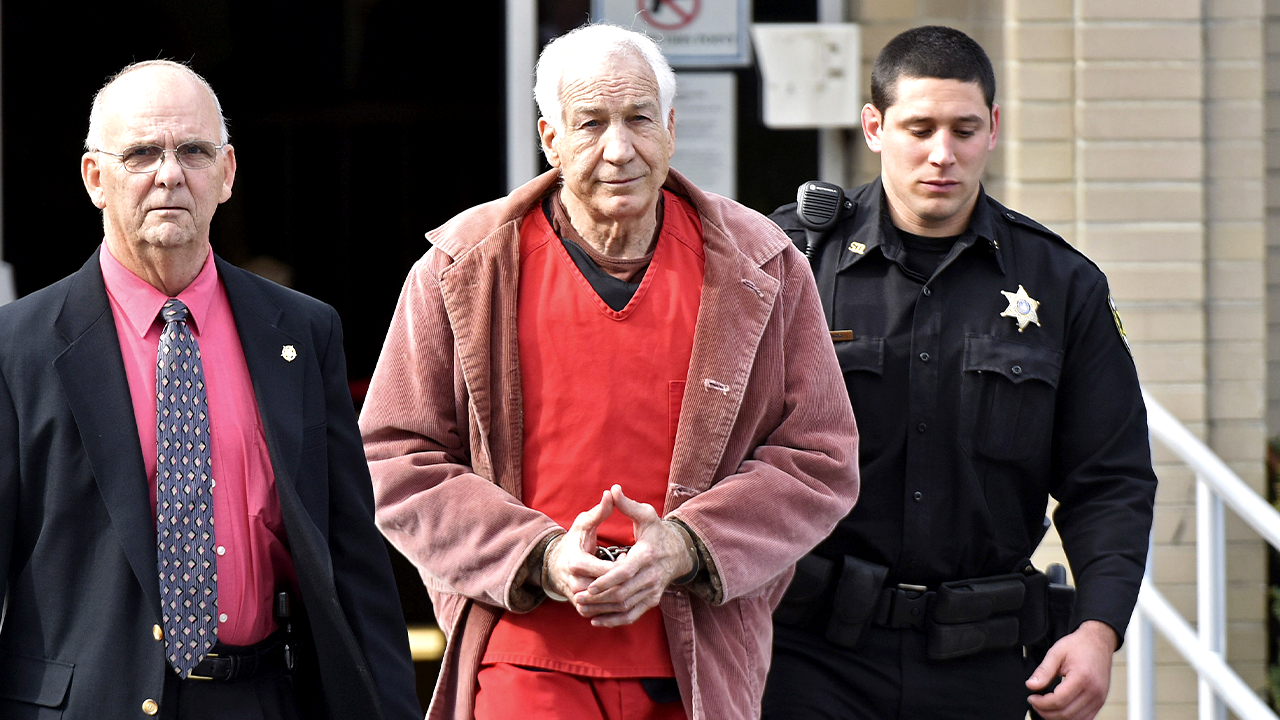
As the date approaches, the small courthouse in Bellefonte, Pennsylvania, is preparing to become the center of a national story once again. Sandusky is due in court on Tuesday, September 8, at 9:30 a.m., and the scene is likely to be tense, crowded with reporters, advocates, and onlookers who have followed this case for years. Sandusky himself, now in his eighties and more than a decade into his sentence, will be brought in wearing prison clothing, his once-familiar face aged and hardened by years of confinement. He has maintained his innocence throughout, and his supporters, though few, continue to believe that he was the target of a massive injustice. His accusers, many of whom have tried to move on with their lives, may be forced to relive the darkest moments of their childhoods as the proceedings unfold. R.R., the man at the center of this recantation, will likely be scrutinized from every angle, his motives questioned, his history examined, and his words weighed against the testimony he gave years ago. There are no easy answers here, no clear villains or heroes, only a deeply flawed and painful human story. The hearing will not bring closure, no matter how it ends. If the recantation is rejected, Sandusky will remain in prison, and the legal system will reaffirm the original verdict. If it is accepted, it could cast doubt on a conviction that has stood for over a decade, and reopen wounds that many thought had healed. Either way, the name Jerry Sandusky will continue to evoke a legacy of tragedy, betrayal, and the enduring search for justice, a search that, for all involved, seems far from over.