



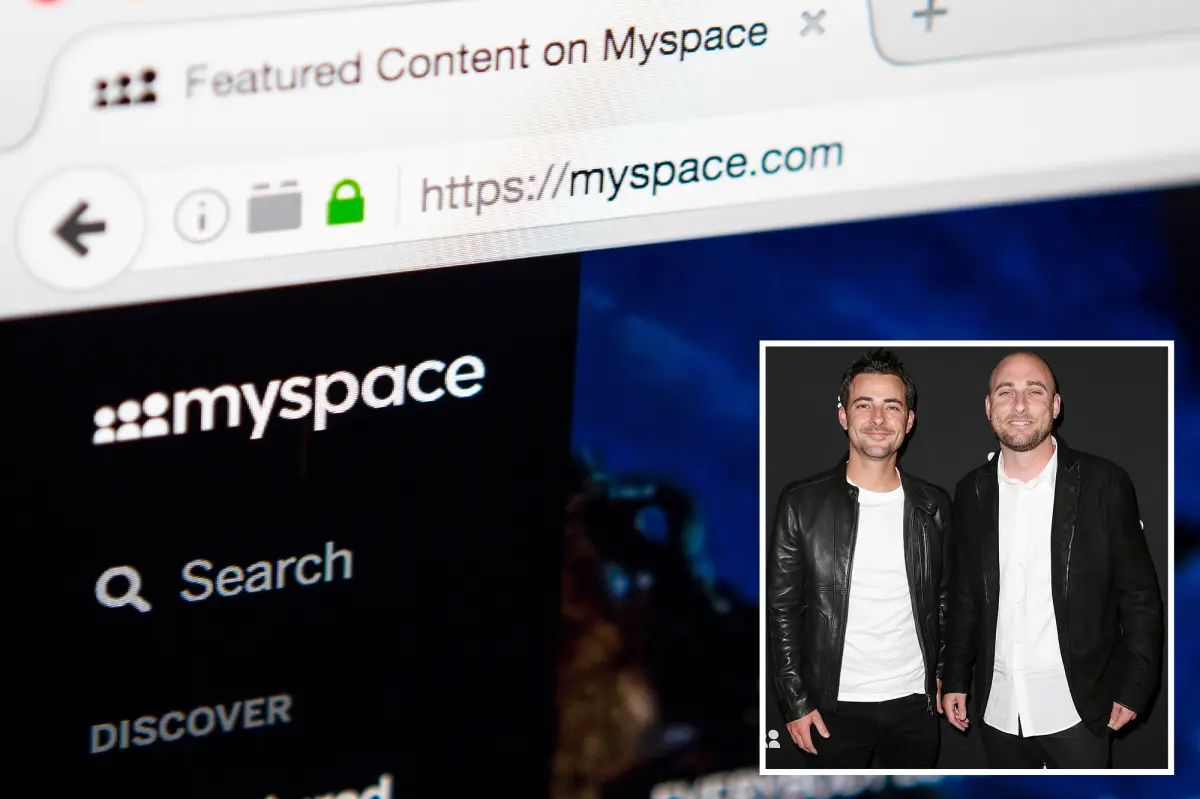
There is a quiet, collective exhaustion settling over the modern internet, a shared weariness born from years of navigating social media platforms that feel less like digital neighborhoods and more like hyper-optimized shopping malls. Today’s major networks are governed by opaque, relentless algorithms designed to capture our attention and hold it hostage, funneling us through endless feeds of sponsored content, viral outrage, and performative trends that encourage mindless, passive scrolling. It is against this backdrop of digital burnout that an unexpected whisper of nostalgia has begun to circulate: Myspace, the beloved pioneer of the social web, could soon be staging a dramatic comeback. The platform’s current owners, brothers Tim and Chris Vanderhook, have announced bold plans to relaunch the site with a radically fresh vision aimed at offering an alternative to the exhausting landscapes of modern social media. Their goal is not merely to rebuild a defunct website, but to revive a lost philosophy of human connection—one that prioritizes user agency, genuine creativity, and personal expression over the addictive engineering that dominates our screens today. By stepping back into the arena, the Vanderhooks are tapping into a profound cultural yearning for an internet that once felt small, warm, and entirely ours to shape.
To understand why a Myspace revival feels so potent, one must look back at the magical, chaotic digital landscape of the mid-2000s, an era when the platform reigned supreme as the beating heart of youth culture. Launched in 2003, Myspace quickly grew into a global phenomenon, serving as the definitive launchpad for musicians, artists, and everyday teenagers who wanted to carve out their own unique corners of the world wide web. It was a place defined by raw individuality, where users learned basic HTML coding just to make their profiles glitter, curated their agonizingly vital “Top Friends” lists, and carefully selected the perfect background song to announce their current mood to anyone who visited. Between 2005 and 2008, Myspace was undisputed in its dominance, going head-to-head with a young Facebook as both platforms attracted roughly 115 million global visitors each month. However, by 2009, Facebook’s clean, uniform, and utility-driven interface began to systematically peel away Myspace’s core demographics. The shift was swift and brutal; Facebook’s rapid expansion triggered a massive exodus of users in 2010, leaving Myspace behind like an abandoned amusement park, while its iconic co-founder and everyone’s automatic first friend, Tom Anderson, quietly stepped away from the spotlight after selling the company in 2005.
The journey to bring Myspace back to life has not been an easy one, as the Vanderhook brothers candidly revealed in a recently released documentary titled, simply, “Myspace.” In the film, Tim and Chris open up about their initial, highly ambitious attempt to resurrect and modernize the platform shortly after taking ownership, admitting that their first major rebuild ultimately fell flat. They poured immense resources into creating an entirely new version of the site, but they quickly realized they were fighting against the heavy tide of corporate fatigue and a fractured identity. By the time the brothers took the reins, the company had already cycled through four different sets of management and chief executive officers, leaving behind a demoralized, exhausted workforce that had lost faith in the brand’s core mission. Tim explained that while they tried their best to modernize the layout and features, the platform they had inherited was simply no longer the same Myspace that people had fallen in love with. The soul of the site had been diluted by years of corporate restructuring and identity crises, making it impossible to capture the lightning in a bottle that had once made the original iteration so culturally electric.
This initial failure, however, has only sharpened the brothers’ understanding of what a truly human-centric social media platform needs to look like in the modern era. The core issue with contemporary giants like TikTok, Instagram, and X is that they treat users as passive products whose data is harvested to feed the next viral loop, leaving people feeling deeply disconnected despite being constantly plugged in. The Vanderhooks’ new vision for Myspace is rooted in dismantling this toxic dynamic by moving away from the predatory, slot-machine design of modern feeds and returning to a model that emphasizes user creation over algorithmic consumption. In the golden age of Myspace, visiting a friend’s profile was an intentional, intimate act of digital exploration; you entered their space, listened to their music, and looked at their custom layouts, which felt like walking into a teenager’s highly decorated bedroom. By bringing back this focus on highly customizable personal spaces and artistic expression, particularly through its historical ties to independent music, the relaunched Myspace hopes to offer a sanctuary for creators who want to share their work and lives without being forced to appease a hidden algorithm to be seen.
Despite the monumental challenge of competing with established tech monopolies, the Vanderhooks are approaching the upcoming relaunch with a mixture of pragmatic patience and unwavering, almost romantic determination. They have deliberately chosen not to set a firm target release date, opting instead to take the time necessary to build an experience that feels authentic, stable, and genuinely different from anything else currently on the market. Their resilience is perhaps best captured by Tim’s defiant declaration in the documentary: “And if that one doesn’t work, we’ll do it again.” This relentless spirit of trial and error is reminiscent of the early days of tech experimentation, before the industry became dominated by risk-averse conglomerates. Conspicuously absent from this new chapter is the legendary Tom Anderson, who has famously spent his post-Myspace years traveling the world, taking breathtaking landscape photographs, and living a peaceful life far removed from corporate boardrooms. Tom has not posted on the platform in thirteen years, and his decision to remain in comfortable retirement serves as a poignant reminder that while the creators of the past have moved on, the legacy of what they built still holds a powerful sway over our collective imagination.
Today, if you navigate to the official Myspace domain, you will find a quiet, largely empty digital monument to a bygone era—a place where the user profiles of old friends sit frozen in time like digital fossils. Yet, the impending relaunch reminds us that the internet does not have to remain trapped in its current, exhausting trajectory. Whether or not the Vanderhook brothers succeed in their second attempt to rebuild Myspace, their endeavor highlights a vital, growing truth: humanity is desperately searching for a way to humanize the digital experience once again. We are ready to move past the era of curated perfection, hyper-targeted advertising, and endless scroll fatigue. As we look to the future, the promise of a revived Myspace is not just about returning to the past or obsessing over nostalgia; it is about reclaiming our digital autonomy and remembering that the internet was once a place of joy, self-expression, and genuine friendship. If the new Myspace can capture even a fraction of that original, human-driven magic, it may very well offer us a much-needed path home.