


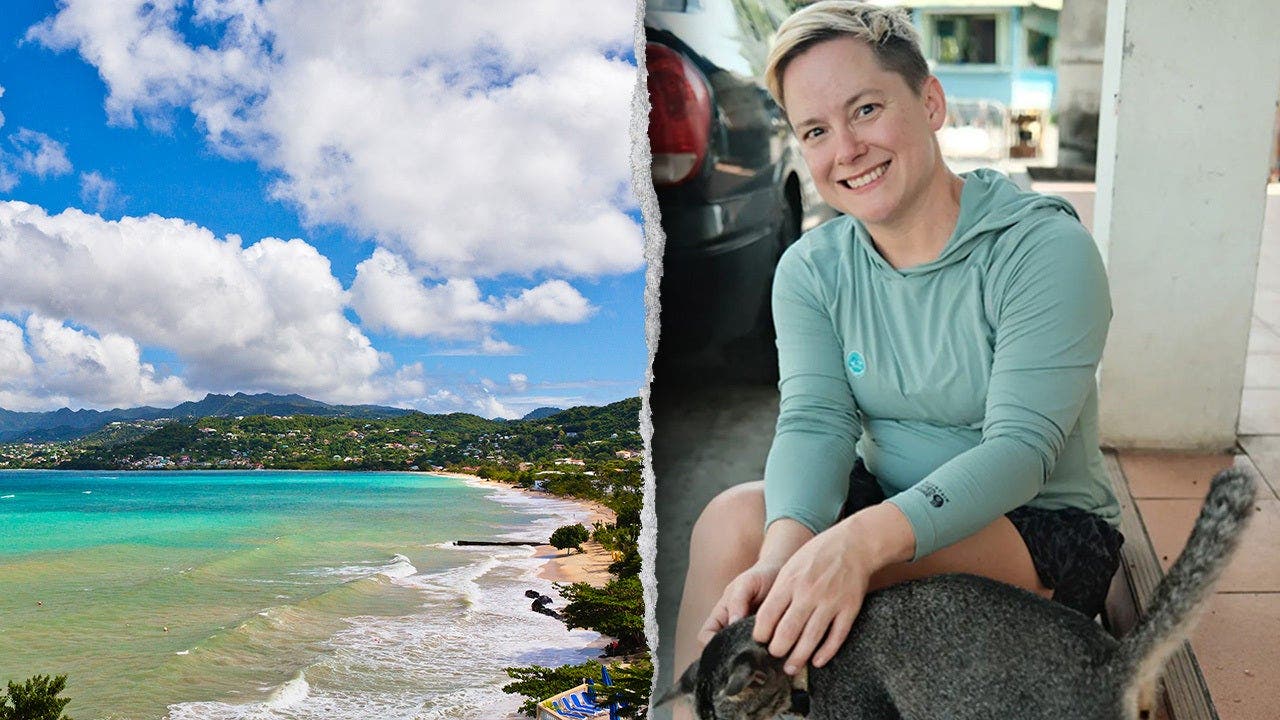
The story of Elizabeth “Liz” Waddell is a heart-wrenching reminder of how quickly a dream vacation can transform into an unimaginable tragedy, leaving an entire family suspended in a painful, agonizing limbo. Liz, a vibrant and deeply loved 43-year-old woman from North Carolina, had traveled to the picturesque Caribbean island of Grenada for what was supposed to be a joyous, rejuvenating girls’ trip filled with laughter, tropical sunshine, and the carefree relaxation that only a getaway with close friends can provide. Grenada, known globally as the “Spice Isle,” is famous for its breathtakingly beautiful beaches, lush rainforests, and warm, welcoming waters, making it the perfect destination for a group of women looking to escape the daily grind and create lasting memories together. However, the warmth of this idyllic paradise was suddenly shattered on July 22, when Liz vanished without a trace, turning an island of beauty into a landscape of profound sorrow, confusion, and unanswered questions. Back home in North Carolina, her husband, Cailen Waddell, and the rest of her family were thrust into a sudden and terrifying nightmare as the initial reports of her disappearance reached them, instantly shattering their peace of mind and replacing it with an overwhelming, suffocating sense of dread. The sudden silence from a loved one who is normally so connected and communicative is a uniquely agonizing experience, and for Liz’s family, the shock was compounded by the vast geographical distance separating them from the search efforts. In an instant, a standard summer vacation was tragically redefined by a desperate search for answers, as a community united in hope and fear, desperately clinging to any fragment of information that might explain how a beloved wife, friend, and sister could simply disappear into the vast expanse of the Caribbean Sea.
As the days turned into weeks, new and deeply haunting details emerged regarding the final known moments of Liz’s disappearance, painting a picture of a confident, independent woman who may have underestimated the power of the ocean. According to updates shared by Cailen Waddell on FindLiz.com—a dedicated website created by her family to centralize search efforts, share vital updates, and keep her story alive in the public consciousness—Liz was last seen alive in the water around 5:30 p.m. on the day she went missing. A group of local jet skiers encountered her in the open water and, recognizing the potential danger of someone swimming so far out as the late afternoon light began to fade and the currents grew stronger, spent several minutes attempting to persuade her to climb onto one of their watercraft. In a detailed post on the website, Cailen recounted that the jet skiers spoke with Liz for five to ten minutes, actively pleading with her to ride back to the safety of the shore with them rather than remaining alone in the deep, unpredictable ocean. Liz, however, remained characteristically self-assured and independent, reportedly telling the concerned jet skiers, “I’m a good swimmer,” before offering them a reassuring thumbs-up and continuing her swim. This brief, final interaction has become a devastating focal point for her family, showcasing Liz’s resilient spirit and physical strength, while simultaneously serving as a tragic prelude to her sudden disappearance. The image of Liz, smiling and confident in her own abilities amidst the vast blue waters, is a memory that now deeply haunts those who loved her, leaving them to wonder if that very confidence ultimately led her into a situation from which even the strongest swimmer could not escape.
The narrative of that fateful afternoon is further complicated and illuminated by chilling surveillance footage captured by a security camera on a nearby Airbnb property, which documented the literal moments before Liz entered the water. The video, which has been analyzed repeatedly by both local law enforcement and her family, shows a solitary figure believed to be Liz walking calmly near a swimming pool, holding a beach towel in her hands as she moves with quiet purpose toward the edge of the property. The scene is deceptively peaceful, capturing the quiet, mundane actions of a vacationer enjoying the late afternoon air, entirely unaware of the looming tragedy that was about to unfold. Moments later, the footage captures her stepping onto a dock and jumping into the ocean, swimming gracefully out of the camera’s frame and into the open sea. This visual evidence provides a vital, yet deeply agonizing, timeline for the investigation, establishing that her entry into the water was intentional and voluntary, rather than the result of foul play or an immediate accident on land. Watching the loop of a loved one swimming away into the distance, knowing it may be the last time they are ever seen, is a unique form of torment for a family, transforming a simple digital recording into a sacred, tragic archive of Liz’s final moments of freedom and peace before the ocean swallowed her path. It leaves viewers with a heavy sense of irony, as the calm waters in the video give no hint of the danger that lay just beyond the camera’s reach.
Upon receiving the devastating news of his wife’s disappearance, Cailen Waddell did what any devoted partner would do: he immediately boarded a flight to Grenada, arriving just two days after she was reported missing to the Royal Grenada Police Force, desperate to join the search efforts on the ground. For a grueling week, Cailen immersed himself in the exhausting and emotionally draining search operation, working alongside local authorities, volunteers, and specialized teams who deployed every resource at their disposal to find any trace of his wife. The search was massive in scope, utilizing advanced aerial drones to scan the rugged coastline, highly trained search dogs to scour the land, and experienced dive teams to explore the depths of the ocean floor where currents might have carried her. Despite this relentless, multi-pronged effort that searched every cove, beach, and underwater structure, the search came up entirely dry, yielding not a single piece of clothing, a personal item, or any physical trace of Liz. The physical and emotional toll of leading an unsuccessful search in a foreign country is immense, and after a week of confronting the harsh, unyielding reality of the sea, Cailen was forced to make the heartbreaking journey back to the United States alone. Returning to their home in North Carolina without Liz, surrounded by the physical reminders of their shared life, marked a transition into a deeper, quieter phase of grief, where the frantic energy of an active rescue operation was replaced by the cold, heavy reality of her ongoing absence.
The psychological landscape of having a missing spouse is a complex, agonizing state known to therapists as “ambiguous loss,” where the lack of closure prevents the normal process of grieving from truly beginning, leaving the left-behind partner suspended between hope and despair. In his heart-wrenching public statements, Cailen has openly grappled with this emotional duality, candidly admitting that while he is actively grieving her daily absence and the sudden loss of her companionship, his intellect tells him that she is almost certainly gone, likely having drowned in the powerful ocean currents. This dual state of mind—rationally accepting the high probability of her death while emotionally refusing to fully close the door on her survival—is a testament to the profound bond they shared and the human brain’s natural resistance to accepting the worst-case scenario without definitive proof. The website FindLiz.com has become not just an information portal, but a digital sanctuary where Cailen can process this overwhelming grief in the public eye, seeking clarity from the ongoing investigation while honoring the vibrant woman Liz was. For Cailen and Liz’s friends, every day is a battle against the silence of the ocean, a quiet struggle to balance the necessity of moving forward with the deep-seated desire to hold onto the memory of her voice, her laughter, and the life they built together before it was so abruptly and tragically interrupted.
Despite the passage of time and the lack of physical evidence, the Royal Grenada Police Force continues to officially treat Liz’s disappearance as an active missing persons case, refusing to declare it resolved until definitive answers are found. For Cailen, this official status allows him to hold onto a microscopic, yet incredibly powerful, thread of hope that defies all scientific probability and logical reasoning. He poignantly expressed this enduring hope by stating that if Liz were to suddenly walk out of the dense Grenadian jungle tomorrow, ask for her passport, and act as though no time had passed, he would not be surprised, but would immediately get on a plane to go rescue her in a heartbeat. This sentiment captures the beautiful, irrational essence of love in the face of tragedy—a willingness to believe in the impossible because the alternative is simply too painful to fully integrate into one’s reality. As the investigation continues and the world moves on, the story of Liz Waddell remains a powerful, humanizing testament to the fragility of life, the unforgiving majesty of the ocean, and the enduring strength of a husband’s love that refuses to let her memory fade into the deep blue sea. It reminds us all of the preciousness of our connections and the quiet, desperate strength of those left behind to carry the torch of hope in the dark.