


The Gathering Outside Gracie Mansion: A City’s Fracture, A Community’s Prayer
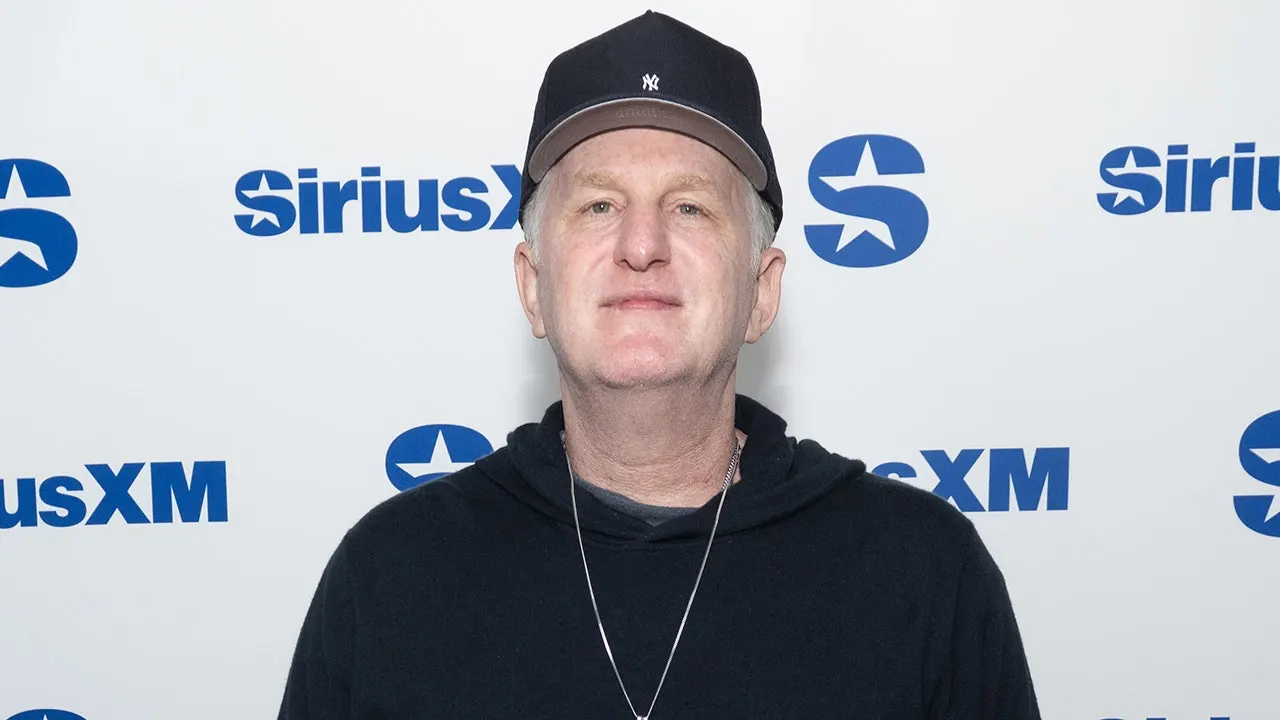
The morning air over Manhattan’s Upper East Side carried an unusual electricity on Friday, charged with tension, defiance, and something approaching hope. Outside the stately gates of Gracie Mansion, the official residence of New York City’s mayor, a crowd had begun to gather—Jewish students from SAR Academy and Ramaz, along with their teachers, parents, and community members, their presence a deliberate statement in a city where they have increasingly felt like strangers in their own neighborhoods. The scene was part vigil, part demonstration, part prayer service, all of it unfolding two days before Yom Kippur, the holiest day on the Jewish calendar. And into this charged atmosphere walked Michael Rapaport, the outspoken actor and comedian known for his unfiltered takes on politics, sports, and culture, his arrival heralding what would become one of the most blistering public condemnations of a sitting New York City mayor in recent memory. Rapaport, whose Brooklyn accent and working-class Jewish roots have made him a beloved if polarizing figure, did not come to offer pleasantries or diplomatic overtures. He came to speak his mind, and his mind was clearly troubled by the direction he believes the city has taken under the leadership of Mayor Zohran Mamdani.
Standing before the assembled crowd with the imposing facade of Gracie Mansion behind him, Rapaport wasted no time in delivering his verdict, his voice carrying the unmistakable cadence of someone who has spent decades on stage and screen. “Zohran the moron is the most divisive mayor in the history of this city by far,” he declared, the words landing with the force of a sledgehammer. The crowd, which had gathered to express solidarity and concern over rising antisemitism in New York, responded with a mixture of applause and murmurs of agreement. Rapaport pressed on, his indictment growing more pointed with each phrase. “He’s a two-bit con man,” the actor asserted, his face flushed with conviction. But it was his next words that would reverberate far beyond the immediate gathering, echoing across social media platforms and cable news segments throughout the weekend. “His wife is an antisemite. His wife is a racist,” Rapaport charged, adding that she was also “a homophobic.” The accusations were delivered with the kind of righteous anger that has become Rapaport’s trademark, the same energy he has brought to his outspoken critiques of figures across the political spectrum. For the crowd outside Gracie Mansion, his words articulated a frustration that many had been feeling but few had been willing to express so publicly, a sense that the city they loved was becoming increasingly hostile to Jewish life and identity under the current administration.
The mayor’s office, for its part, responded to the criticism with the kind of measured detachment that often characterizes official statements when confronted with heated attacks. Rather than engaging directly with Rapaport’s specific accusations about his wife or his characterization of the mayor’s divisiveness, the office referred Fox News Digital to remarks Mamdani had made earlier in the week when asked about the planned gathering outside his residence. “I welcome them,” the mayor had said, his tone seemingly conciliatory. “They can have a vigil, or I’ve heard some describe it even as a protest.” Mamdani acknowledged that whatever the gathering “is intended to be, they have the room and space to do so outside of Gracie Mansion.” He then added, with what some might interpret as either indifference or diplomatic deflection, “I think that at the time that they are there I will probably be somewhere else across the city.” The response, while outwardly accommodating, struck many in the Jewish community as symptomatic of a broader pattern—a mayor who acknowledges their concerns but remains conspicuously absent when it counts, who grants them space to express themselves but offers little in the way of substantive engagement or solidarity. This tension between the performative and the substantive, between appearance and action, lies at the heart of the growing disillusionment many Jewish New Yorkers feel toward the current administration.
Rapaport, never one to shy away from grand pronouncements or personal ambitions, also used the platform to float a possibility that has been whispered about in political circles for months. “I am absolutely considering running for mayor,” he announced, though he immediately hedged his bets, leaving the door open to backing another candidate if that person would have “a better chance of winning” the 2029 contest. The declaration immediately injected a new dimension into the unfolding political drama, transforming what might have been dismissed as celebrity grandstanding into a genuine signal of political aspiration. Rapaport’s potential entry into the mayoral race would represent a continuation of a trend that has seen celebrities and political outsiders enter New York politics, often with mixed results. His brand of unfiltered, street-smart authenticity could resonate with voters who feel disconnected from a political establishment they perceive as out of touch. At the same time, his divisive rhetoric and willingness to engage in personal attacks might limit his appeal beyond his natural constituency. For now, the announcement serves as another flashpoint in the ongoing cultural and political war over the soul of New York City, a conflict that shows no signs of abating as the next electoral cycle approaches.
Beyond the heated rhetoric and political maneuvering, however, lay a deeper story about community, faith, and the increasingly precarious position of Jewish life in contemporary New York. Rabbi Binyamin Krauss, principal of SAR Academy, a Modern Orthodox school in the city, articulated the vision behind the gathering in a piece published by The Times of Israel, offering a window into the hearts of the students and families who chose to show up that morning. “On Friday morning, students from SAR, Ramaz, and a number of other schools will stand on East 88th Street and daven,” Krauss wrote, using the Yiddish and Hebrew term for prayer. “They’ll sing. A few of them will speak. Then they’ll get back on the buses and return to class, two days before Yom Kippur.” The rabbi’s words painted a picture of an event designed not merely as a political statement, but as a lesson in civic engagement and communal resilience. “Here’s what we want students to learn in the three periods this costs: you belong in this city, and when Jews feel unsafe we gather, and we pray, out loud. We express both our vulnerability and our agency at the same time. Showing up is a civic act, one the Constitution protects and one they’ll need for the rest of their lives.” He concluded with a sentiment that captured the complex identity of being Jewish in New York: “Our students love this city and they love Israel, and they don’t see a contradiction.”
Yet even this act of communal prayer and solidarity was not without its own complications, as the gathering also attracted individuals who appeared to be Jewish counter-protesters expressing anti-Israel sentiments at the edge of the event. They carried signs bearing messages that sought to draw distinctions between support for the Jewish community and opposition to Israeli government policies: “Mayor Mamdani A Friend of Jews While Opposing Israeli Crimes” and “Anti-Zionism Is NOT Anti-Semitism.” The presence of these counter-protesters, themselves Jewish and claiming friendship toward their co-religionists while simultaneously defending a mayor whom many in the community view with deep suspicion, underscored the profound divisions that exist not just between Jews and the broader society, but within the Jewish community itself. They raised questions that defy easy answers: Can one oppose Israeli government actions while still being a friend to Jewish people? Is anti-Zionism inherently antisemitic, or is it a legitimate political position? Where does criticism of a mayor’s policies end and personal attacks on him and his family begin? These questions, hanging in the air alongside the sounds of prayer and protest, captured the essence of a moment in which Jewish identity, politics, and civic life have become inextricably and uncomfortably intertwined. As the students boarded their buses and returned to their classrooms, and as Rapaport’s words continued to echo through the corridors of social media and political discourse, one thing remained clear: the gathering outside Gracie Mansion was more than a single morning’s event—it was a reflection of the fractures, anxieties, and hopes of a city in search of its soul, and a community determined to stake its claim to belonging in a place they call home.