





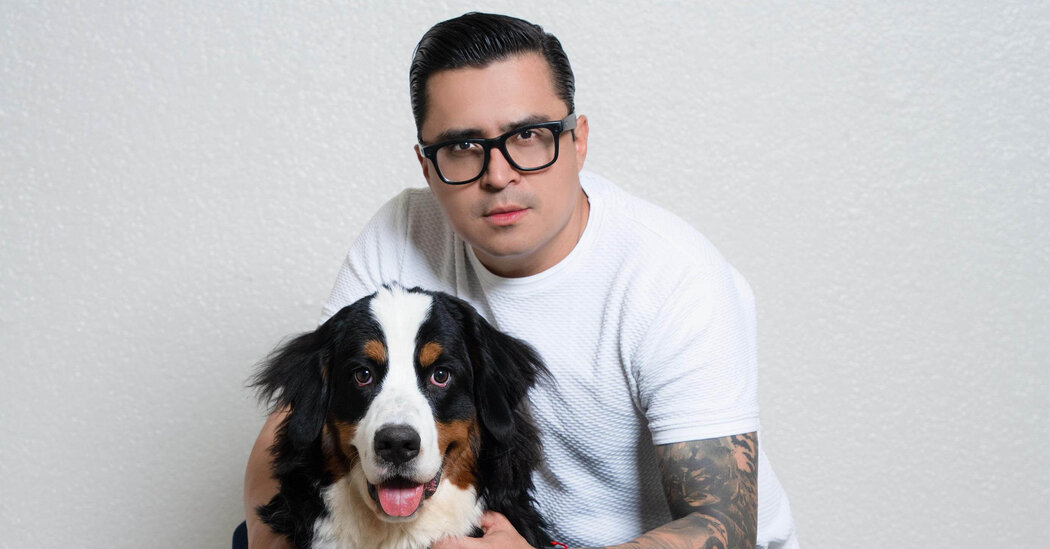
On a quiet afternoon in Phoenix, Arizona, the fragile sanctuary that forty-year-old Franklin Humberto Coral Garrido had built over a decade of exile was instantly shattered. Better known to his hundreds of thousands of online followers as “Beto Coral,” the progressive Colombian activist was returning to his suburban home, accompanied by his twelve-year-old son and the family dog, when a convoy of Immigration and Customs Enforcement (ICE) officers intercepted him. In a terrifying blur of flashing badges and demands, the suburban silence was replaced by the cold reality of a federal arrest. Beto’s former partner, Tatiana Camacho, watched in absolute horror as the tools of American immigration enforcement were deployed against a father in front of his young child. Amidst the panic, Beto managed to make a frantic phone call to Daniel Coronell, a prominent Colombian journalist, who quickly broadcasted a live video of the arrest to the world, capturing the raw terror of a man being pulled from his family for the crime of speaking his mind. The arrest was not a random administrative sweep; it was a targeted, politically motivated strike orchestrated from the highest levels of the United States government, signaling a dark new era where the borders of American democracy no longer protect the fundamental human right to free expression.
The administrative machinery that led to Beto’s arrest was set in motion on the very same day by Secretary of State Marco Rubio, who issued a highly unusual and direct memo declaring the activist deportable. Although Beto had arrived in the United States legally in 2015 on a tourist visa and had maintained a pending asylum application along with a legally authorized work permit, Rubio’s memo stripped him of his protections with a single stroke of a pen. In the document, Rubio argued that Beto’s continued presence in the United States actively undermined American foreign policy interests, accusing him of using his platform to wage “politically motivated disinformation campaigns” against right-wing democratic actors in Colombia. This was not an isolated incident of bureaucratic overreach, but rather the continuation of a controversial campaign by Rubio to use the State Department’s immense power to recommend the targeted deportation of non-citizens who express dissenting political views. While previous memos from Rubio’s office had focused on silencing immigrants who protested against Israel—such as the high-profile arrest of Columbia University student Mahmoud Khalil—this marked the first time the Secretary of State had explicitly weaponized immigration enforcement to silence an activist involved in a foreign country’s democratic election.
At the cold center of this geopolitical storm is the highly polarized presidential runoff election in Colombia, where leftist candidate Iván Cepeda is facing off against Abelardo De La Espriella, a fiery right-wing populist who enjoys the vocal endorsement of Donald Trump and several prominent U.S. Republicans. De La Espriella, a wealthy former criminal defense attorney who spent over a decade living in Florida and obtained U.S. citizenship in 2023, has built his political brand on an iron-fisted, highly aggressive law-and-order platform, openly promising to “disembowel the left.” Beto Coral had been one of his most vocal and relentless critics, recently traveling to Miami to participate in peaceful protests urging the Colombian diaspora not to vote for De La Espriella, while also attempting to file a formal complaint with the FBI accusing the candidate of illegally wiretapping and harassing him. De La Espriella had previously represented the deeply controversial former Colombian President Álvaro Uribe in a defamation lawsuit against Beto, repeatedly pressuring the activist to retract his criticisms. Days before the arrest, De La Espriella boasted on social media that “good news” was coming for patriotic Colombians, dropping heavy hints about his connections to high-ranking U.S. officials who had the power to revoke visas—a calculated threat that manifested as ICE officers waiting on a Phoenix street corner.
To fully understand the profound tragedy of Beto Coral’s impending deportation, one must look back at the blood-soaked history of Medellín, Colombia, in the 1990s, where Beto’s father served as a dedicated police officer. His father was a member of the elite Search Bloc, the legendary task force responsible for tracking down and ultimately killing the notorious drug kingpin Pablo Escobar, the head of the Medellín Cartel. Years after his father died under highly suspicious circumstances, Beto began a relentless personal investigation to uncover the truth, a quest for justice that quickly made him a prime target for powerful paramilitary groups and cartel remnants who still wield immense influence in Colombia. Fearing for his life, Beto fled to the United States in 2015 to seek asylum, believing that America was a safe haven where he could raise his son free from the constant shadow of political violence. Now, the bitter irony of his situation is agonizingly clear: the very search for truth and devotion to justice that forced him to flee his homeland is now being framed by American politicians as a threat to national security, putting him at risk of being sent back directly into the hands of the powerful enemies who have wanted him dead for decades.
Since his sudden arrest on Tuesday, Beto has been subjected to the grueling and isolating pipeline of the American immigration detention system, designed to break the spirit of even the most resilient activists. Authorities have continuously moved him across the country, transferring him first from Phoenix to El Paso, Texas, and then to a high-security facility in the remote bayous of Louisiana, effectively stripping him of his ability to secure stable legal representation. In her final, agonizing phone calls with Beto, Tatiana Camacho described him as sounding increasingly desperate and disoriented, though he stubbornly refused to sign voluntary deportation papers despite the overwhelming psychological pressure. As a crucial hearing in his case looms on June 30, Beto remains locked in a legal purgatory, unable to consult with an attorney or hold his terrified son, while American politicians celebrate his suffering online. Senator Bernie Moreno of Ohio, a vocal supporter of De La Espriella, took to social media to mock Beto’s plight, writing a cold and callous post telling the asylum seeker to “have a nice life back in Colombia,” a statement that highlights the complete absence of human empathy in the modern political arena.
The targeting of Beto Coral has sent a chilling shockwave through immigrant and exile communities across the United States, raising fundamental questions about the future of free speech and political asylum in America. Kerry Doyle, a veteran immigration attorney and former top lawyer for ICE in the Biden administration, sharply condemned the arrest, comparing Secretary Rubio’s heavy-handed tactics to the repressive methods used by authoritarian regimes to crush political dissent. Similarly, Gimena Sánchez, the Andes director at the Washington Office on Latin America, warned that the Trump administration is sending a terrifyingly clear message: if you speak out against a foreign political figure who has the favor of the United States government, you will be hunted down and discarded, regardless of your legal rights or pending asylum cases. By turning the Department of Homeland Security into a political weapon to silence critics of its foreign allies, the United States is betraying its historic promise as a sanctuary for those fleeing tyranny. For Beto Coral, his family, and the millions of political refugees who looking to America for safety, the message is devastatingly clear: the land of the free is no longer safe for those who dare to speak the truth.