


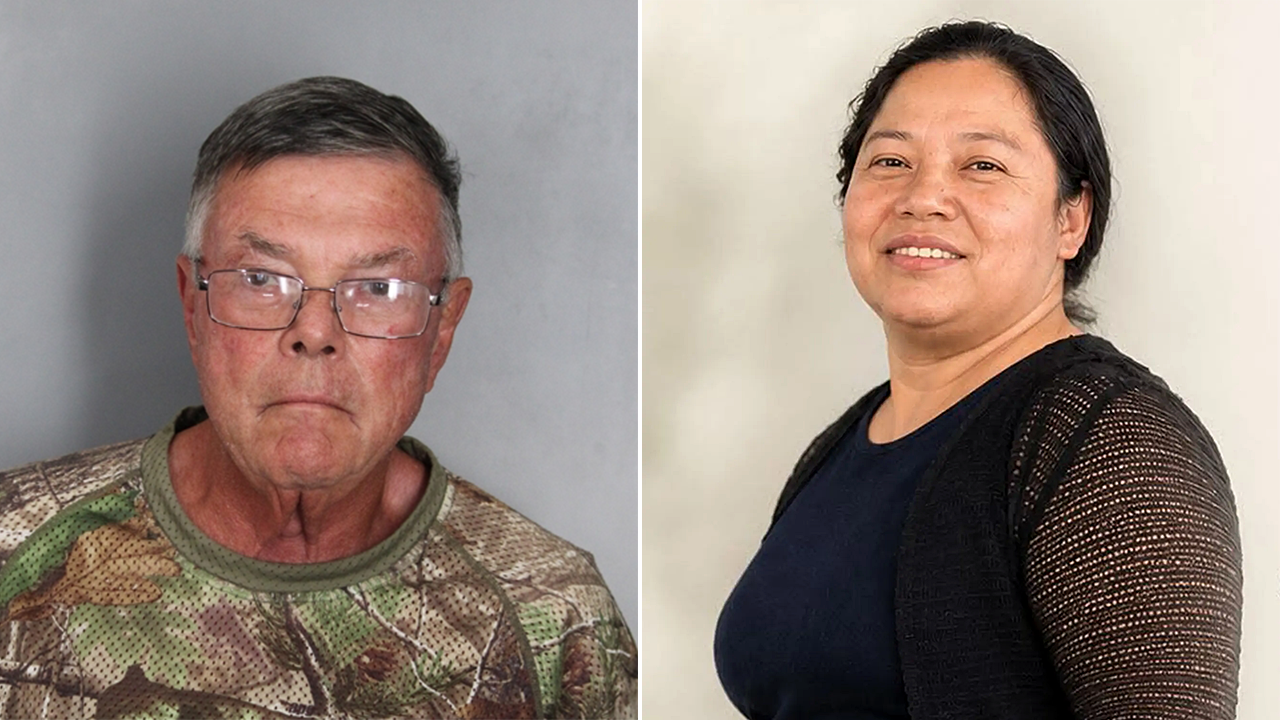
The quiet dusk of a Delaware evening turned into an unthinkable nightmare on Friday, when a simple walk through an open field ended in tragedy. Santos Maria Chilel Soto, a 39-year-old mother of five, was walking with a man and two children near Ellendale, Delaware, at around 7:40 p.m. when a bullet tore through the twilight calm. According to Delaware State Police, Walter Moorhead, a 74-year-old hunter from Maryland, was positioned in a ground blind—a camouflaged hunting hide meant to conceal him from the eyes of deer—when he saw movement in the dimming light. Believing he had spotted his quarry, he raised his rifle and fired. Instead of a deer, his shot struck Soto, who was simply crossing the field with her family. The horror of that moment is almost impossible to process: a woman walking with children, perhaps heading home or simply enjoying the evening air, suddenly collapsing as the adults and little ones around her realized what had happened. The field, which should have been a place of peace, became a scene of chaos, sirens, and desperate attempts to save a life. Moorhead, authorities say, made a catastrophic error in judgment, one that would end a life, shatter a family, and leave an entire community reeling from the senselessness of it all.
The immediate aftermath was a frantic race against time. State troopers arrived at the scene and found Soto gravely wounded. They administered life-saving medical care as best they could, but the damage from a high-powered rifle round is often catastrophic, and despite their efforts and the speed with which she was rushed to a local hospital, Soto was pronounced dead shortly after arrival. The news of her death sent shockwaves through the small Delaware community and beyond, as friends, neighbors, and strangers alike struggled to comprehend how a routine walk could end in such violence. Meanwhile, investigators pieced together the events, leading them to arrest Moorhead on multiple felony charges: manslaughter by recklessly causing the death of another person, possession of a firearm during the commission of a felony, and three counts of first-degree reckless endangerment—the latter likely reflecting the danger posed to the man and two children who were with Soto when she was shot. The charges paint a picture of negligence so profound that it crossed the line into criminal recklessness. Yet, in a development that has left many in the community frustrated and bewildered, Moorhead was released from custody after posting a $43,000 cash bond. For a life lost, for five children left motherless, for a family torn apart, the bond felt to many like a slap on the wrist—a reminder that the legal system, with its cold calculations of flight risk and financial capacity, often cannot measure the weight of human grief.
To those who knew her, Santos Maria Chilel Soto was far more than a name in a police report. She was a mother, first and foremost—a woman who devoted herself to her five children, who worked hard, who dreamed of a better life. A GoFundMe page set up by her family describes her as a “beloved” aunt, a woman whose warmth and kindness touched everyone around her. The fundraiser also reveals a heartbreaking detail: Soto’s family is now trying to raise money to send her body back to Guatemala, her homeland, so that she can be laid to rest among her ancestors and loved ones. This detail speaks to the immigrant experience, to the sacrifices so many make in pursuit of safety, opportunity, and a future for their children. Soto’s life was likely one of quiet resilience—working, caring, hoping, and building a home in a country that was not her birthplace but had become her family’s home. And now, in a cruel twist of fate, her journey ended not in a hospital bed surrounded by family, nor peacefully in old age, but in a field in Delaware, felled by a bullet meant for an animal. Her children will grow up without her. Her family will forever carry the scar of that Friday evening. The fundraiser, which had raised roughly $12,000 as of Monday evening, is a testament to the community’s desire to help, but no amount of money can fill the void left by her absence.
The accused, Walter Moorhead, is a 74-year-old man who, by all accounts, was engaging in a legal and time-honored activity: deer hunting. Hunting is deeply woven into the fabric of rural American life, a tradition passed down through generations, a way of connecting with nature and providing food. But with that tradition comes an immense responsibility—the responsibility to know your target, to be absolutely certain of what lies beyond it, and to never, ever fire at movement or sound alone. Moorhead’s alleged mistake is a hunter’s worst nightmare, the kind of error that haunts not only the victim’s family but also the shooter, who must live with the knowledge that he took a human life. Yet, while we can acknowledge the tragedy of a life ruined, we must also hold space for the greater tragedy: the life that was taken. Soto was not a deer. She was a woman walking with children, likely unaware that a hunter was hidden nearby, likely believing that an open field was a safe place. The fact that Moorhead was hunting from a ground blind—a structure designed to conceal his presence—raises troubling questions about how he could have mistaken a human being for an animal, especially when that human being was accompanied by others. Hunting regulations typically require hunters to wear blaze orange for visibility, but ground blinds and low-light conditions can create dangerous situations. This incident will undoubtedly reignite debates about hunting safety, about the need for stricter regulations, about whether older hunters should undergo more rigorous testing, and about how to prevent such tragedies from happening again.
In the days since the shooting, the GoFundMe page has become a focal point for grief and solidarity. The family’s words are simple and devastating: “Maria’s family is now facing the overwhelming pain of this sudden loss while also trying to make sure she is laid to rest with dignity. This heartbreaking situation has placed a heavy financial burden on the family at a time when they are grieving deeply.” The fundraiser aims to cover funeral services and the cost of repatriating her body to Guatemala, a process that is both emotionally and financially draining. As of Monday evening, the page had raised approximately $12,000, a meaningful sum that shows the community’s willingness to rally around a family in crisis, but also a reminder of how quickly funeral costs can spiral beyond reach. Every donation, every shared post, every message of condolence is a small act of humanity in the face of senseless violence. But the family’s pain is not something that can be eased by money alone. They must now navigate the impossible task of explaining to five children that their mother is never coming home. They must plan a funeral while also dealing with police investigations and court proceedings. They must grieve in public, under the glare of media attention, while trying to hold onto the private memories of the woman they loved. And they must do all of this while knowing that the man responsible for their loss is currently free, awaiting trial, living his life while theirs has been irrevocably shattered.
As the investigation continues, the community is left to grapple with the profound questions this tragedy raises. How can a person mistake a mother for a deer? How can a legal activity, conducted by a licensed hunter, end in such a preventable death? And what does justice look like when a life is taken by negligence rather than intent? For Soto’s family, justice may never feel complete. No verdict, no sentence, no amount of money can bring her back. But there is hope that this tragedy will lead to change—perhaps stricter hunting laws, perhaps mandatory safety courses for hunters of all ages, perhaps a greater emphasis on the simple rule that if you are not absolutely certain of your target, you do not pull the trigger. Moorhead now faces the weight of the legal system, and if convicted, he will spend years behind bars. But the true weight of this tragedy lies with the children who will grow up without their mother, with the family who must bury a beloved aunt and sister, with a community that must learn to live with the knowledge that a walk through a field can end in death. In the end, Santos Maria Chilel Soto was a human being, a mother, a daughter, an aunt, a woman with dreams and hopes and people who loved her. She deserved to grow old, to watch her children graduate, to hold her grandchildren. Instead, she was taken from this world in a moment of terrible, avoidable error. May her memory be a blessing, and may her story serve as a solemn reminder of the preciousness of life and the profound responsibility we all bear to protect it.