





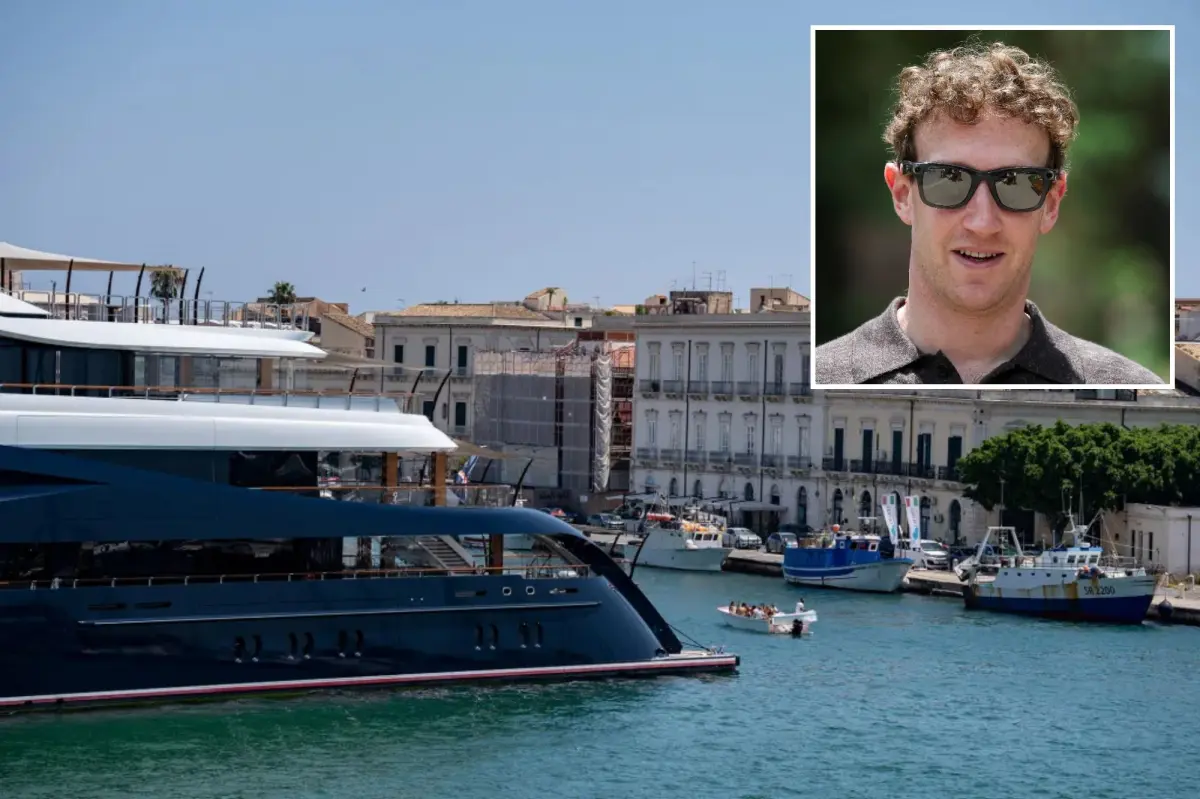
The majestic, icy waterways of Alaska have always demanded a profound sense of humility from those who dare to navigate them, serving as a stark reminder that even in our modern era of technological triumph, nature’s elements can quickly turn precarious. On a chilly Monday evening, this breathtaking wilderness, framed by towering pines and the deep, dark swells of the northern Pacific, became the stage for a dramatic encounter that highlighted the growing divide between extreme wealth and ordinary human struggle. Between the remote Alaskan outposts of Petersburg and Juneau, a modest twenty-one-foot skiff carrying everyday travelers found itself in a sudden, quiet crisis when its engine sputtered and died, leaving the vessel completely out of fuel and drifting helplessly at the mercy of the cold currents. As the shadows of dusk lengthened and the cold northern air began to settle over the water, those aboard the small boat were left feeling incredibly vulnerable, scanning the horizon for any sign of warmth or assistance. It was during these tense moments that a towering testament to global privilege loomed in the distance: Launchpad, a mammoth three-hundred-eighty-seven-foot superyacht valued at an astronomical three hundred million dollars, belonging to Meta platforms chief executive officer Mark Zuckerberg. Equipped with cutting-edge technology, luxurious amenities, and a professional crew, the floating fortress represented the absolute pinnacle of human engineering and financial excess. Yet, despite its massive size, unparalleled resources, and close physical proximity to the stranded boaters, the giant vessel remained completely unresponsive, idling silently in the dark waters while a small group of human beings awaited rescue. The contrast between the fragile, fuel-starved skiff and the impenetrable, silent mega-yacht served as a powerful visual metaphor for the disconnect between the world’s tech elite and the everyday people who share the same planet, immediately sparking a fierce public debate over maritime ethics, the responsibilities of wealth, and the basic human duty to assist those in need.
The sequence of events unfolded rapidly as the night deepened, revealing a series of choices and movements that would later be heavily scrutinized by maritime observers, local Alaskans, and the public alike. According to official reports later released by the United States Coast Guard, the occupants of the stranded skiff realized their predicament and sent out an initial call for assistance at approximately nine-thirty in the evening. Although the Coast Guard evaluated the situation and determined that the vessel was not in immediate, life-threatening distress, they recognized the potential danger of being stranded in remote, freezing Alaskan waters overnight and subsequently broadcasted a marine assistance request about thirty minutes later. It was during this critical window that the true geometry of the situation became clear through vessel-tracking technology. Data retrieved from marine tracking services later confirmed that the Wilderness Legacy, a relatively small, locally operated cruise ship owned by UnCruise Adventures, was navigating the same stretch of water but was positioned significantly farther away from the stranded skiff than Zuckerberg’s towering superyacht. Despite the physical distance, the captain and crew of the Wilderness Legacy did not hesitate; they immediately altered their course and began steaming toward the coordinates of the disabled skiff. As the cruise ship made its way to the rescue site, vessel-tracking data captured a telling moment: the Wilderness Legacy actually sailed directly past the stationary Launchpad, which sat anchored and undisturbed in the middle of the passage. The imagery of a modest commercial cruise vessel hurrying past a static, multimillion-dollar playground of the ultra-rich to perform a rescue operation created an indelible impression of priorities, showcasing a willingness on one side to take action and a seemingly cold indifference on the other, establishing a narrative that would quickly capture the attention of the media.
The atmosphere aboard the Wilderness Legacy quickly transformed from a peaceful evening of vacationing into a scene of shared human drama and moral outrage as the rescue unfolded. While the cruise ship’s crew prepared to tow the stranded twenty-one-foot skiff to safety, the vessel’s captain took to the loudspeaker to update the passengers on the situation unfolding just outside their cabin windows. In a moment that would soon reverberate far beyond the pristine waters of Alaska, the captain announced to the gathered travelers that Zuckerberg’s nearby superyacht had actually been positioned much closer to the stranded boat than they were, but had actively refused to lend any assistance to the struggling mariners. The reaction among the passengers was immediate, visceral, and near-unanimous; a wave of loud booing echoed through the ship’s decks as vacationers reacted to what they perceived as a shocking display of elitist apathy. One passenger, Michael Love, captured the collective indignation of the moment and shared it on the social media platform Bluesky, describing the intense frustration felt by those on board who could not comprehend how such a massive, well-equipped vessel could simply ignore fellow boaters in need. As the Wilderness Legacy successfully took the small skiff under tow and guided it to the sheltered safety of Farragut Bay, the contrast between the cruise ship’s communal spirit and the superyacht’s silent isolation became the central topic of conversation, turning a routine maritime rescue into a public relations nightmare for one of the world’s most recognizable billionaires, showing how quickly public sentiment can turn against those who seem to lack basic human concern for their fellow travelers on the water.
As the public outcry intensified and news of the incident spread across social media and news outlets, representatives for Mark Zuckerberg moved quickly to contain the damage and offer an explanation for the superyacht’s apparent inaction. A spokesperson for the Meta CEO issued a formal statement to the Alaska Beacon, attempting to distance the billionaire from the controversy by clarifying that neither Zuckerberg nor his family members were actually aboard the Launchpad at the time of the incident. Furthermore, the spokesperson offered a technical explanation for why the yacht’s crew did not respond to the Coast Guard’s broadcast, claiming that the crew had been actively operating on a different radio channel than the one used to transmit the assistance request. According to this defense, by the time the crew finally noticed and reviewed the Coast Guard’s communications, the Wilderness Legacy had already arrived on the scene and the rescue operation was well underway. The statement also echoed the Coast Guard’s assessment that the stranded skiff was not in immediate, grave danger, framing the event as a minor inconvenience rather than a life-or-death emergency, and concluded with a polite expression of gratitude that everyone involved had returned to safety. While these technical explanations were designed to absolve the crew and their wealthy employer of blame, they did little to quiet the skepticism of critics who argued that a state-of-the-art superyacht should easily have been monitoring all critical emergency channels, suggesting that the communication breakdown was itself a sign of negligence or isolation, leaving many to wonder about the internal operations of these giant private vessels.
The controversy surrounding the Launchpad taps into a deeply rooted cultural tradition known as the “law of the sea”—an ancient, unwritten code of honor and mutual aid that has governed mariners for centuries. In the unforgiving marine environment, where help is often hours or days away, sailors have historically operated under the strict understanding that they must assist any vessel in distress, regardless of their own schedule, status, or national affiliation. This tradition of maritime solidarity is built on the profound realization that on the open water, all human beings are equally vulnerable, and today’s rescuer could easily become tomorrow’s victim. When a vessel as massive and advanced as Zuckerberg’s superyacht fails to participate in this shared safety net, it strikes a sensitive chord, signaling a rejection of the basic social contract that binds seafaring communities together. For many observers, this incident is not just about a missed radio transmission; it is a vivid illustration of how extreme wealth can insulate individuals and their operations from the common responsibilities of society. The image of a mega-yacht sitting idly while a small boat struggles nearby serves as a modern parable for our times, reflecting a broader public anxiety that the ultra-wealthy are increasingly choosing to live in their own private, high-tech bubbles, completely detached from the struggles, needs, and safety of the ordinary communities they pass through, raising fundamental questions about what we owe to each other when we occupy the same public resources and navigate the same shared spaces of our planet.
Ultimately, the quiet resolution in Farragut Bay, where the stranded boaters were safely delivered to harbor, stands as a testament to the enduring power of community and goodwill over technological sophistication and sheer wealth. While the Launchpad continues its journey through the pristine waters of the Pacific Northwest, its glittering facade has been somewhat tarnished by the lingering questions of empathy, responsibility, and civic duty that this incident has left in its wake. The episode serves as a powerful reminder that true leadership and humanity are not measured by the length of one’s yacht or the size of one’s fortune, but by the willingness to extend a helping hand when the call arises. In an age dominated by algorithms, massive corporate valuations, and the relentless pursuit of personal comfort, it was a modest, hardworking cruise ship and its crew that exemplified the best of the human spirit on that cold Alaskan night. As the public continues to debate the details of radio channels and vessel proximity, the story remains a compelling narrative about what we owe to one another as fellow travelers on this earth, reminding us that when the waters get rough, we must always be ready to answer the call, regardless of how grand our own ship may be, because in the end, our shared humanity is the only true anchor we have in an unpredictable world.