






The Silent Epicenter: How Decades of War Masked a New Viral Peril in Eastern Congo
The mist-shrouded green hills of the eastern Democratic Republic of Congo have long served as a backdrop to one of the world’s most protracted and complex humanitarian crises, where a deadly convergence of armed conflict, state fragility, and mass human displacement has now cleared a path for a terrifying old foe to re-emerge in a stealthier, highly unpredictable guise. For years, the provinces of North Kivu, South Kivu, and Ituri have been fractured by ethnic and geopolitical violence perpetrated by dozens of armed rebel groups, forcing more than a million terrified civilians to flee their homes in search of a relative, albeit fleeting, safety. This relentless displacement has not only stripped the regional healthcare infrastructure to its absolute bare bones, leaving remote clinics without basic medical supplies, electricity, or running water, but it has also created the perfect epidemiological blind spot in which a highly lethal pathogen could quietly mutate, multiply, and migrate without detection. When a rare, enigmatic strain of the Ebola virus began silently circulating through these highly vulnerable populations, there were no early warning systems left functional enough to sound the alarm, leaving local communities completely exposed to an invisible killer while the international community remained largely preoccupied with other global crises. Consequently, the pathogen burned through families and remote forest settlements for weeks on end, masquerading as common endemic fevers like malaria or typhoid, before the true scale of the epidemic began to reveal itself through an alarming spike in sudden, unexplained deaths. This initial period of undetected transmission has now set the stage for an escalating health crisis that threatens to unravel years of painstaking progress in global disease eradication, demonstrating how political instability acts as a primary vector for infectious diseases.
A Diagnostic Blind Spot: Inside the Lab Failures and Migratory Winds of Mongwalu’s Gold Fields
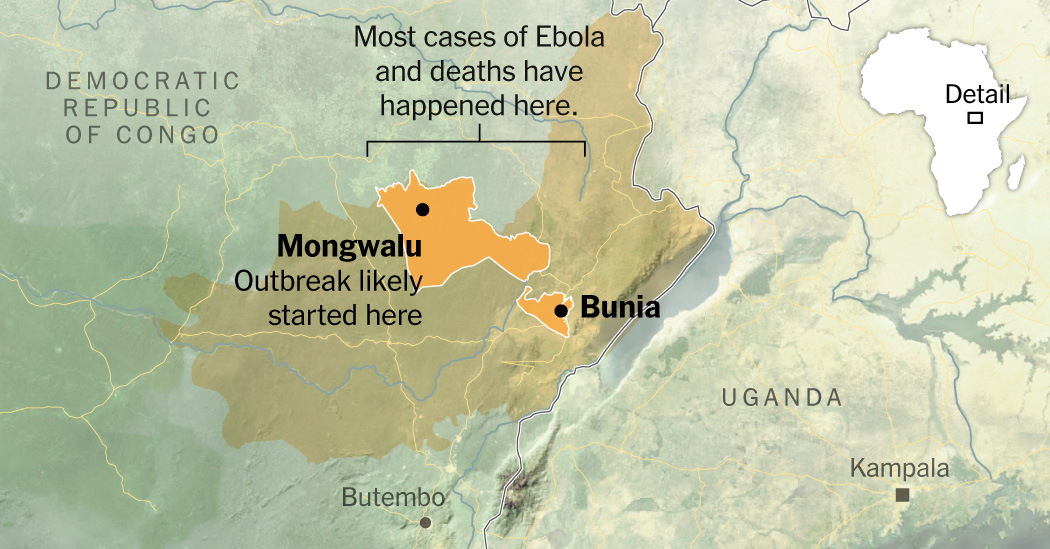
At the heart of this unfolding public health emergency lies the remote, gold-rich territory of Mongwalu in Ituri Province, a chaotic and bustling economic hub where thousands of informal, artisanal miners toil in hazardous conditions before moving on to the next gold rush, driving a relentless cycle of population movement. This transient labor force, constantly shifting between remote mining settlements, dense forest camps, and larger urban centers, has acted as a highly efficient engine of viral transmission, carrying the infection deep into the region’s interior long before health officials realized an outbreak was underway. The tragedy of this delayed response was further compounded by a devastating technological and logistical failure in the local diagnostic networks: the primary laboratories in Ituri Province, situated more than a thousand miles away from the capital city of Kinshasa, were equipped only with diagnostic assays specifically designed to detect the Zaire ebolavirus—the most common and widely studied species of the pathogen. When early samples from dying patients in Mongwalu were run through these local machines, they repeatedly returned false negative results because the tools were biologically blind to the rare, divergent strain actually causing the sickness, leading local clinicians to falsely believe they were dealing with more benign endemic pathogens. It was only when physical tissue and blood samples were finally packed onto local transport and flown across the vast, roadless expanse of the Congolese rainforest to the advanced laboratory facilities in Kinshasa that genomic sequencing revealed the true culprit: the rare and poorly understood Ebola Bundibugyo species. By the time this crucial diagnostic breakthrough was made, weeks of unchecked transmission had already occurred, allowing the virus to establish countless deep chains of infection throughout a highly mobile, deeply traumatized, and largely unvaccinated civilian population.
The Mystery of Bundibugyo: Grappling with a Rare Strain Devoid of Vaccines and Therapeutics
Unlike the more infamous Zaire strain of the virus, which captured global headlines during the devastating West African outbreak a decade ago and for which scientists successfully developed highly effective vaccines like Ervebo and monoclonal antibody treatments like Inmazeb, the Ebola Bundibugyo species remains a profound biological enigma wrapped in a scientific blind spot. Since its initial identification, this particular variant of the filovirus has only been documented in two previous, relatively contained outbreaks—first in the Bundibugyo District of western Uganda in 2007, and later in a remote pocket of the Democratic Republic of Congo, just west of Ituri, in 2012. Because of its historical rarity, global pharmaceutical companies and public health agencies have directed little interest or funding toward developing targeted countermeasures for it, leaving the modern medical arsenal entirely bare; today, there are absolutely no approved vaccines or specific therapeutic drugs capable of neutralizing the Bundibugyo strain. This lack of biomedical defenses means that clinical management is restricted to primitive supportive care—such as intravenous hydration and symptom management—while health workers are forced to watch the mortality rate climb without the lifesaving tools that transformed the management of recent Zaire outbreaks. Alarmingly, epidemiological data indicates that the current crisis in Ituri Province has already surpassed the combined casualty and infection tallies of both previous Bundibugyo outbreaks, pushing medical professionals into uncharted territory as they struggle to understand the transmission dynamics and virulence of a pathogen that has mutated under the cover of a decade’s silence. The absence of pharmacological interventions places an immense, almost unbearable burden on traditional infection control measures, requiring near-perfect execution of isolation protocols and personal protective equipment usage in local medical facilities that are already buckling under the weight of decades of chronic underfunding and systemic neglect.
A Borderland in Crisis: Cross-Border Contagion and the Nightmare of Modern Contact Tracing
The geographical layout of Ituri Province, which shares highly porous and heavily trafficked borders with South Sudan and Uganda, has transformed what could have been a localized public health intervention into a complex international security threat, with regional containment efforts now precariously hanging of a thread. Already, the dreaded specter of cross-border transmission has transitioned from a theoretical risk to a grim reality, with the Ugandan Ministry of Health confirming that the virus has breached the frontier, resulting in at least two confirmed cases—including one fatality—deep within the densely populated capital city of Kampala. Because the virus is transmitted primarily through direct contact with the bodily fluids of symptomatic patients, or through contaminated surfaces and medical equipment, understaffed and poorly equipped clinics along the border zones have rapidly become hot zones for nosocomial transmission, where unsuspecting medical staff and family members are infected while providing basic care. To halt this chain of transmission, epidemiologists rely on the meticulous practice of contact tracing—identifying, monitoring, and isolating every single individual who has interacted with an infected person during their incubation period—but this vital practice is proving nearly impossible to execute in eastern Congo. The combined forces of intense local conflict, deep-seated public mistrust of government authorities, and the rapid, unmapped flight of migrant laborers fleeing both the virus and armed militias mean that contacts are vanishing into the dense jungle or crossing international borders faster than trackers can log their names. Without the stabilizing presence of secure regional corridors and trusted community leaders who can bridge the gap between suspicious locals and foreign medical teams, contact tracers are left chasing ghosts, while the virus silently hops from one transit hub to another along the vital arterial trade routes linking Central and East Africa.
The Geopolitical Vacuum: How Western Disengagement and Defunding Crippled the Frontlines
As local health workers and international medical charities struggle to gain the upper hand against this rapidly expanding epidemic, they are doing so in the shadow of a profound geopolitical vacuum left by Western nations, most notably the United States, which has drastically scaled back its funding and physical presence in the region’s health security sector. In previous decades, agencies such as the U.S. Agency for International Development (USAID) and the Centers for Disease Control and Prevention (CDC) maintained robust, highly active emergency response groups and surveillance networks in eastern Congo, acting as critical scaffolding for the country’s fragile ministry of health by providing rapid funding, expert epidemiologists, and advanced mobile laboratories. However, a significant shift in Western domestic political priorities toward isolationist fiscal policies and a restructuring of global health budgets has resulted in the systematic dismantling of these vital overseas defensive lines, leaving local authorities to confront a highly lethal outbreak virtually empty-handed. This strategic disengagement has not only crippled the region’s early-warning systems but has also severely diminished the speed at which emergency isolation wards can be constructed, personal protective gear distributed, and community engagement campaigns launched. The absence of Western technical leadership and financial backing has forced the World Health Organization and local non-governmental organizations to stretch their already depleted resources to the absolute limit, raising troubling questions about the long-term sustainability of global health security when the world’s wealthiest nations choose to retreat from the frontlines of infectious disease control. By abdication of their traditional roles as global health underwriters, wealthy nations have inadvertently allowed a localized pathogen the time and space to gather momentum, highlighting a dangerous vulnerability in the collective defense against global pandemics.
The Global Horizon: Containing a Central African Threat Before It Redefines Global Biosecurity
While the World Health Organization has issued a sobering assessment stating that the risk of regional contagion across Central and East Africa is exceptionally high, the agency has stopped short of declaring the current outbreak a Public Health Emergency of International Concern, maintaining that it does not yet pose an immediate threat to global biosecurity. However, many prominent epidemiologists and humanitarian leaders warn that such distinctions are dangerously short-sighted, arguing that in an era of unprecedented global connectivity, a localized health crisis in a war-torn province can rapidly transform into a global catastrophe if left unchecked. The lesson of previous pandemics is clear: the safety of the global community is only as strong as the weakest link in the international biosurveillance chain, and allowing a rare, vaccine-resistant pathogen like the Bundibugyo strain to fester in the conflict zones of the Democratic Republic of Congo is akin to playing Russian roulette with global health. To avert a continental disaster, the international community must immediately mobilize to restore diagnostic equity, fund aggressive local contact tracing, and fast-track scientific research into clinical trials for effective Bundibugyo-specific vaccines and therapeutic treatments. Ultimately, the crisis in Ituri Province is not merely a medical emergency, but a profound moral and political test that challenges the global community to recognize that human health is indivisible; until we address the systemic inequalities, active conflicts, and funding vacuums that allow deadly viruses to hide in the dark, we will remain forever vulnerable to the pathogens that thrive in the shadows of our collective neglect.