






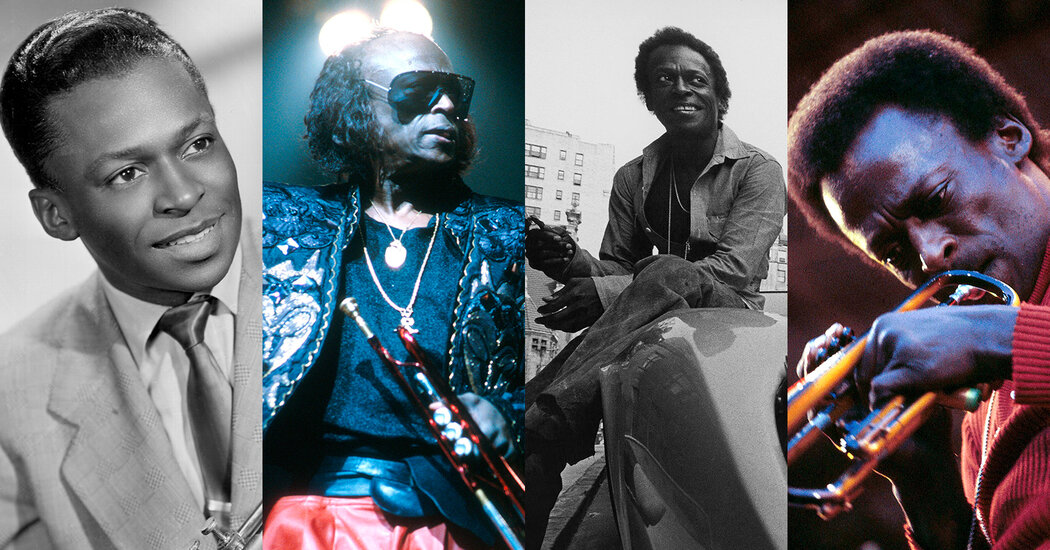
In our modern, hyper-connected world, there exists a pervasive and often exhausting obsession with the physical tools of creativity, a phenomenon where aspiring artists constantly chase the elusive promise of better gear. Musicians spend countless hours combing through internet forums and specialty shops, desperately searching for the perfect mouthpiece, the rarest vintage alloy, or the most prestigious brand name, operating under the quiet delusion that a premium physical object can somehow bestow the gift of genius on those who possess it. Yet, if we look back at the artistic giants who actually shaped the course of musical history, we find a starkly different, far more grounded philosophy, embodied most iconically by the legendary jazz trumpeter Miles Davis. According to Billy Buss, an associate professor in the brass department at the illustrious Berklee College of Music in Boston, Davis was the absolute antithesis of what we would today call a “gear head.” For Miles, the trumpet was never an object of intellectual obsession, nor was it a technological puzzle to be solved through endless tinkering; instead, it was merely a physical vessel for his deeply personal artistic expression. He did not waste his precious creative energy fussing over the mechanics of his instruments or worrying about whether a different setup would miraculously elevate his performance. He understood to his very core that his sound lived inside his own body and mind, not inside the cold curves of the brass, and that his distinct, unmistakable musical identity would shine through regardless of what instrument he happened to be playing. This liberating philosophy allowed him to bypass the anxieties of gear-dependency that plague so many modern players, freeing him to focus entirely on the emotional weight of his delivery. To Miles, the horn was simply an extension of his own physical body, a conduit through which his inner thoughts, vulnerabilities, and raw emotions could escape into the physical world, proving to generations of listeners that true artistry can never be purchased off a store shelf, but must instead be excavated from within.
To understand how Miles Davis projected this inner world, one must examine the instrument that became his most trusted companion throughout the core of his historical career: the Martin Committee trumpet. Developed in the mid-twentieth century by the Martin Band Instrument Company, this particular horn was highly unique because it was designed not by a single master builder, but by a “committee” of leading mid-century brass players and instrument designers who sought to create a trumpet with a warm, dark, and highly expressive tonal quality. For Miles, this instrument was not a status symbol or a piece of collectible memorabilia, but a highly responsive partner that welcomed his unorthodox, deeply felt approach to brass playing. While other manufacturers of the era focused on producing instruments that projected a bright, piercing, and mathematically uniform sound, the Martin Committee possessed a smoky, almost tactile resonance that allowed Miles to manipulate the texture of his notes with incredible, breathing intimacy. He played this instrument not with the aggressive, athletic force of a classical virtuoso, but with a gentle, whispering touch, coaxing out its rich mid-range frequencies and embracing the slight acoustic imperfections that gave his music its uniquely human character. Over the decades, Miles and his Martin Committee became virtually synonymous in the minds of jazz enthusiasts worldwide, representing a perfect union of player and machine where the physical boundary between the human hand and the cold metal seemed entirely to dissolve. He kept several of these horns close at hand throughout his career, treating them not as fragile artifacts to be preserved behind velvet ropes, but as working tools of the trade that bore the scratches, tarnishes, and natural wear of a life lived intensely on the bandstand and the road. This profound relationship demonstrated that while Miles was never obsessed with gear for its own sake, he deeply appreciated a physical tool that did not fight him, but instead allowed him to express the full, unfiltered spectrum of his humanity.
Perhaps the most defining element of Miles Davis’s sonic signature, and the one that permanently cemented his reputation as a master of understated emotional depth, was his innovative use of a simple accessory: the Harmon mute. Normally, trumpet players used this bulbous metal mute with its adjustable central stem inserted, which produced a bright, buzzy, and somewhat comedic sound often associated with early novelty jazz or vaudeville acts. Miles, however, made the radical and intuitive decision to dismantle the device, discarding the stem entirely and playing directly into the empty chamber of the mute while pressing his horn incredibly close to the recording microphone. This technical adjustment fundamentally transformed the acoustics of the trumpet, completely dampening the loud, brassy projection and replacing it with a warm, intimate, whispering timbre that felt less like a mechanical instrument and more like a human voice speaking secrets directly into the listener’s ear. As the renowned jazz biographer Ian Carr beautifully noted in his definitive work on Davis, this stemless Harmon mute allowed Miles to “express the most delicate nuances of feeling,” creating a sonic texture that was surprisingly “round and full” despite its hushed, restricted volume. Miles himself laid bare the deep emotional philosophy behind this choice in a candid 1989 interview, revealing that he preferred playing the trumpet with a mute because it “sounds human, sounds like a voice.” By altering the physical nature of his trumpet’s projection, Miles was able to shed the traditional, aggressive bravado of the brass section, revealing instead a fragile, raw, and deeply personal vulnerability that mirrored the complex inner landscapes of human emotion itself. This legendary sonic profile, hovering perpetually somewhere between a whisper and a sigh, lent his music a cool, haunting lyricism that could break a listener’s heart with a single, sustained note, proving to the world that quiet, understated sincerity often carries far more weight than loud, performative theatricality.
To fully appreciate the revolutionary nature of Miles Davis’s quiet, voice-like sound, one must understand the broader musical landscape of the 1950s, a chaotic and competitive era when the dominant trends in modern jazz were moving in the exact opposite direction. Following the explosion of bebop in the post-war years, the genre had become increasingly defined by a relentless drive toward athletic virtuosity, with trumpet players constantly competing to see who could play “higher, louder, faster” than anyone else on the scene. The nightclub stage was frequently treated as an arena of intense technical combat, where musicians showcased their lightning-fast finger work, staggering breath control, and ability to hit ear-splitting high notes that left audiences breathless but emotionally detached. While Miles certainly possessed the technical capabilities to participate in these competitive displays, he made the deliberate, rebellious choice to walk a lonely path of profound understatement, emotional vulnerability, and deliberate restraint. Rather than filling every available beat with a manic flurry of notes, Miles embraced the vast power of silence, understanding that the space between the notes could be just as expressive, if not more so, than the music itself. He resisted the heavy pressure to conform to the dominant, high-energy aesthetic of the era, choosing instead to offer his listeners a quiet, contemplative haven of cool lyricism and introspective beauty. By slowing down the frantic tempo and lowering the aggressive volume, Miles invited his audience into an intimate, shared dialogue, fundamentally shifting the focus of jazz from an exhibition of physical stamina to a deep exploration of the human soul. His subdued, deliberate approach was a profound reminder that true strength in art does not come from overpowering the listener with sheer volume, but from having the courage to stand vulnerable before them, exposing one’s own quiet moments of wonder.
As the tumultuous decades marched on, the physical world that birthed Miles Davis’s unique sound inevitably began to fade and dissolve, reminding us of the transient, delicate nature of all material things in this life. The legendary Martin Band Instrument Company, which had crafted the very Committee trumpets that served as the physical vessels for his genius, eventually fell victim to shifting economic corporate tides and changing global musical tastes, ultimately going out of business entirely in the year 2008. The quiet closure of the company’s historic factory doors marked the final, somber end of a grand era of mid-century American craftsmanship, leaving behind only a finite, precious number of these beautifully constructed horn designs scattered across the globe like lost treasures. Yet, while the physical machinery and skilled hands used to manufacture his beloved trumpets have ceased to exist, the timeless, groundbreaking music Miles created on them has survived entirely untouched by the slow, eroding passage of time. This striking contrast highlights a beautiful, comforting paradox at the absolute heart of human creativity: that while the physical tools we use to construct art are inherently mortal, fragile, and destined to decay into dust, the emotional truths we express through them can achieve a form of genuine, everlasting immortality. The physical horns themselves may tarnish, their delicate valves may stick, and their human makers may vanish into the forgotten pages of history, but the haunting, voice-like sound that Miles breathed into the atmosphere decades ago continues to reverberate deeply through the collective cultural consciousness of humanity today. It serves as a powerful reminder that the true legacy of a genius does not reside in the physical objects they left behind on this earth, but in the intangible, miraculous ways they succeeded in touching the hearts of others, leaving an indelible imprint on the air itself that can never be erased, silenced, or lost.
This deep, universal human longing to physically connect with the ghosts of our past creative heroes was vividly illustrated in March, when one of Miles Davis’s custom-built Martin Committee trumpets was put up for public auction. This spectacular instrument, custom-crafted for Miles around 1980 during a period of his artistic reinvention, was a striking visual masterpiece, boasting a sleek, dramatic black lacquered finish accented with elegant, gleaming gold-plated hardware that perfectly mirrored the bold, stylish, and futuristic aesthetic of his later years. When the auctioneer’s gavel finally fell, the instrument sold for an astronomical price of more than $1.6 million, a staggering sum of money that reflects far more than the objective, material value of the brass, gold, and paint from which the horn was carefully constructed. In reality, the passionate buyer was not merely purchasing a rare piece of high-end vintage musical equipment; they were chasing the tangible shadow of a genius, desperately attempting to possess a physical relic of a man who once had the power to change how the entire world listened to music. There is an incredibly moving, almost religious irony in this transaction: that a basic trumpet, which Miles himself viewed as a simple, completely replaceable vessel for his inner voice, has now become a multi-million-dollar monument to his historic absence. Yet, no matter how much money is paid to own these sacred, silent physical relics, the true, living magic of Miles Davis can never be locked away in a private vault, hoarded by the wealthy, or displayed behind a climate-controlled glass case. The real, invaluable treasure he left behind remains entirely free, accessible to anyone with ears to hear and an open heart—a haunting, human voice made of brass and breath that continues to whisper its beautiful, sorrowful secrets to anyone willing to sit alone in the dark and just listen.