



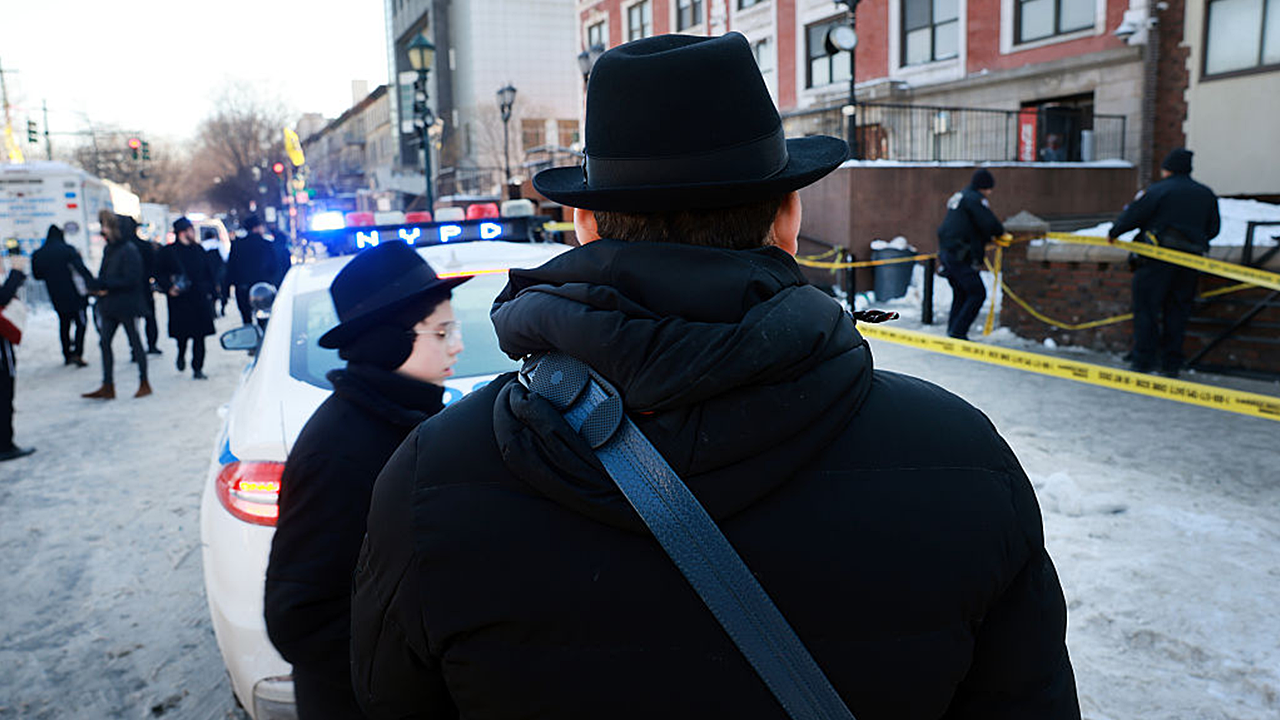
On a freezing afternoon in late January, the historic and vibrant Crown Heights neighborhood of Brooklyn was shattered by an incident that initially seemed to confirm the worst fears of a community already on edge. Outside the Chabad Lubavitch World Headquarters—a global beacon of Jewish faith, culture, and community—a 36-year-old New Jersey man named Dan Sohail drove his car directly toward the building’s side entrance. Before initiating the impact, Sohail took the time to step out and physically move the protective security barriers out of his path. In a bizarre display that puzzled onlookers, he gestured urgently to nearby congregants, desperately warning them to get out of the way so that no one would be hurt by his impending actions. What followed was a chaotic sequence of events in which Sohail repeatedly rammed his vehicle into the side-entrance door five times, ultimately shearing the door off its hinges and obliterating his own car’s front bumper. In a city hyper-vigilant against a rising tide of bias-motivated attacks, this violent disruption was instantaneously interpreted by the public and lawmakers as a targeted, antisemitic hate crime, casting a shadow of fear over the local congregation who wondered if they were once again under siege.
The legal fallout from this distressing event quickly escalated to the Brooklyn federal court, where the prosecution sought to turn Sohail’s sentencing into a high-profile statement of societal deterrence. Facing charges of intentionally damaging religious property, to which he pleaded guilty in May, Sohail found himself at the center of an intense debate over justice, public safety, and accountability in an era of heightened social friction. Federal prosecutors fiercely lobbied for a 14-month prison sentence, a penalty designed to keep Sohail behind bars for an additional eight months beyond the time he had already served. To justify this demand, the government pointed to sobering statistics collected by the New York City Police Department, which revealed that out of 146 recorded hate crime incidents since the beginning of the year, a staggering 80 had specifically targeted Jewish individuals and institutions. In the eyes of the prosecution, Sohail’s actions could not be divorced from this broader, alarming trend, and they argued that a harsh sentence was absolutely necessary to send an uncompromising message to anyone who might contemplate attacking religious sanctuaries.
Yet, beneath the terrifying headlines and the cold, institutional statistics lay a deeply complex and heartbreaking human story—one of a profound psychological breakdown and a desperate, agonizing search for human connection. Dan Sohail was not a calculated extremist driven by ideological hatred; rather, he was a deeply troubled man battling severe depression and post-traumatic stress disorder rooted in a highly traumatic and painful childhood. His defense attorney, Mia Eisner-Grynberg, painted a poignant portrait of a soul in freefall, explaining that Sohail’s involvement with the Chabad Lubavitch community had originally begun as a sincere and passionate quest for spiritual healing, identity, and belonging. Drawn to the rich traditions and welcoming nature of Judaism, Sohail had regularly attended the very same synagogue he would later damage. There, he had found brief moments of joy and acceptance, dancing warmly with rabbinical students who embraced him without judgment. This temporary sanctuary gave him a fleeting sense of hope, prompting him to follow the students’ heartfelt encouragement to travel to Israel in a bid to further ground his fragile psyche and find a lasting peace that had eluded him his entire life.
Tragically, the pilgrimage that was meant to cure Sohail’s inner turmoil instead triggered a devastating relapse upon his return to the United States. Stranded back in his daily reality, he found himself overwhelmed by a severe, crippling wave of anxiety and erratic mental instability that his fragile coping mechanisms could not withstand. Feeling increasingly isolated and drowning in his psychological pain, Sohail made desperate attempts to reach out to the Chabad members, literally begging them for help and guidance as his mental state rapidly deteriorated. His subsequent action of driving his car into the synagogue was not born of malice, but was instead characterized by his lawyer as an erratic, “irrational cry for help”—the ultimate, desperate act of a man who believed he had run out of options and possessed no other way to make his psychological suffering visible to the world. By ensuring that bystanders were safely out of harm’s way before striking the building, Sohail’s bizarre caution betrayed his true underlying motive: he did not wish to harm the people who had shown him kindness, but rather cracked under the weight of his own inner darkness.
This nuanced, tragic reality was not lost on U.S. District Judge Eric N. Vitaliano, who presided over the sentencing with a rare degree of empathy and critical clear-sightedness. Judge Vitaliano expressed deep sadness that the Justice Department had actively sought to leverage the public’s initial mischaracterization of the crash—which many had immediately branded as an act of antisemitic terrorism or hate—to push for an unnecessarily punitive sentence. Guided by a comprehensive psychiatric evaluation that detailed the overwhelming severity of Sohail’s mental health challenges, the judge firmly rejected the government’s narrative, noting that these psychological struggles played “an important role” in the court’s determination of justice. Vitaliano openly lamented the situation as a “sad tale,” recognizing that punishing a severely ill individual in the name of political deterrence would do nothing to address the root causes of the incident, nor would it offer true healing to either the defendant or the community he disrupted.
Ultimately, Judge Vitaliano sentenced Dan Sohail to six months and one week of imprisonment—a decision that practically secured his release within a matter of days due to the six months he had already spent in custody awaiting trial. In addition to his time served, Sohail was ordered to pay $20,000 in restitution to cover the physical damages inflicted upon the Chabad entrance, ensuring that financial accountability was upheld without entirely crushing his prospects for a fresh start. This compassionate yet balanced resolution highlights a crucial, often overlooked truth within the criminal justice system: behind the alarming aesthetic of a localized crisis, there are often deeply vulnerable human beings whose cry for help is misdiagnosed as malice. As Sohail prepares to reintegrate into society, his story serves as a powerful reminder of the vital need for robust mental health support systems, the necessity of looking beyond first impressions, and the profound impact of judicial empathy in distinguishing between genuine hatred and the desperate actions of a broken mind.