

From UN Podium to Home Front: Syria’s President Ahmed al-Sharaa Faces the Hardest Test
His international standing has climbed since his last speech to the General Assembly, but the crisis at home is growing deeper by the day.
When President Ahmed al-Sharaa last addressed the U.N. General Assembly, he delivered a speech that was as much a plea as it was a promise. He asked the international community to see a new Syria, to look beyond the years of conflict, and to give his transitional government a chance to rebuild what war had shattered. In many ways, that appeal worked. Since his last appearance at the United Nations, al-Sharaa has repositioned himself with remarkable speed. The man once viewed through the narrow lens of armed opposition is now a regular presence at regional summits, a counterpart for European foreign ministers, and a partner in diplomatic statements issued from Washington, Ankara, and Gulf capitals. His diplomatic standing has improved in ways that would have been difficult to imagine only months earlier. But the distance between New York’s East River and the streets of Syria has never felt greater. While the world has adjusted its opinion of the president, Syria’s economy continues to bleed, and the security situation remains deeply unstable. Behind the polished speeches and official photographs is a country still recovering from a civil war that touched nearly every family, destroyed entire districts, and displaced millions. Al-Sharaa arrives at this moment of international goodwill with a critical advantage — and a dangerous vulnerability. The goodwill could translate into investment, sanctions relief, and reconstruction aid. Or it could fade quickly if the domestic crisis continues to spiral. He is no longer fighting for recognition abroad. The harder fight is at home.
Few figures have traveled so far in so short a time, and fewer still have managed to reshape their image so completely in the eyes of a skeptical world. When Ahmed al-Sharaa was named president of Syria’s transitional government, many foreign ministries hesitated to engage, wary of the movement he had once commanded. Now the conversation has shifted. Turkey, Qatar, the United Arab Emirates, Saudi Arabia, Jordan, France, Germany — all have opened lines of communication, made official visits, or adjusted policies to accommodate a new reality. The Arab League, which once suspended Syria’s seat, has recommitted to dialogue. The European Union has debated conditional suspension of certain sanctions. Washington, after years of isolating Damascus, moved to ease some restrictions and withdrew the long-standing bounty against al-Sharaa, a symbolic but powerful gesture. During this year’s General Assembly, when al-Sharaa met foreign leaders, the atmosphere was almost constructive. The phrase that kept coming up was “regional stability.” For many governments, the pragmatic argument is simple: ignoring Syria did not work; engaging may produce a better chance of easing refugee flows, containing extremism, and limiting Iranian influence across the region. All of that has strengthened his diplomatic standing. Yet this recalibration is not unconditional. Even the friendliest capitals have made clear that Syria’s climate has changed, but not their memory of the past. The promise of reconstruction aid, investment, and technical assistance is tied to tangible steps: a new constitution, credible elections, a transparent treasury, and a government in which every Syrian community shares power. Al-Sharaa has presented himself as a pragmatist, and many international counterparts have accepted that framing, at least for now. But in diplomacy, patience is a finite resource. The next time he flies to New York, less of the world will be watching what he says and more will be watching what he has actually done.
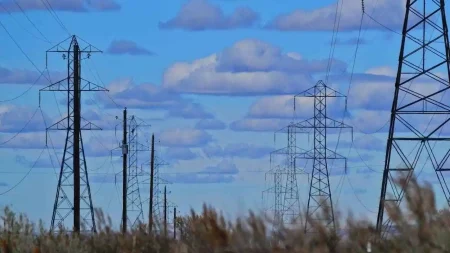
The weight of a shattered economy, however, cannot be masked by diplomatic momentum. More than a decade of war flattened Syria’s economic infrastructure, and the transition has not yet produced the dramatic recovery that ordinary Syrians were promised. The national currency continues to lose value against the dollar, and in cash-strapped markets, people watch prices change almost by the hour. Electricity is available for only a few hours a day in many cities, and even Damascus, the seat of the new government, faces rolling blackouts that disrupt hospitals, bakeries, and water supply networks. The United Nations has estimated that the vast majority of Syrians now live below the poverty line, and millions depend on humanitarian assistance just to get through the month. Roads, schools, clinics, power plants, water treatment facilities — all of it requires billions of dollars in renewed investment. For now, foreign investors are waiting. Sanctions may be easing, but not fast enough for business leaders who want legal certainty and guarantees that their money will not be trapped. Banks operate under a shadow of suspicion, and the private sector remains cautious despite public expressions of optimism from the new authorities. Domestically, al-Sharaa’s government is juggling the enormous burden of paying civil servants, subsidizing basic goods, and preventing economic instability from igniting social unrest. At the last General Assembly, the president’s message was about opportunity. On the ground, that opportunity is still buried under rubble. The economic challenges are mounting, and they do not respond to well-crafted speeches. A currency crisis does not care about diplomatic protocol. A power outage does not pause for a photo opportunity. This is the harder reality behind Syria’s diplomatic thaw.
The security landscape remains equally difficult, even as the political climate warms. Syria’s security map is still crowded with armed actors and unresolved territorial questions. The most immediate threat comes from the Islamic State, which never entirely disappeared. Its fighters retreated into remote desert camps and mountain hideouts, and they continue to mount hit-and-run attacks on military convoys, border posts, and local officials. The new government has stepped up counterterrorism operations, but the task is enormous. Another challenge is the Kurdish-led Syrian Democratic Forces in the northeast, who control much of the country’s oil- and wheat-producing land. Negotiations between Damascus and the SDF are ongoing, but a comprehensive agreement has proved elusive. In the north, Turkish-backed factions hold territory, complicating any attempt to restore central authority. In the south, areas near Daraa and Suwayda remain restless, with local grievances and, in some cases, armed groups of their own. And then there is Israel, which has carried out strikes inside Syria in pursuit of what it describes as strategic threats. Israeli forces have also moved into buffer zones, drawing sharp accusations from Damascus. For al-Sharaa, the central security challenge is not simply defeating an enemy; it is consolidating a state. The transitional government has promised a unified national army, the disarmament of militias, and the integration of fighters from different revolutionary factions into official ranks. That project remains incomplete. Too many guns are still outside state control. Too many communities feel left out of a political settlement that has so far centered on the new president and his inner circle. In such an atmosphere, the security challenges are quieter, more diffuse, but no less dangerous than they were at the height of the war. The existence of a recognized leader has not yet translated into control of every border, every checkpoint, or every barrel of oil. Without control, there can be no investment, no rule of law, and no lasting peace.
At the center of every conversation about Syria’s future stands a governance problem. Ahmed al-Sharaa has promised a transitional process that will lead to a new constitution, a national dialogue conference, and credible elections. He has spoken about transitional justice, women’s rights, and the need for a civil state, and he has invited Syrians of different sects and political backgrounds to participate. But the gap between those promises and the pace of implementation is wide. Many Syrians, particularly in minority communities, remain skeptical of a government that emerged from a rebel movement and has yet to fully break with its past. International donors are not blind to this. Reconstruction funds, development aid, and infrastructure loans will almost certainly be conditioned on political inclusivity, legal transparency, and a visible commitment to human rights. The United States and European governments have begun to recalibrate, but no one in Brussels or Washington is ready to sign a blank check. For Syria, that means reconstruction is likely to be slow, piecemeal, and heavily scrutinized. The country also needs to bring back its diaspora — millions of educated, entrepreneurial Syrians who could offer critical skills and capital. Yet very few will return permanently until there is a secure environment, functioning banks, reliable electricity, and a credible justice system. The private sector, which could be a powerful engine of recovery, is waiting for clear signals. The result is a chicken-and-egg dilemma: stability requires investment, but investment requires stability. President al-Sharaa’s diplomatic achievements have created room to maneuver, but they cannot substitute for competence in governance. The next phase of Syria’s transition will be won or lost not in elegant meeting rooms, but in the daily delivery of services, salaries, and safety. Those are the standards by which the world — and the Syrian street — will ultimately judge this government.
President Ahmed al-Sharaa will likely look back on his last address to the U.N. General Assembly as a turning point, the moment the world began to accept him as a legitimate leader. Since then, he has traveled a long way, both physically and politically. But the road from that podium to a functioning Syrian state remains longer than the diplomacy so far suggests. His improved international standing is real. It has opened doors, created diplomatic momentum, and raised hopes among Syrians that their country may finally emerge from isolation. At the same time, the mounting economic and security challenges are eroding those hopes from the inside. Economic frustration can turn into protest. Insecurity can reignite conflict. And international goodwill, if not matched by results, can quickly curdle into disappointment. The next chapter of Syria’s transition will be defined by choices made far from the cameras. Can the government secure the eastern desert? Can it reach a lasting agreement with the SDF? Can it deliver electricity to Aleppo, jobs to the young, and justice to those who lost too much? Can it persuade investors that the risk is worth the reward? These are the questions that will decide whether al-Sharaa’s diplomatic victory becomes a lasting legacy or just a brief, promising moment. For now, Syria remains a country in between — between war and peace, between isolation and inclusion, between hope and fear. The president has won the opening argument before the world. The harder argument is with the Syrian people, and it will not be settled in New York. It will be settled in the neighborhoods, villages, and fields of a broken country still searching for a way forward. The world is watching, but the clock is ticking.