




A Sacred Space Violated: Unpacking the Hate Crime at Central Synagogue
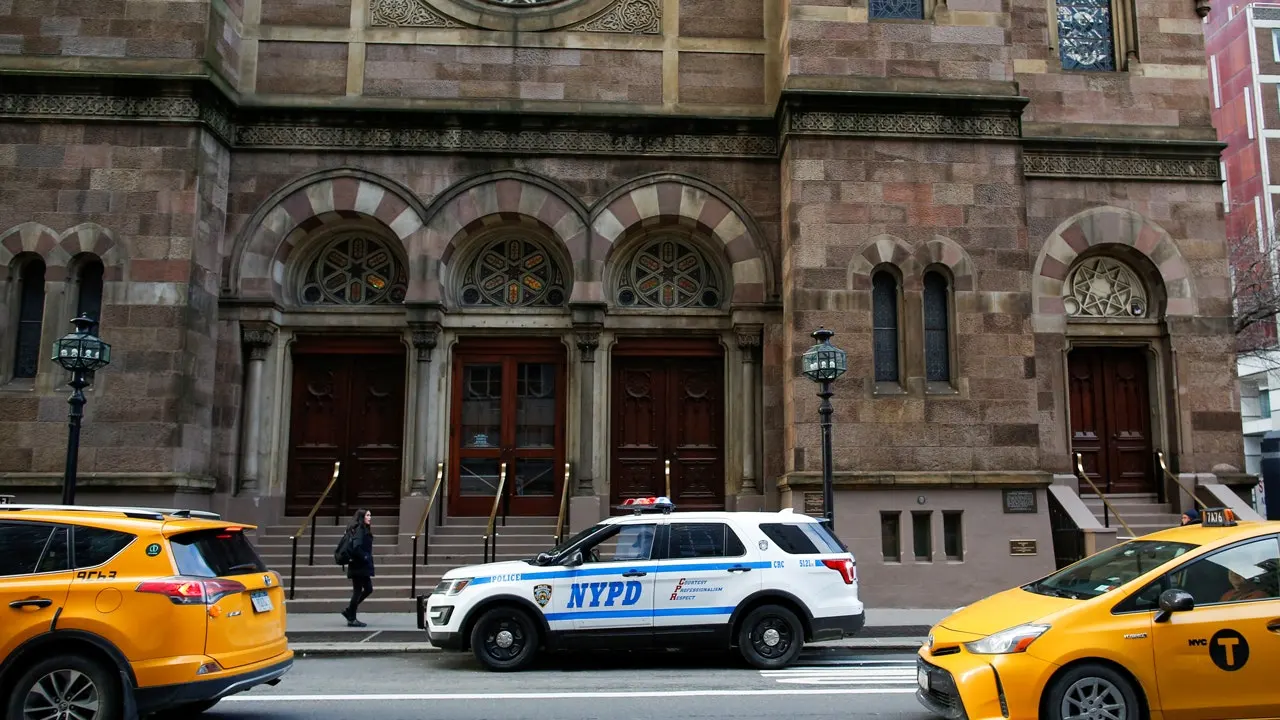
The sanctity of a Friday evening Shabbat service—a time traditionally reserved for peace, reflection, and communal prayer—was shattered in New York City when a man was arrested for allegedly disrupting services at the historic Central Synagogue, violently attacking congregants and security personnel in a brazen act now investigated as a hate crime. The incident, which unfolded on a quiet Friday evening at the synagogue located on Lexington Avenue in Manhattan, has sent shockwaves through the city’s Jewish community and beyond. The New York Police Department (NYPD) swiftly identified the suspect as Larry Montes, a 46-year-old resident of the Bronx, charging him with two counts of assault as a hate crime, one count of criminal mischief as a hate crime, and additional related offenses. For those present, what should have been a spiritually uplifting evening transformed into a harrowing encounter with unprovoked violence, leaving the congregation and countless Jewish New Yorkers grappling with a troubling question: how can anyone feel safe worshiping in such an unpredictable climate of hate?
A Scene of Terror Unfolds During Evening Prayer
The details, as reported by NYPD Commissioner Jessica Tisch, paint a disturbing picture of chaotic violence erupting within sacred walls. The suspect interrupted the evening Shabbat services—services that mark the culmination of the week and the beginning of a day of rest—before being confronted by security. Rather than leaving peacefully, authorities say Montes turned violently on the congregation. As synagogue security escorted him toward the exit, he is accused of striking a congregant, damaging synagogue property, and then, in a shocking escalation, spitting at and headbutting a member of the security team. The assault was not only physical but also profoundly symbolic, targeting the very essence of a safe space where worshippers gather to escape the outside world’s turmoil. That such violence could erupt during a time meant for spiritual connection underscores the brazen disregard for human dignity and religious sanctity that defines a hate crime. The fact that an NYPD sergeant, working a paid detail at the synagogue, was present and immediately intervened to take Montes into custody is a small mercy in an otherwise deeply troubling narrative.
Humanizing the Aftermath: Pain, Fear, and Resilience
Beyond the cold language of police reports and charges lies the raw human toll of the incident. Imagine the terror of the congregants, their eyes closed in prayer, only to be jolted by shouts and scuffles. Picture the fear in their eyes as they witnessed violence erupt in a place they hold sacred. Commissioner Tisch, speaking poignantly about her own connection to Central Synagogue—the very place where she grew up—captured the collective heartbreak: “I understand the sanctity of this space and its meaning for congregants. In joy and in sorrow, it has always been a place of comfort and peace.” Her words remind us that this is not just an attack on a building or a random act of violence; it is a deep violation of a place that holds generations of memories, weddings, b’nei mitzvahs, and moments of profound grief and joy. The relief that no one was seriously injured physically is palpable, yet the psychological scars will linger long after the bruises have healed. The reassurances from officials that those hurt were “evaluated at the scene and are doing well” do little to erase the trauma felt by witnesses, a trauma that often reveals itself in the quiet moments of anxiety and fear that follow such an attack.
Official Outrage and a Call for Unity
In the aftermath, a chorus of officials voiced outrage and solidarity, their words painting a stark picture of a city confronting its demons. New York City Mayor Zohran Mamdani expressed his horror, framing the attack not merely as a criminal act but as an assault on the freedom of religious expression. “I can only imagine the pain and fear an attack like this, during Shabbat services, causes for the congregation and for Jewish New Yorkers across our city,” he said. “Every New Yorker must be able to observe their religion without fear of violence.” The emphasis on “fear of violence” is crucial; it highlights the specific harm of hate crimes—they are not just crimes against individuals but threats designed to intimidate an entire community. Governor Kathy Hochul echoed these sentiments, condemning the “appalling” act and asserting that Jewish New Yorkers “have every right to worship openly, proudly, and without fear.” These statements, while necessary, also carry an undercurrent of exhaustion—a repeated need to reassure a community that has heard such words before, in the face of escalating anti-Semitic incidents across the country.
A Broader Epidemic of Hate
The Central Synagogue attack does not occur in a vacuum. It is tragically emblematic of a disturbing nationwide rise in antisemitism and hate crimes targeting places of worship. From the recent attack in Houston, which led to hate crime charges, to the stabbing on the Upper West Side, there is a documented pattern of escalating violence and intimidation. Federal data analyzed by the ADL has shown record-high levels of antisemitic incidents, with synagogues increasingly targeted as symbols for broader global conflicts. The assault at Central Synagogue is a chilling reminder that communities of faith are on high alert, having to act as their own first line of defense against a threat that feels both pervasive and personal. This case forces a difficult national conversation about root causes: is this the result of cyber-cascading radicalization, or a mainstreaming of hate speech? Whatever the cause, the result is that a group of people simply trying to observe their religion on a Friday night was thrust into a situation where they now must consider if their house of worship is truly safe.
The Ripple Effect on a Faith Community
The impact extends far beyond the immediate perimeter of Central Synagogue. For Jewish communities across the city and the nation, these targeted acts of violence trigger a collective sense of vulnerability. The security mechanics become sistematic: the locked doors, the security guards with earpieces, the instinctive assessment of exits upon entering a memorial or cultural hall. This incident reinforces a tragic reality that many Jewish Americans already understand: the battle against anti-Semitism has shifted discernibly from the fringes to the mainstream digital and physical spaces. While the suspect in this case is in custody, the mental and emotional turmoil persists. Synagogue leaders must now navigate the delicate balance between maintaining spiritual solace and implementing tangible security protocols that, for some, may feel like a loss of innocence. For many congregants, the experience is personal—a stranger’s hate has infiltrated a space they considered their home away from home, forcing them to reconcile their faith with a persistent feeling of being targeted.
Looking Forward with Resolve and Hope
As the New York City police and prosecutors move forward with the case against Larry Montes, the true test lies in the community’s response. The path forward requires more than just police presence; it demands a reaffirmation of resolve. Leaders like Tisch have committed to deploying additional resources to the synagogue and across the city to reassure the Jewish community. Yet, true security will only come when we address the underlying climate of hate that has emboldened such individuals. The incident at Central Synagogue is a somber reminder that freedom of religion is not an abstract ideal but a fragile right that must be actively defended. While the physical wounds may heal, the memory of the violence will linger. However, so too will the resilience of the community. By gathering for Shabbat services again this Friday, by continuing to observe their faith proudly and openly, they will deliver the most powerful possible rebuttal to hate. In the face of hate, they choose community; in the face of fear, they choose faith.And in that defiant choice, there is hope—a hope that love for one’s neighbor, in all its forms, will always be stronger than the fear meant to divide them.