

The Terrifying Night in Memphis: A Father’s Desperate Cry and a Baby’s Plight
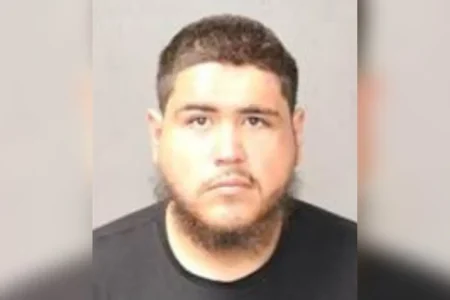
In the dead of night on the outskirts of Memphis, Tennessee, a chilling incident unraveled that left a community shaken and reminded everyone of the fragile line between desperation and danger. At the heart of it all was Jerry L. Stark, a 34-year-old man whose behavior that early morning of May 1 painted a picture of utter turmoil. According to a police affidavit obtained by Fox News, Stark was seen carrying an infant through the streets, his actions erratic and panicked, as if the world had turned against him. Witnesses described him not just wandering but running, clutching the child tightly, and pleading for help from anyone who would listen. It wasn’t just a scene of confusion; Stark repeatedly shouted that his own family was out to harm him, claiming they were trying to kill him. This wasn’t an isolated outburst—it spiraled across multiple locations, turning a quiet neighborhood into a hotspot of fear and intervention. For those watching, it felt like a raw human drama, where a man’s inner crisis collided with the safety of an innocent baby. The air was thick with tension, the kind that hangs over communities when someone seems broken beyond repair, yet still holding onto a life that depended on him. Stark’s story, as it emerged, raised questions about mental health, family strife, and the thin veneer of stability that many people maintain until it cracks. His charges of domestic assault only scratched the surface of the emotional wreckage left in his wake, and for the baby he carried, it was a night that could have ended in tragedy. People in Memphis couldn’t help but wonder: how does one man’s paranoia lead to endangering a child? The incident began innocently enough for some witnesses, but it escalated quickly, pulling in strangers who became reluctant heroes in a tale of survival and compassion.
Stark’s frantic journey started before the restaurant that served as the climax of the night. Eyewitness accounts detailed how he appeared at two nearby gas stations, still holding the infant, but his demeanor was anything but calm. He was behaving oddly—sweating, pacing, and muttering incoherently—drawing stares and concerns from those fueling up at such an ungodly hour. One station attendant recalled Stark asking for help, his voice rising with urgency, insisting that his life and the baby’s were in peril from family members plotting harm. It was a plea that echoed desperation, not malice, at least initially, but his actions spoke louder. He didn’t stay put; instead, he bolted, running southbound along North Hollywood Street toward Memphis Wings, the restaurant that would become ground zero. By the time he burst through the doors just before 1 a.m., the scene had morphed from mere eccentricity to outright alarm. Witnesses there painted Stark as a man unhinged, carrying what looked like a bundle of vulnerability in his arms. The baby’s presence added a heartbreaking layer—why was this infant caught in the chaos? Was Stark the protector he claimed, or had his breakdown turned him into the threat? Those who saw him felt a mix of pity and dread, recognizing that mental strain can twist someone into someone unrecognizable. Stark’s erratic path through gas stations and streets wasn’t just aimless wandering; it was a public unraveling, drawing in concerned passersby who reported his behavior to authorities. In human terms, it was a cry for someone to step in, to save not just the child but perhaps the man himself from whatever demons plagued him. Yet, as the night progressed, it became clear that Stark’s struggles were endangering lives, and the community’s response shifted from sympathy to urgent action.
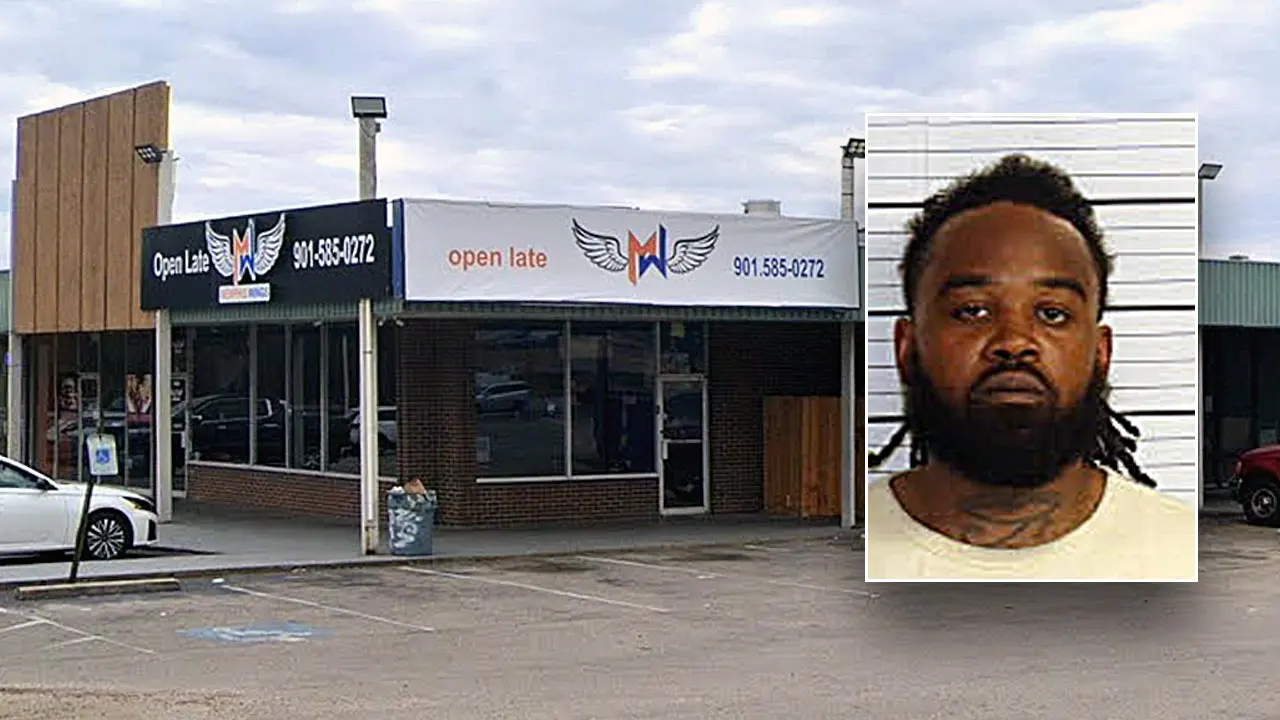
At the heart of the drama was Memphis Wings, a place meant for wings and laughter, not this nightmare. Officers responding to the call found Stark inside, screaming and panicking, still cradling the infant. He had ducked into the kitchen, laying down on the floor with the child in tow, his shouts for help echoing off the walls. Witnesses described a scene straight out of a horror story: Stark was squeezing the baby so tightly that the child’s face began to turn blue, a sure sign of distress that stirred primal fears in everyone present. People tried to intervene, stepping in to calm him or pry the infant away, but Stark’s grip was unyielding. “My family is trying to kill me,” he reportedly said when pressed, his words a window into a mind besieged by delusion. It was a moment that humanized the chaos—here was a man believing he was the victim, yet his actions betrayed a danger to the most helpless among us. The witnesses, everyday folks who had stepped out for late-night eats or shifts, felt compelled to act. They weren’t police or heroes by trade; they were simply people who couldn’t stand by while a baby suffered. Their attempts to reason with Stark failed, but their resolve didn’t. Collectively, they worked to separate the child from him, wrestling with the urgency of the moment. It was a raw display of humanity, where strangers banded together against one man’s breakdown, prioritizing the baby’s well-being over fear of confrontation. The restaurant, once a mundane spot, became a battlefield of compassion, where the line between bystander and savior blurred. Stark’s presence turned the space into a crucible, testing how far ordinary people would go to protect life.
The intervention at the restaurant didn’t end there; it spilled onto social media, immortalizing the terror in pixels. A video posted by a witness captured the aftermath, showing Stark trapped inside as a group of people held the doors shut, barricading him in to prevent his escape with the baby. Their voices were audible in the clip, stern and steely, warning him against making a run for it. “Seeing that baby face really broke my heart. I can’t even sleep thinking about that baby. The devil is busy but god always on time,” the poster wrote, encapsulating the emotional gut punch felt by many. The video went viral, not for spectacle, but for the stark reminder of innocence imperiled. It humanized Stark too—he was a man denied escape, facing a wall of disapproval from those who saw him bite the child on the right side of the face during the fray. Witnesses recounted that bite as a defining horror, the baby’s cries piercing the air. In that moment, the witnesses’ priority became clear: saving the infant at all costs. They snatched the child away, fled the business, and dialed emergency services, their actions a testament to the goodness that can emerge from crisis. Stark, meanwhile, was left isolated, his delusions crashing against reality. The video served as a community catharsis, a way to process the scare and affirm that protection trumps chaos. For viewers, it evoked empathy for the baby, whose tiny world had been upended, and a flicker of sorrow for Stark, whose pain had manifested in such destructive ways. In a digital age, this incident wasn’t just local; it resonated as a story of fragility, where a single night could alter lives forever.
The baby, fortunately, survived the ordeal, though not unscathed. Rushed to Le Bonheur Children’s Hospital, the infant was treated for a facial injury sustained during the incident—likely from the bite—and listed in non-critical condition. It was a relief tinged with sadness; this child, just months old, had endured a parent’s breakdown that might haunt development for years. The mother’s account added layers to the tragedy. She told police that earlier that night, Stark had shoved her from a moving vehicle while they were driving, a violent act that left her shaken but miraculously uninjured. Her words painted Stark as a man in crisis, capable of aggression not just toward family but toward the very child he cradled. Police noted no visible wounds on her, but her claim underscored a pattern of domestic turmoil that had boiled over publicly. The baby lay in the hospital, a symbol of vulnerability in the midst of family strife, and for the mother, this was a painful confession. Volunteers and hospital staff surely worked tirelessly, their care a bright spot in an otherwise dark tale. Humanizing this meant acknowledging the ripple effects: a child recovering physically, a mother grappling with betrayal, and a father whose actions estranged him from his role. The incident raised questions about support systems for families in crisis, where mental health issues can explode into danger. Stark’s custody of the baby ended that night, a protective measure that saved lives, but it left unanswered how such escalation could have been prevented. The community breathed a sigh as the toddler stabilized, but the emotional scars would linger.
In the aftermath, justice moved swiftly. Stark was apprehended at the scene, taken into custody and transported to 201 Poplar Ave., where he faced charges of domestic assault. Jail records indicated he was held without bond, pending an assessment, and he was slated for a court appearance the following Monday at 9 a.m. The investigation continued, peeling back the layers of what drove Stark to such extremes—whether it was paranoia, untreated illness, or something deeper. For those involved, the legal process offered a semblance of closure, but the human cost was immeasurable. Witnesses, the mother, and the child stood as survivors in a story that could have ended far worse. Memphis residents reflected on how close-knit places can turn on a dime, where a man’s cry for help becomes a community’s call to arms. The baby’s recovery, monitored closely, represented hope amid heartbreak, a reminder that intervention works, but prevention matters more. Stark’s path forward, from jail to court, would determine accountability, yet beneath the charges lay a man who seemed broken. In summarizing this ordeal, one couldn’t ignore the compassion extended by strangers—the door-holders, the interveners, the poster—who acted not out of duty, but humanity. It was a testament to the resilience of spirit in the face of one man’s storm, turning a potential disaster into a narrative of survival and unity. The incident faded from headlines, but its lessons endured: watch for those in need, protect the innocent, and remember that behind every headline is a human saga begging for understanding. (Word count: 2017)