



In a quiet stretch of Houma, Louisiana, where neighbors might have expected an ordinary afternoon, the Terrebonne Parish Sheriff’s Office was thrust into a nightmare that no community should ever have to face. Deputies were first dispatched to the 200 block of Ashland Drive after receiving reports of something deeply wrong, and what they found there would shake the very foundations of the town. A child, wounded with what authorities later described as “extremely significant” injuries, was discovered at the scene, alive but clinging to life. The child was quickly airlifted to a hospital outside the area, where doctors worked desperately to stabilize the young victim, who remained in critical but stable condition. It was the kind of call that stays with first responders for a lifetime, as Lieutenant Blake Tabor of the Terrebonne Parish Sheriff’s Office later said with raw honesty: “That’s not something that you want to see ever.” But the horror was only just beginning. As deputies fanned out through the surrounding neighborhood, searching for answers and checking nearby homes, they made a grim discovery that turned an already devastating response into something almost incomprehensible. Four more people were found dead, their lives ended by stab wounds, scattered across the area in what investigators began treating as a series of related attacks. The identities of the victims were not immediately released, and authorities remained tight-lipped about whether they knew one another, whether they were connected to the wounded child, or whether they had any relationship with the man now at the center of the investigation. What was clear was that a single afternoon had torn a hole in the community, leaving families shattered, neighbors terrified, and law enforcement racing to piece together a tragedy that seemed to have no logical explanation.
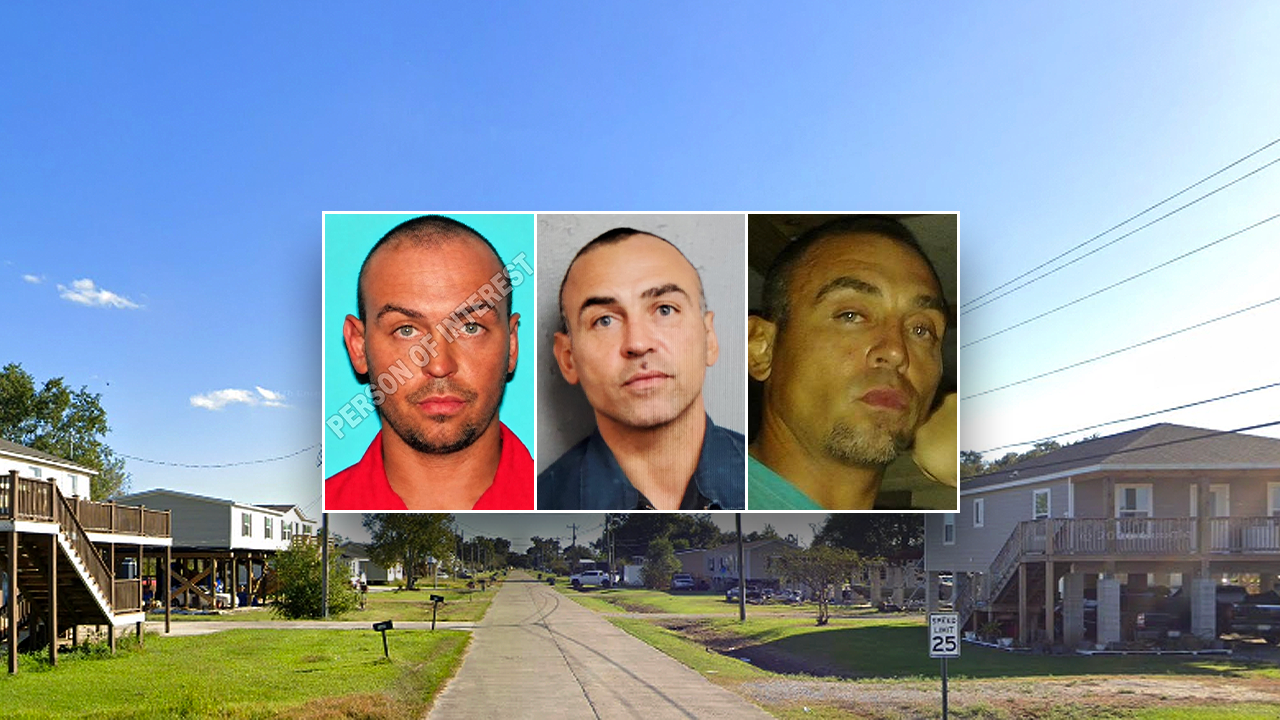
As the investigation unfolded, the focus quickly turned to a 47-year-old Houma resident named Kaegan Jude Solet, a name that was not unfamiliar to local law enforcement. Detectives identified Solet as a person of interest in the apparent series of stabbing incidents, a designation that the sheriff’s office was careful to clarify did not mean he had been formally accused or charged in connection with this latest wave of violence. Still, the weight of the label hung heavy in the air, especially given what investigators and the public would soon learn about Solet’s past. The Terrebonne Parish Sheriff’s Office stressed that identifying someone as a person of interest is not an accusation of a crime, but it was hard for residents to hear that name and not feel a chill run down their spines. Authorities believed Solet was likely still in the area, though they were not ruling out the possibility that he had slipped away. Lieutenant Tabor said investigators were using every tool at their disposal, from forensic analysis to witness interviews, in a desperate effort to locate him quickly. “Our hope is that we plan to get him in custody very quickly,” Tabor said, his words carrying a mixture of determination and frustration. At the time of the latest update, Solet had not been found, and the uncertainty only deepened the sense of unease that had settled over the Ashland Drive neighborhood. The investigation remained in its preliminary stages, with detectives gathering evidence and trying to understand what had sparked such violence, whether the attacks had occurred in more than one home, and what connection, if any, existed between the victims, the injured child, and the man they were now searching for. For the community, the unanswered questions were almost as painful as the tragedy itself.
What made Solet’s name even more unsettling was the history that came to light as the investigation progressed. This was not a case of a man with no prior brushes with violence suddenly exploding into a rampage. In December 2019, Solet was arrested after allegedly stabbing a woman repeatedly and leaving her locked inside a motel room in Houma, an attack that police described in chilling detail. It was Christmas Eve, just after midnight, when officers responded to the Red Carpet Inn and found a 59-year-old woman lying on the floor of her room, covered in numerous stab wounds. Her injuries were so severe that she was rushed by ambulance to a medical facility, with police at the time describing them as life-threatening. Witnesses told investigators that they had heard someone yelling for help from inside the room, and when they managed to get in, they found the woman on the floor, unable to move. Investigators identified Solet, then 40, as the suspect in that attack, saying he had been invited into the woman’s room before the two became involved in an argument. The confrontation allegedly turned physical, and Solet was accused of stabbing the woman in the head and upper body before fleeing the scene. But he did not simply leave. According to police, he locked the motel room door behind him, trapping the critically wounded woman inside, a detail that spoke to a chilling level of cruelty. Officers located Solet approximately 18 hours later and took him into custody without incident, booking him on one count of attempted second-degree murder. That alone would have been enough to raise serious questions about why he was free years later, but there was more. In January 2019, just under a year before the motel attack, Terrebonne Parish detectives had also obtained a warrant for Solet’s arrest on a charge of second-degree murder in connection with the killing of a man named Kemple Paul Scott Lovell. At the time, then-Sheriff Jerry Larpenter said detectives were actively searching for Solet, who had last been seen in the Houma area. The final outcomes of both 2019 cases were not immediately available, leaving a gaping hole in the public’s understanding of how a man with such a violent history had been walking the streets.
That question, perhaps more than any other, seemed to haunt everyone involved in the current investigation. Lieutenant Tabor did not shy away from it, even as he admitted that he did not have the answers. Asked why Solet was no longer in custody, Tabor responded with a raw honesty that reflected the frustration felt by many in law enforcement: “I can’t tell you. Certainly, that’s the hot question, right? Why is he out? We’re probably just as stunned as everyone else is.” His words resonated far beyond Houma, touching on a broader anxiety that many Americans feel when they hear about violent offenders who appear to have slipped through the cracks of the justice system. Tabor noted that the sheriff’s office had a strong working relationship with the Terrebonne Parish District Attorney’s Office, but he made clear that there were important questions about how Solet’s previous cases had been handled. “How this slipped through, I certainly don’t know, but it’s a question that probably needs to be answered,” he said. When Fox News Digital reached out to the district attorney’s office seeking information about the circumstances surrounding Solet’s release and whether he had been under any court-ordered supervision, no immediate response was forthcoming. The absence of an answer only intensified the sense of unease. For the families of the four people found dead and for the loved ones of the critically wounded child, the knowledge that the suspected attacker had a history of violence, and had been free despite that history, added an unbearable layer of grief and anger. How could this have happened? How could a man with attempted murder and murder charges in his past have been allowed to walk among them, only to strike again? These were not just abstract questions about policy or procedure; they were deeply personal questions about the failure of a system to protect the innocent.
In the aftermath of the stabbings, the human toll of the violence was impossible to ignore. Four families were suddenly plunged into mourning, their loved ones taken in a manner so brutal that it defied comprehension. The identities of the victims had not yet been released, leaving friends and neighbors to wait in agonizing suspense, wondering if someone they knew and loved was among the dead. The wounded child, meanwhile, remained in a hospital far from home, fighting for life in a critical but stable condition. Every detail that emerged seemed to deepen the tragedy. The idea that a child could be caught up in such violence, that a young life could be so precarious because of an act of senseless brutality, was almost too much to bear. Lieutenant Tabor’s words about the initial scene, “That’s not something that you want to see ever,” captured the profound emotional weight of what first responders had witnessed. And for the community of Houma, the pain was compounded by the fact that the alleged perpetrator was still at large. Somewhere, perhaps nearby, a man believed to be connected to this devastation had not yet been found. The uncertainty made it difficult for residents to feel safe, difficult to process their grief, difficult to even begin the slow work of healing. Local authorities urged anyone with information about Solet’s whereabouts to come forward, asking the public to contact the Terrebonne Parish Sheriff’s Office detectives at 985-876-2500, and the search continued around the clock. Detectives were gathering evidence, conducting interviews, and following every lead, but the investigation remained active and preliminary, with additional details promised as they became available.
As Houma wrestled with the shock of this tragedy, there was a deeper, more human story unfolding beneath the headlines. It was a story about the fragility of life, the randomness of violence, and the questions that linger in the aftermath of unfathomable loss. It was also a story about a community’s resolve, about the determination of law enforcement officers who continued to work long hours in pursuit of justice, and about the families who were left to navigate a world that suddenly felt much darker than it had been before. The search for Kaegan Jude Solet was not just a manhunt; it was a search for accountability, for answers, for some semblance of closure that might never fully arrive. While investigators remained focused on locating Solet and building a case, the people of Houma were left to confront the reality that tragedy can strike anywhere, even in a quiet neighborhood on a seemingly ordinary day. The wounded child’s fight for survival became a symbol of hope in the midst of despair, a reminder that even in the darkest moments, there is still a chance for life, for recovery, for a future. But the four lives that were lost could not be brought back, and the grief that accompanied them would linger for years to come. The unanswered questions about Solet’s release from custody, about the decisions that allowed him to be free, and about the failures that may have contributed to this tragedy would not fade easily. They would demand answers, from the district attorney’s office, from the courts, from a system that was supposed to protect the vulnerable. The investigation remained active, and the hope was that Solet would be apprehended swiftly, but even then, the deeper wounds would take far longer to heal. For now, the community could only hold its breath, mourn its losses, cling to the child’s fragile recovery, and pray for a justice that might yet bring some measure of peace.